
You finish an eight-hour workday, push your chair back and stand up. Your lower back feels tight. Your shoulders seem heavier than they did in the morning. When you turn your neck, there is an uncomfortable pulling sensation that makes you pause for a moment.
You stretch, walk a few steps and feel slightly better. Then you sit down again, and the stiffness gradually returns.
Sound familiar?
For many people, working at a desk has become part of everyday life. Long meetings, back-to-back deadlines, extended screen time and limited movement can leave the body feeling uncomfortable by the end of the day. Even when you exercise occasionally, spending hours in one position may contribute to muscle tension and reduced mobility.
But here is a question worth considering: What happens when your body keeps feeling stiff, even after you finish work?
Is it simply the result of sitting too long, or could your daily routine, posture, physical activity and stress levels also be contributing?
This is where people sometimes begin exploring Ayurveda, including Panchakarma therapy and other traditional approaches to physical well-being.
But what is Panchakarma, and is Panchakarma treatment worth exploring when prolonged sitting leaves you feeling stiff and uncomfortable? Could an Ayurvedic treatment help you build a healthier routine, or is a different approach more appropriate?
Understanding what these therapies involve, what they may offer and where their limitations lie can help you make a more informed decision.
Medically Reviewed By
Medically Reviewed by Dr. Farida Khanum, BAMS, MD
Chief Medical Officer and Head of Orthopaedic and Neurological Disorders, Healing Earth Multi-Specialty Ayurveda Hospital, Bangalore.
Why Does Sitting All Day Leave Your Body Feeling Stiff?
Your body is designed to move. When you spend several hours sitting with little change in position, certain muscles remain under sustained demand while other muscle groups have fewer opportunities to move through their normal range of motion.
Over time, this can contribute to discomfort, particularly around the neck, shoulders, hips and lower back.
The problem is not necessarily sitting itself. It is often the combination of prolonged sitting, limited movement, unsuitable workstation positioning and insufficient recovery between periods of activity.
Several everyday habits may contribute to that familiar feeling of stiffness.
- Staying in one position for too long: Remaining seated for extended periods limits movement and may increase discomfort.
- Working with poor posture: A poorly positioned screen, unsupported back or awkward desk setup may contribute to neck and back symptoms.
- Skipping movement breaks: Going several hours without standing, walking or stretching reduces opportunities to change position.
- Experiencing ongoing stress: Stress can contribute to muscle tension, headaches and difficulty relaxing after work.
- Getting insufficient sleep: Poor sleep may affect pain sensitivity, energy levels and your ability to recover from daily demands.
- Avoiding physical activity: Limited strength and mobility work may make everyday movements feel more demanding.
Notice how these factors can overlap. You may sit for eight hours, feel stressed about deadlines, sleep poorly and wake up with the same discomfort the next morning.
That pattern deserves attention, particularly when the stiffness becomes frequent or starts affecting your daily activities.
However, persistent pain should not automatically be attributed to sitting. Joint conditions, nerve irritation, inflammatory disorders and other medical problems can produce similar symptoms.
The first step is understanding what may be causing the discomfort. The next is identifying an approach that fits your needs.
What Is Panchakarma, and Why Are People Exploring It?
Panchakarma is a traditional Ayurvedic system of therapeutic procedures used within individualised treatment plans. In classical Ayurveda, it is associated with five principal cleansing or elimination procedures, although the specific treatment plan depends on the practitioner’s assessment and the person’s health.
Unlike a regular massage session, Ayurvedic Panchakarma may involve several stages, including preparation, selected therapeutic procedures and post-treatment care.
The purpose is not simply to relax the body for an hour. Traditional Panchakarma practice follows a structured approach that considers the individual’s condition, constitution, dietary habits and overall health.
Depending on the assessment, an Ayurvedic practitioner may consider factors such as:
- The location, duration and nature of your stiffness.
- Your daily work routine and physical activity.
- Your sleep quality and stress levels.
- Your dietary habits and general health.
- Existing medical conditions and prescribed medications.
- Whether particular Ayurvedic procedures are suitable for you.
So, does feeling stiff after a long workday mean you need Panchakarma?
Not necessarily.
Someone with mild discomfort caused by prolonged sitting may benefit from regular movement breaks, ergonomic adjustments, strengthening exercises and appropriate stretching. Another person with persistent symptoms may need a medical assessment before considering complementary therapies.
Panchakarma treatment should not be the automatic answer to every ache and stiffness complaint.
Its suitability depends on the underlying problem, the procedures involved and the person’s health.
Can Panchakarma Therapy Help When You Feel Stiff After Sitting?
This is the question many people want answered before exploring an Ayurvedic treatment.
Panchakarma therapy may be considered as part of traditional Ayurvedic care for selected individuals experiencing musculoskeletal discomfort. However, the evidence supporting Panchakarma as a whole for stiffness specifically caused by prolonged sitting is limited.
It is important to distinguish between the traditional purpose of a treatment, the relaxation someone may experience during a session and a clinically demonstrated improvement in an underlying condition.
Depending on the assessment, an Ayurvedic practitioner may recommend selected external therapies alongside guidance on movement, rest and daily habits.
Here are a few reasons people consider this approach.
1. Time to Relax and Recover From Daily Demands
A demanding workday can leave little time to pay attention to physical discomfort. You may continue working despite tight shoulders, an uncomfortable back or tired legs because your next meeting is already waiting.
A supervised therapeutic session can provide dedicated time away from work and everyday responsibilities.
Some people may find the quiet environment and hands-on therapies relaxing. However, relaxation alone does not establish that the underlying cause of stiffness has been treated.
2. Attention to Everyday Habits
An Ayurvedic consultation may encourage you to examine how your routine affects your well-being.
Are you eating irregularly? Do you remain seated through lunch? Do you work late and sleep for only a few hours? Does discomfort become worse after particular activities?
Identifying these patterns can help you make practical changes.
For desk workers, regular movement, suitable exercise, workstation adjustments and adequate sleep remain important parts of managing stiffness.
3. An Individualised Approach
Not everyone experiences stiffness for the same reason.
One person may have muscle discomfort after prolonged sitting. Another may experience pain because of an existing joint condition or nerve problem.
A personalised assessment can help identify whether an Ayurvedic procedure is appropriate or whether another form of care should take priority.
The key is to choose treatment based on the symptoms and their possible causes, rather than assuming that one Panchakarma procedure works for everyone.
Which Ayurvedic Therapies Might Be Worth Exploring?
Panchakarma is not a single treatment. It includes different procedures, and not every procedure is intended for the same condition.
If your main concern is stiffness associated with prolonged sitting, discuss your symptoms with a qualified practitioner before choosing a therapy.
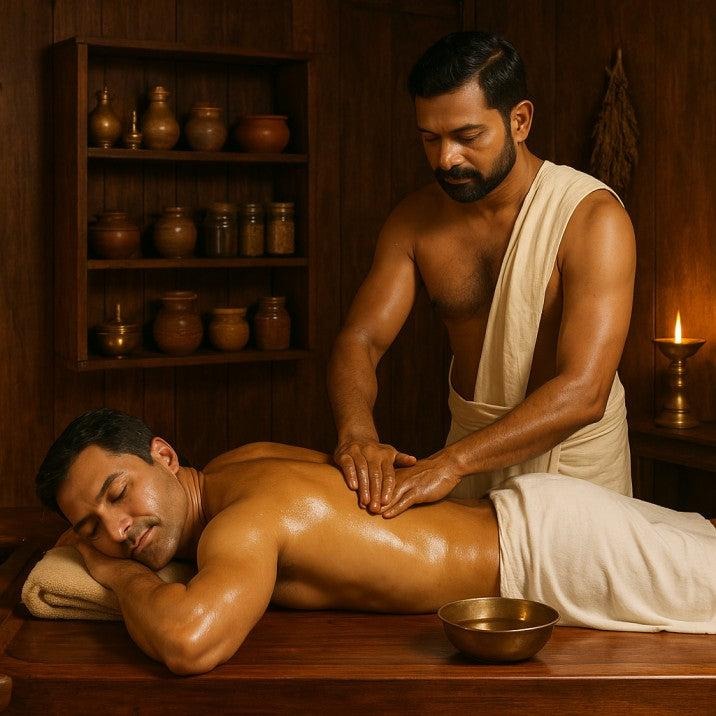
1. Abhyanga: Traditional Ayurvedic Oil Massage
Abhyanga involves applying oil to the body using traditional massage techniques. Some people find massage helpful for temporary relaxation and relief from muscle tension.
It may be considered in selected Ayurvedic care plans, depending on the individual’s symptoms and health. However, it should not be assumed to correct postural problems, treat nerve compression or resolve every cause of back pain.
If you have skin conditions, an acute injury, significant swelling or unexplained pain, seek appropriate advice before undergoing massage.
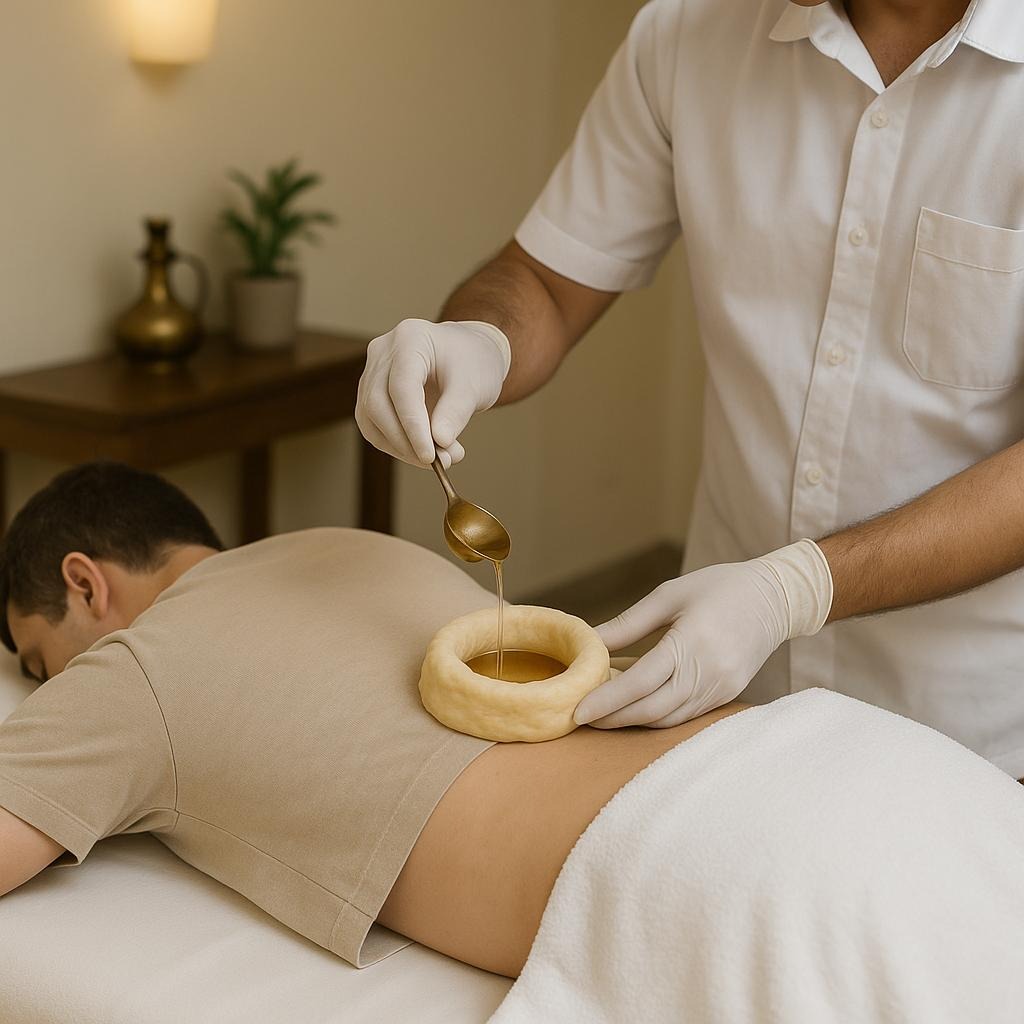
2. Kati Basti: Traditional Lower-Back Therapy
Kati Basti is an Ayurvedic procedure in which warm oil is retained over the lower-back region within a specially prepared boundary.
It attracts interest from people experiencing lower-back discomfort, particularly when long hours at a desk leave the area feeling tight.
The procedure has a traditional role in Ayurveda, but strong clinical evidence establishing its effectiveness for sitting-related stiffness is limited. It should not replace assessment for persistent or severe back pain.
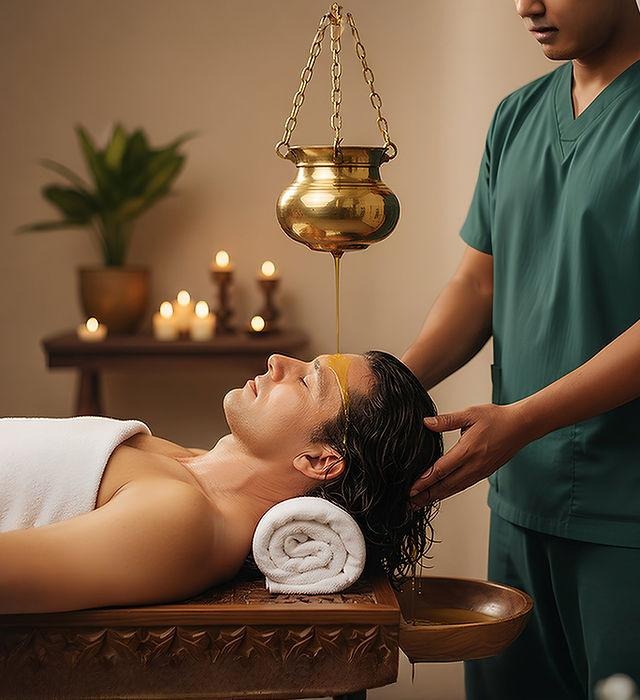
3. Shirodhara: A Traditional Relaxation Procedure
Shirodhara involves a controlled stream of liquid, commonly oil, poured over the forehead while the person rests.
Why mention it in an article about sitting-related stiffness?
Because physical discomfort is not always the only concern. Work pressure, persistent worry and poor sleep may accompany long working hours, making relaxation another area people want to address.
Shirodhara for stress is discussed in traditional Ayurvedic practice, but strong clinical evidence supporting it as a treatment for anxiety disorders or chronic insomnia remains limited. It is not a direct treatment for mechanical stiffness.
These therapies serve different purposes. A practitioner should explain why a particular procedure is being recommended, what it is expected to achieve and what risks or limitations apply.
It is also worth remembering that a treatment does not need to be intensive to be useful. For some people, changing their workstation and moving more frequently may be a more appropriate starting point than undergoing Panchakarma.
What Are the Potential Panchakarma Benefits for Desk Workers?
People searching for Panchakarma benefits often want a simple answer: Will it help me feel better?
The honest answer depends on the cause of the symptoms, the procedures involved and the available evidence.
For someone exploring traditional Ayurvedic care, possible areas of interest include the following.
Temporary relaxation: Selected external therapies may help some people feel relaxed during or after a session. Individual experiences vary.
Greater awareness of physical discomfort: A consultation may encourage you to notice when stiffness develops and which activities appear to aggravate it.
A more structured self-care routine: Treatment planning may create an opportunity to review rest, movement, meals and other daily habits.
Individualised guidance: A practitioner can discuss whether specific procedures are suitable for your circumstances and identify when additional medical assessment is needed.
These potential benefits should not be confused with proof that Panchakarma reverses damage caused by prolonged sitting or cures chronic musculoskeletal conditions.
There is also no reliable basis for promising that every person will experience improved mobility, reduced pain or lasting relief after treatment.
Instead of asking only, “What are the Panchakarma benefits?”, consider asking:
- What might be causing my stiffness?
- Which treatment is being recommended, and why?
- What improvement can reasonably be expected?
- How will progress be assessed?
- Should I also consult a physiotherapist or another healthcare professional?
These questions can help you evaluate whether the proposed treatment makes sense for your situation.
What Are the Panchakarma Treatment Steps?
One common misconception is that Panchakarma begins and ends with a single therapy session.
In traditional practice, the Panchakarma procedure may involve preparation, selected interventions and a period of recovery. The exact process varies according to the treatment plan and the individual’s health.
Here are the broad Panchakarma treatment steps you may encounter.
Step 1: Initial Consultation
The practitioner reviews your symptoms, medical history, work routine, activity levels and any existing health conditions. If your stiffness is persistent, the assessment should consider whether further medical evaluation is needed.
Step 2: Panchakarma Preparation
Panchakarma preparation may include selected traditional preparatory procedures, dietary adjustments and other instructions. Not everyone needs the same preparation, and intensive cleansing should never be attempted without appropriate supervision.
Step 3: Selected Therapeutic Procedures
The practitioner carries out the procedures included in the treatment plan. These may differ substantially in intensity, purpose and risk. Ask what each procedure involves and how it relates to your symptoms.
Step 4: Recovery and Follow-Up
Depending on the procedures, aftercare may include dietary guidance, activity recommendations and follow-up appointments. The practitioner should explain which symptoms require attention and when you can resume your usual activities.
Not every Ayurvedic therapy requires a complete Panchakarma programme. A person considering an external oil massage, for example, should not assume that they need to undergo every stage associated with a full Panchakarma plan.
This distinction matters when choosing treatment for a specific concern such as desk-related stiffness.
How Long Does Panchakarma Take?
There is no single answer to the question, “How long does Panchakarma take?”
The duration depends on the procedures prescribed, the person’s health, the treatment setting and the practitioner’s plan.
A single external Ayurvedic therapy may take considerably less time than a multi-stage Panchakarma programme. Some treatment plans involve several days, while others may extend over multiple weeks.
Before committing to Ayurvedic Panchakarma, ask about:
- The expected number of treatment sessions.
- Whether preparation is required before the first session.
- The time needed for each procedure.
- Whether you need to remain at a treatment centre.
- Any dietary or activity restrictions.
- The expected recovery period.
- The total cost and follow-up requirements.
If you work full-time, these practical details matter. A treatment plan that requires extensive time away from work may not be suitable for everyone.
Do not choose a programme simply because it promises a longer Panchakarma cleanse or a more intensive detoxification experience. More treatment does not automatically mean better results.
Panchakarma Preparation: What Should You Know Before Starting?
If you decide to explore Panchakarma treatment, preparation should begin with a conversation about your health, not an online detox checklist.
Tell the practitioner about your symptoms, existing diagnoses, prescribed medication, supplements, allergies and previous treatments.
This is especially important if your stiffness is accompanied by numbness, tingling, weakness, joint swelling or pain that interferes with everyday movement.
Keep these precautions in mind:
- Do not stop prescribed medication without guidance from your prescribing clinician.
- Avoid unsupervised fasting, dehydration or restrictive cleansing diets.
- Ask about the ingredients and potential interactions of herbal preparations.
- Discuss the suitability of the proposed procedures for any existing medical conditions.
- Ask about possible side effects, contraindications and recovery requirements.
- Seek medical assessment for persistent or unexplained pain before assuming that it is caused by sitting.
An Ayurvedic detox or Panchakarma cleanse should not be treated as a necessary way to remove unspecified toxins from the body. The liver, kidneys and other organs already perform essential functions involved in processing and eliminating waste.
Certain Panchakarma procedures, particularly those involving induced vomiting, purgation or enemas, can carry risks such as dehydration, electrolyte disturbances, injury or other complications. Their suitability requires professional assessment and appropriate supervision.
Natural does not automatically mean safe. The procedure itself, the person’s medical history and the quality of supervision all matter.
Could Stress Be Making Your Physical Discomfort Worse?
You may have noticed something unusual: your shoulders feel tighter on days filled with difficult meetings, while your body feels more relaxed during a quiet weekend.
That does not mean the discomfort is imaginary. Stress can contribute to muscle tension and influence how the body experiences pain.
When work pressure continues throughout the day, it can also affect sleep, concentration and recovery.
This is why a discussion about sitting-related stiffness may sometimes include stress management.
People exploring Ayurvedic treatment for stress may also ask about Ayurvedic treatment for anxiety or Ayurvedic treatment for insomnia. These are separate concerns, and each requires an appropriate assessment.
For example, Shirodhara for stress is a traditional Ayurvedic approach that some people explore for relaxation. However, evidence supporting its use for treating anxiety disorders or chronic insomnia remains limited.
Similarly, Panchakarma for anxiety and stress should not be presented as a proven standalone treatment for mental health conditions.
If stress and poor sleep accompany your physical discomfort, practical steps may help:
- Take short movement breaks during the workday.
- Maintain a consistent sleep and waking schedule.
- Reduce late-evening caffeine if it affects your sleep.
- Make time for regular physical activity suited to your ability.
- Establish boundaries between work and personal time.
- Seek professional support if anxiety or sleep problems persist.
These habits can complement appropriate care. They do not replace evidence-based treatment when a mental health condition or sleep disorder is present.
Is Panchakarma Better Than Exercise or Physiotherapy for Sitting-Related Stiffness?
There is no single approach that is best for every person experiencing stiffness after prolonged sitting.
The right option depends on the cause of the discomfort, its severity, the person’s health and the treatment goals.
| Approach | Potential role | Important consideration |
| Movement breaks | Reduce uninterrupted sitting and encourage regular movement | Best incorporated throughout the workday |
| Ergonomic adjustments | Improve workstation positioning and comfort | May need to be combined with other measures |
| Exercise and stretching | Support strength, mobility and physical function | Should suit your abilities and symptoms |
| Physiotherapy | Assess movement problems and provide targeted rehabilitation | Particularly useful when symptoms persist or limit function |
| Ayurvedic massage | May provide temporary relaxation for some people | Does not establish or treat every underlying cause |
| Panchakarma | Traditional Ayurvedic treatment system used in selected care plans | Evidence for sitting-related stiffness is limited |
For many desk workers, the most practical starting point is simple: interrupt long periods of sitting, improve workstation ergonomics and maintain regular physical activity.
If symptoms persist, worsen or interfere with normal activities, seek an appropriate clinical assessment.
Ayurvedic therapy may be explored as complementary care when suitable, but it should not delay diagnosis or replace treatments with stronger evidence for the underlying condition.
How Can You Reduce Stiffness While Working at a Desk?
You do not need to wait until the end of the workday to address discomfort.
A few practical changes can help you move more regularly and identify which habits contribute to your stiffness.
Take Movement Breaks
Stand up periodically, walk around your workspace or change your position between tasks. Even brief movement breaks can reduce the amount of uninterrupted sitting in your day.
Adjust Your Workstation
Position your screen so you can look at it without repeatedly bending your neck. Keep your feet supported and arrange your keyboard and mouse to avoid unnecessary reaching.
A comfortable workstation will not eliminate every cause of pain, but it can help reduce avoidable strain.
Build Strength and Mobility
Regular physical activity can support muscle strength, joint movement and general health. Depending on your needs, walking, strengthening exercises and suitable mobility work may help.
If a particular movement causes pain, do not force yourself through it. Seek advice if you are unsure which activities are appropriate.
Review Your Sleep and Stress Levels
Poor sleep and ongoing stress may contribute to how uncomfortable you feel. Establishing a consistent sleep routine and making time to unwind may support your overall well-being.
Monitor Your Symptoms
Notice when the stiffness begins, where you feel it and whether it improves with movement. Record any accompanying symptoms, such as numbness, weakness or pain radiating into an arm or leg.
This information can help a healthcare professional determine whether further assessment is necessary.
Seek urgent medical attention if back pain occurs with new bladder or bowel control problems, numbness around the groin or saddle area, or significant or progressive leg weakness. Fever, major trauma or rapidly worsening pain also warrant prompt assessment.
Exploring Ayurvedic Treatment at Healing Earth Ayurveda Hospital, Bangalore
If prolonged sitting leaves you feeling stiff and uncomfortable, the next step is understanding what may be causing the symptoms and which treatment options are appropriate.
At Healing Earth Ayurveda Hospital in Bangalore, you can enquire about Ayurvedic consultation and available therapies to understand whether a traditional approach may be suitable for your needs.
Rather than choosing Panchakarma simply because you experience stiffness, discuss your symptoms, daily routine, existing health conditions and treatment goals with a qualified practitioner.
Ask which procedures are being recommended, what they are intended to achieve, whether preparation is necessary and what risks or limitations you should understand.
If your discomfort is persistent, severe or accompanied by other symptoms, seek an appropriate medical assessment before proceeding with complementary treatment.
An informed decision should consider your health, the available evidence and the practical changes that may help you remain comfortable throughout the working day.
Interested in exploring Ayurvedic care?
Contact Healing Earth Ayurveda Hospital to enquire about consultation options and discuss whether an appropriate Ayurvedic treatment plan may fit your circumstances.
Frequently Asked Questions
1. Can Panchakarma help with stiffness caused by sitting all day?
Panchakarma is a traditional Ayurvedic treatment system that may be considered for selected individuals following an appropriate assessment. However, strong clinical evidence establishing Panchakarma as an effective treatment specifically for sitting-related stiffness is limited. Movement breaks, ergonomic changes, exercise and physiotherapy may be more directly relevant, depending on the cause.
2. What is Panchakarma treatment used for?
Panchakarma is traditionally used within Ayurveda as a system of therapeutic procedures selected according to an individual’s health and treatment needs. It may involve preparation, specific interventions and recovery guidance. The appropriate procedures depend on the practitioner’s assessment, and claims about detoxification or disease treatment should be evaluated carefully.
3. What are the main Panchakarma benefits?
Potential areas of interest include relaxation from selected therapies, structured attention to daily habits and individualised treatment planning. However, the benefits vary by procedure and person. Panchakarma should not be assumed to cure chronic pain, reverse postural problems or treat every underlying medical condition.
4. How long does Panchakarma take?
The duration varies according to the treatment plan and the procedures involved. Some external therapies may require a single appointment, while a multi-stage Panchakarma programme may take several days or longer. Ask the practitioner about preparation, session frequency, recovery time and follow-up before starting.
5. What are the Panchakarma treatment steps?
The broad stages may include an initial consultation, Panchakarma preparation, selected therapeutic procedures and post-treatment care. The exact steps vary according to the person’s health and the treatment prescribed. Not everyone requires the same procedures or a complete Panchakarma programme.
6. Is an Ayurvedic detox necessary for body stiffness?
No. Body stiffness does not automatically indicate that you need an Ayurvedic detox or Panchakarma cleanse. Stiffness can have several causes, including prolonged sitting, muscle tension, joint conditions and nerve problems. Identifying the cause is more useful than assuming that cleansing is necessary.
7. Can Ayurvedic treatment help with work-related stress?
Some people explore traditional Ayurvedic therapies as part of their relaxation routine. However, evidence for treating anxiety disorders with Panchakarma or other specific Ayurvedic procedures remains limited. Persistent stress that affects daily functioning may require psychological or medical support.
8. Is Shirodhara useful for stress and insomnia?
Shirodhara is a traditional Ayurvedic procedure that some people find relaxing. However, strong clinical evidence establishing it as an effective treatment for anxiety disorders or chronic insomnia is limited. It should not replace appropriate assessment or evidence-based treatment.
9. Is Panchakarma suitable for everyone?
No. Suitability depends on a person’s age, health, medical conditions, medication and the procedures involved. Some treatments may cause adverse effects or be inappropriate for particular individuals. A qualified practitioner should assess your circumstances before recommending treatment.
10. Can I undergo Panchakarma while taking prescribed medication?
That depends on the medication and the proposed procedures. Inform your Ayurvedic practitioner and prescribing clinician about all medicines, supplements and herbal products you use. Some preparations can interact with medications, and prescribed treatment should not be stopped without medical guidance.
Final Thoughts: Your Body May Be Asking for a Change in Routine
When you spend most of the day sitting, stiffness can gradually become something you expect rather than something you question.
You stand up, stretch your back, roll your shoulders and return to work. The discomfort becomes part of the routine, even when it begins affecting your concentration, movement or sleep.
But recurring stiffness deserves more than another quick stretch followed by eight more hours in the same chair.
Start by reviewing your workstation, breaking up prolonged sitting and making regular movement part of your day. If the discomfort continues, seek professional advice to identify its possible cause.
Panchakarma and other Ayurvedic therapies may be worth exploring as complementary options for selected individuals. However, they should be approached with realistic expectations, an understanding of their limitations and appropriate medical guidance.
The goal is not to find the most intensive treatment available. It is to understand what your body needs and choose a safe, appropriate approach that helps you stay comfortable and active.
Sometimes, the first useful change is not a treatment at all. It is recognising that your daily routine needs to change.
Medical Disclaimer
This article is intended for general educational purposes only. It does not replace professional medical advice, diagnosis or treatment. Evidence supporting Panchakarma and specific Ayurvedic therapies for sitting-related stiffness, anxiety and chronic insomnia remains limited.
Consult a qualified healthcare professional if pain or stiffness persists, worsens or interferes with your daily activities. Seek prompt medical attention for severe or unexplained symptoms, new weakness, significant numbness or changes in bladder or bowel control.
Discuss any Ayurvedic procedures or herbal preparations with an appropriate practitioner, particularly if you take prescribed medication or have an existing medical condition. Do not delay necessary medical assessment or discontinue prescribed treatment in favour of complementary therapies.