
Medically reviewed by: Dr. Farida Khanum, BAMS, MD, CMO / Technical Director, Healing Earth Ayurveda Hospital, HSR Layout, Bangalore.
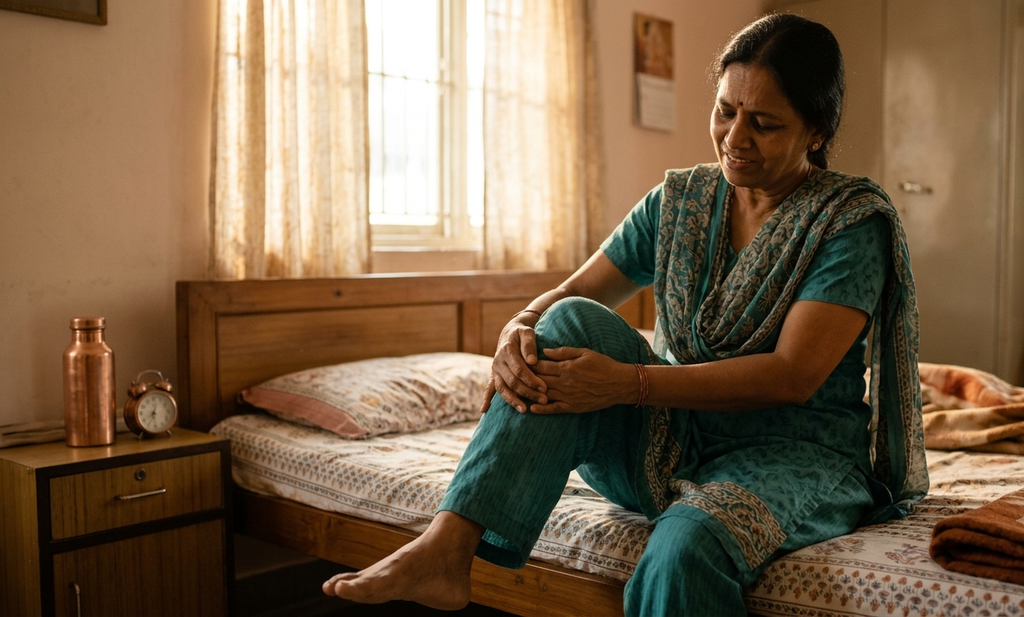
You wake up, swing your legs off the bed, and your knees refuse to cooperate. Your fingers feel tight around the coffee cup, and it takes a few minutes of slow movement before your body feels like your own again. If this sounds familiar, you are not alone. Morning joint stiffness is one of the most common complaints we hear from patients at our hospital in HSR Layout, Bangalore.
So why do joints feel stiff in the morning? And what can you do about it? In this blog, we explain the common causes, how Ayurveda understands the problem, and the daily habits that can help you move more easily.
Why Do Joints Feel Stiff in the Morning?
During sleep, your body stays in one position for hours. Your joints are not moving, the fluid that lubricates them circulates less, and the surrounding muscles and tendons tighten slightly. When you wake up, it takes a little time for the joints to warm up and the movement to return. That is why many people notice joint stiffness after sleeping, and also after sitting for a long time.
A short spell of stiffness is usually harmless. But when it becomes a daily problem, or comes with pain or swelling, it is worth looking into. Common causes of joint stiffness include:
- Osteoarthritis, where the cartilage cushioning the joint wears down with age or overuse. Morning stiffness here usually settles within about 30 minutes.
- Inflammatory arthritis, such as rheumatoid arthritis, where stiffness often lasts longer than 30 to 60 minutes and may come with joint swelling and warmth.
- Past injuries, extra body weight or repeated strain on the knees, hips and hands.
- Inactivity, long hours at a desk, or a sedentary routine that leaves the joints under-used.
- Cold weather and poor sleep posture, which can make joints feel tighter on waking.
If you are wondering how long morning joint stiffness should last, a general rule is this: stiffness that eases within half an hour is often mechanical, while stiffness that lasts an hour or more deserves a proper medical evaluation. You can read more about these conditions in the WHO fact sheets on osteoarthritis and rheumatoid arthritis.
Where Do Knees and Fingers Come In?
The joints that carry weight or do fine work tend to complain first. Knee stiffness is common in the morning because the knees take the load of every step, and the cartilage there is the first to feel the effects of wear. Finger stiffness, on the other hand, is often noticed while buttoning a shirt or holding a cup, and it can be an early sign of hand osteoarthritis or an inflammatory condition.
If your stiffness is limited to one or two joints, it may point towards wear and tear. If it affects both hands, both knees or several joints together, and especially if there is joint swelling, please do not wait. An early consultation with one of our Ayurvedic doctors makes a real difference to how well the joints can be protected.
The Ayurvedic View of Joint Stiffness
Ayurveda looks at joint health through the balance of the three doshas, mainly Vata and Kapha. Vata governs movement and dryness in the body, and the joints are one of its main seats. When Vata increases, the natural lubrication of the joints is affected, leading to pain, cracking sounds and stiffness. Early morning is also the time when Kapha is dominant, which brings a feeling of heaviness and slow movement in the body. Ayurveda is a recognised system of medicine in India, promoted by the Ministry of Ayush.
The classical condition most closely linked to degenerative joint pain is Sandhivata. Its common features include joint pain, stiffness, swelling that comes and goes, and a cracking sound on movement. Ayurveda also describes Ama, which means undigested waste material that can settle in the joints and make them heavy and stiff, a picture similar to inflammatory arthritis. This is why Ayurveda for joint health does not rely on a single remedy. Our doctors first understand which dosha is involved, how strong the digestion is, and whether Ama is present, and then plan the treatment around that. You can browse the other conditions we treat on our diseases page.
Ayurvedic Treatment for Joint Stiffness at Healing Earth
Treatment at Healing Earth begins with a detailed consultation. Our Orthopaedic and Neurology department, headed by Dr. Farida Khanum, assesses the pattern of stiffness, the joints involved, your digestion, sleep and daily routine. Based on this, the plan may include:
- Panchakarma therapies to cleanse the body and bring Vata back into balance, selected according to your condition and strength.
- Abhyanga (warm herbal oil massage) for joint pain and stiffness. The oil massage nourishes the joints, relaxes tight muscles and supports better joint mobility.
- Swedana (herbal steam) and local therapies such as Janu Vasti for the knees, which are listed among our Ayurvedic treatments.
- Ayurvedic medicine for joint pain, prescribed by the doctor after assessment. We do not recommend self-medicating with herbal preparations.
- Diet and lifestyle guidance from our General and Internal Medicine team, since digestion and joint health are closely connected in Ayurveda.
- Yoga and physiotherapy support through our Yoga and Naturopathy department and consultant physiotherapist.
Treatment outcomes vary from person to person, and the plan is always adjusted to your condition. You can meet our physicians on the Team of Doctors page.
Daily Care Tips: How to Reduce Morning Joint Stiffness
The good news is that small, steady habits can make your mornings easier. Here is how to relieve joint stiffness naturally, alongside any treatment your doctor advises.
- Warm up before you get up. Spend a minute or two gently flexing your ankles, bending your knees and opening and closing your fists while still lying down.
- Try stretches for stiff joints in the morning. Slow neck rolls, shoulder circles, gentle knee hugs and finger stretches are enough. There is no need to push hard.
- Do a little self-massage. Warm sesame oil, applied to the knees, fingers and other stiff joints before a warm bath, is a simple form of Abhyanga that many families already follow. If you have swelling, redness or heat in a joint, check with your doctor before massaging it.
- Take a warm bath or shower. Heat relaxes the muscles around the joints and helps them loosen up faster.
- Add yoga. Yoga for morning joint stiffness works best when it is gentle and regular. Poses such as Tadasana, Vajrasana (if your knees allow) and simple seated stretches are good starting points, but please learn them from a trained teacher first.
- Stay active through the day. Yes, exercise helps morning joint stiffness. Regular walking, swimming or cycling keeps the joints lubricated and the muscles around them strong. Avoid sitting in one position for too long.
- Eat warm, freshly cooked food. Ayurveda suggests favouring light, easily digested meals and reducing cold, heavy and processed foods, which can increase Ama.
- Keep a healthy weight. Extra weight puts additional load on the knees and hips.
- Sleep well. Keep your bedroom warm in winter, use a supportive mattress and avoid sleeping in awkward positions.
These tips support, but do not replace, medical advice. For persistent joint pain and stiffness, a proper diagnosis matters first.
When Should You See a Doctor?
Please book a consultation if you notice any of the following:
- Morning stiffness lasting longer than an hour
- Swelling, redness or warmth in a joint
- Stiffness in several joints at the same time, such as both hands
- Pain that wakes you at night or does not ease with rest
- Reduced movement that affects daily tasks like climbing stairs or holding objects
Early assessment helps your doctor decide whether you need Ayurvedic care, a blood test or imaging, or a combination of approaches.
Joint Stiffness Treatment in Bangalore: Visit Healing Earth in HSR Layout
If you are looking for Ayurvedic treatment for joint stiffness in Bangalore, Healing Earth is an NABH-accredited Ayurveda hospital in HSR Layout. Our team treats Sandhivata and other joint conditions with a mix of Panchakarma, medicines, therapies and diet guidance, and we offer both OPD consultations and in-patient care. Patients searching for an Ayurvedic doctor for joint pain in HSR Layout can consult our physicians in person or through online consultation. Cashless treatment is also available with several insurance partners, subject to your policy terms. You can check the details on our insurance page.
To plan your visit, book a consultation with our team today.
Frequently Asked Questions
1. Why are my joints stiff when I wake up?
Joints stay still for hours during sleep, so the lubricating fluid circulates less and the muscles tighten. Conditions such as osteoarthritis or inflammatory arthritis can make this stiffness stronger or longer lasting.
2. Is morning joint stiffness a sign of arthritis?
It can be, but not always. Stiffness that eases within 30 minutes is often linked to wear and tear, while stiffness that lasts an hour or more, especially with swelling, needs a medical check-up for arthritis.
3. Can Ayurvedic remedies for morning joint stiffness help?
Ayurvedic therapies such as Abhyanga, Swedana and Panchakarma, along with doctor-prescribed medicines and diet changes, may support joint comfort and mobility. The right plan depends on your condition, so a consultation is the first step.
4. Does exercise help morning joint stiffness?
Yes, gentle and regular movement such as walking, stretching and yoga helps keep the joints supple. Avoid strenuous exercise during a painful flare-up and follow your doctor’s guidance.
5. How can I improve joint mobility at home?
Start your day with gentle stretches, stay active, maintain a healthy weight, eat light and warm meals, and keep your joints warm. Regular follow-up with your doctor keeps the plan on track.
About the Author
Dr. Farida Khanum, BAMS, MD CMO / Technical Director and Head of the Department of Orthopaedic and Neurological Disorders, Healing Earth Ayurveda Hospital, HSR Layout, Bangalore
Dr. Farida Khanum has more than 15 years of experience in Ayurvedic practice. She completed her BAMS at SDM College of Ayurveda, Hassan, and her post-graduation at Government Ayurveda Medical College, Bangalore. She uses Nadi Pareeksha (pulse examination) and a holistic assessment of the body’s constitutional balance to diagnose conditions, and she leads the care of patients with joint, bone and nerve disorders at Healing Earth.
Medical Disclaimer: This blog is for general awareness and is not a substitute for medical advice. Please consult a qualified doctor for diagnosis and treatment.