
Type 2 Diabetes Mellitus has become one of the most common lifestyle disorders worldwide. Characterized by elevated blood glucose levels due to insulin resistance and impaired insulin function, it affects millions of people and significantly impacts overall health. While conventional medicine plays a crucial role in diabetes management, many individuals are turning to Ayurveda as a complementary approach to support healthy blood sugar levels naturally.
In Ayurveda, diabetes is closely associated with Madhumeha, a metabolic disorder linked to imbalances in the body’s doshas, digestive fire (Agni), and tissue metabolism. By addressing the root causes through herbal remedies, dietary modifications, lifestyle changes, yoga, and stress management, Ayurveda offers a holistic pathway to better glycemic control and overall well-being.
At Healing Earth Ayurvedic Hospital, we believe that successful diabetes management requires a holistic approach that addresses the root causes of metabolic imbalance rather than simply managing symptoms. Our experienced Ayurvedic practitioners combine traditional Ayurvedic wisdom with modern healthcare principles to help patients achieve better blood sugar control and improved overall wellness.
Understanding Type 2 Diabetes
Type 2 Diabetes occurs when the body’s cells become resistant to insulin or when the pancreas cannot produce sufficient insulin to maintain normal blood glucose levels.
Common Causes of Type 2 Diabetes
- Insulin resistance
- Sedentary lifestyle
- Excess body weight and obesity
- Poor dietary habits
- Chronic stress
- Genetic predisposition
- Sleep disturbances
- Metabolic syndrome
Common Symptoms
- Frequent urination
- Excessive thirst
- Increased hunger
- Fatigue
- Slow wound healing
- Blurred vision
- Unexplained weight changes
If left unmanaged, Type 2 Diabetes can increase the risk of cardiovascular disease, kidney damage, neuropathy, and other serious complications.
Ayurveda’s Perspective on Diabetes (Madhumeha)
Ayurveda describes diabetes under the category of Prameha, with Madhumeha being the advanced stage characterized by sweet urine and metabolic dysfunction.
According to Ayurvedic principles, diabetes develops due to:
- Weak digestive fire (Mandagni)
- Accumulation of toxins (Ama)
- Imbalance of Kapha Dosha
- Disturbance in fat and muscle metabolism
- Sedentary lifestyle and improper dietary habits
Rather than focusing solely on blood sugar levels, Ayurveda aims to restore metabolic balance, improve tissue nourishment, and enhance the body’s natural ability to regulate glucose.
Ayurvedic Herbs for Diabetes Management
Several Ayurvedic herbs have been traditionally used to support healthy blood sugar regulation and metabolic function.
1. Gymnema Sylvestre (Gurmar)
Known as the “Sugar Destroyer,” Gymnema is one of Ayurveda’s most respected herbs for diabetes management.
Potential Benefits
- Supports healthy blood glucose levels
- May reduce sugar cravings
- Helps improve insulin function
- Supports pancreatic health
2. Fenugreek (Methi)
Fenugreek seeds contain soluble fiber that may help slow carbohydrate absorption.
Potential Benefits
- Supports glycemic control
- Improves insulin sensitivity
- Helps reduce post-meal blood sugar spikes
- Supports digestive health
How to Use
Soak fenugreek seeds overnight and consume them in the morning or use powdered fenugreek as advised by an Ayurvedic practitioner.
3. Bitter Melon (Karela)
Bitter melon contains compounds that mimic insulin activity and may help improve glucose metabolism.
Potential Benefits
- Supports healthy blood sugar levels
- Enhances glucose utilization
- Helps manage insulin resistance
4. Amla (Indian Gooseberry)
Amla is rich in antioxidants and Vitamin C, supporting metabolic and immune health.
Potential Benefits
- Helps reduce oxidative stress
- Supports pancreatic function
- Promotes overall metabolic wellness
5. Turmeric (Haridra)
Curcumin, the active compound in turmeric, has been extensively studied for its anti-inflammatory properties.
Potential Benefits
- Supports insulin sensitivity
- Reduces inflammation
- Promotes cardiovascular health
6. Neem
Neem has traditionally been used to support healthy blood sugar regulation.
Potential Benefits
- Supports glucose metabolism
- Promotes detoxification
- Supports immune health
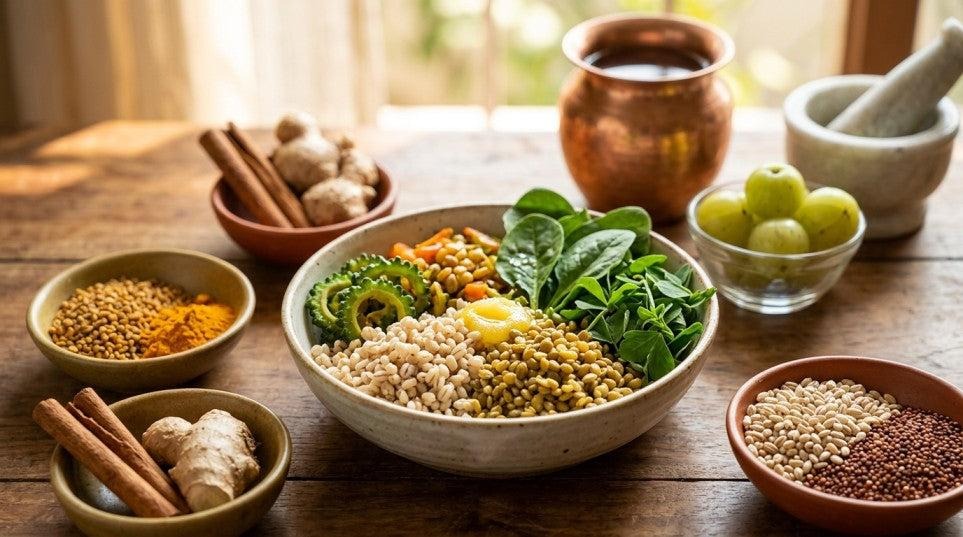
Ayurvedic Diet for Type 2 Diabetes
Diet plays a central role in Ayurvedic diabetes management. The goal is to balance Kapha dosha, improve digestion, and stabilize blood sugar levels.
Foods to Include
Whole Grains
- Barley
- Millets
- Oats
- Brown rice (in moderation)
Vegetables
- Bitter gourd
- Bottle gourd
- Ridge gourd
- Spinach
- Fenugreek leaves
- Broccoli
- Cucumber
Healthy Proteins
- Lentils
- Moong dal
- Chickpeas
- Sprouts
Healthy Fats
- Moderate amounts of ghee
- Nuts and seeds
- Coconut
Spices
- Turmeric
- Cinnamon
- Fenugreek
- Ginger
- Black pepper
Foods to Avoid
- Refined sugar
- Sweetened beverages
- White bread
- Processed foods
- Deep-fried foods
- Excess dairy products
- Excessive consumption of rice and potatoes
Choosing low-glycemic foods can help maintain stable blood glucose levels throughout the day.
Daily Routine (Dinacharya) for Diabetes Management
A structured daily routine is highly emphasized in Ayurveda.
Morning Routine
- Wake up early
- Drink warm water
- Practice yoga and breathing exercises
- Eat a balanced breakfast
Throughout the Day
- Follow regular meal timings
- Stay physically active
- Avoid prolonged sitting
- Stay hydrated
Evening Routine
- Light dinner before sunset when possible
- Gentle walking after meals
- Relaxation practices before sleep
Yoga for Diabetes Management
Yoga supports glucose metabolism, stress reduction, and weight management.
1. Surya Namaskar
A dynamic sequence that improves circulation, flexibility, and metabolic activity.
Benefits
- Supports weight management
- Enhances insulin sensitivity
- Improves overall fitness
2. Bhujangasana (Cobra Pose)
Benefits
- Stimulates abdominal organs
- Supports pancreatic function
- Improves spinal flexibility
3. Dhanurasana (Bow Pose)
Benefits
- Enhances digestive health
- Activates abdominal organs
- Improves metabolism
4. Ardha Matsyendrasana (Half Spinal Twist)
Benefits
- Supports digestive organs
- Improves circulation
- Enhances metabolic activity
5. Vajrasana
Benefits
- Aids digestion
- Helps regulate post-meal glucose metabolism
- Easy to practice after meals
Pranayama for Blood Sugar Regulation
Breathing exercises help reduce stress, a significant contributor to insulin resistance.
Anulom Vilom
- Balances the nervous system
- Promotes relaxation
- Supports metabolic balance
Kapalabhati
- Improves circulation
- Stimulates metabolism
- Supports weight management
Bhramari
- Reduces stress and anxiety
- Improves sleep quality
- Promotes mental calmness
Stress Management and Sleep Optimization
Chronic stress can elevate cortisol levels, worsening insulin resistance and blood sugar fluctuations.
Stress Management Strategies
- Meditation
- Yoga Nidra
- Mindfulness practices
- Nature walks
- Regular relaxation techniques
Sleep Recommendations
- Aim for 7–8 hours of quality sleep
- Maintain consistent sleep schedules
- Limit screen exposure before bedtime
Good sleep supports hormonal balance and glucose regulation.
Weight Management in Type 2 Diabetes
Excess body weight is a major contributor to insulin resistance.
Ayurvedic Weight Management Tips
- Eat according to hunger
- Avoid overeating
- Practice mindful eating
- Stay physically active
- Follow seasonal dietary guidelines
- Incorporate metabolism-supportive herbs under professional guidance
Even modest weight loss can significantly improve blood sugar control.
Panchakarma Therapy for Diabetes
Panchakarma is Ayurveda’s detoxification and rejuvenation therapy.
Potential Benefits
- Supports metabolic balance
- Helps remove accumulated toxins (Ama)
- Enhances digestive efficiency
- Promotes overall well-being
Common therapies may include:
- Abhyanga (oil massage)
- Udvartana (herbal powder massage)
- Virechana (therapeutic purgation)
- Basti (medicated enema)
Panchakarma should always be performed under qualified Ayurvedic supervision.
Integrating Ayurveda with Conventional Diabetes Care
Ayurveda can serve as a complementary approach alongside conventional medical treatment.
Benefits of an Integrative Approach
- Supports lifestyle modification
- Encourages sustainable habits
- Enhances overall wellness
- Addresses stress and emotional health
- Promotes long-term metabolic balance
Important Reminder
Never discontinue prescribed diabetes medications without consulting your healthcare provider. Regular monitoring of blood glucose, HbA1c, and overall health remains essential.
Benefits and Limitations of Ayurveda for Type 2 Diabetes
Benefits
- Holistic and personalized approach
- Focuses on root-cause management
- Encourages healthy lifestyle habits
- Supports stress reduction and weight management
- Utilizes natural herbs and dietary strategies
Limitations
- Results may vary between individuals
- Requires consistency and lifestyle commitment
- Should not replace emergency or critical medical care
- Needs professional supervision, especially when combined with medications
The Future of Integrative Diabetes Management
Modern healthcare increasingly recognizes the value of combining evidence-based traditional practices with conventional medicine. Integrative approaches that include nutrition, exercise, stress reduction, herbal support, and personalized care are becoming central to long-term diabetes management.
Ayurveda’s emphasis on prevention, lifestyle optimization, and individualized treatment makes it a valuable complementary system for managing Type 2 Diabetes naturally and sustainably.
Conclusion
Ayurveda for Type 2 Diabetes offers a comprehensive approach that goes beyond symptom management. Through the strategic use of Ayurvedic herbs such as Gymnema Sylvestre, Fenugreek, Bitter Melon, Amla, Turmeric, and Neem, combined with a balanced diet, yoga, pranayama, stress management, and healthy daily routines, individuals can support better blood sugar regulation and overall wellness.
When integrated responsibly with conventional medical care and regular monitoring, Ayurveda can become a powerful ally in achieving healthier blood glucose levels, improved metabolic health, and a better quality of life.
Frequently Asked Questions (FAQs)
Can Ayurveda cure Type 2 Diabetes permanently?
Ayurveda does not claim a universal cure. However, it may help manage blood sugar levels, improve insulin sensitivity, and support overall metabolic health when combined with healthy lifestyle practices.
Which Ayurvedic herb is best for diabetes?
Gymnema Sylvestre (Gurmar), Fenugreek, Bitter Melon, Amla, Turmeric, and Neem are among the most commonly recommended Ayurvedic herbs for diabetes management.
Is yoga beneficial for people with Type 2 Diabetes?
Yes. Yoga can support weight management, reduce stress, improve insulin sensitivity, and enhance overall metabolic function.
Can I take Ayurvedic medicines along with diabetes medications?
Many people use Ayurveda alongside conventional treatment, but it should always be done under the guidance of qualified healthcare professionals to avoid interactions and ensure safety.
How long does Ayurveda take to show results for diabetes?
Results vary depending on individual health status, lifestyle changes, adherence to treatment, and overall metabolic condition. Consistency is key for long-term benefits.