
You wake up feeling fine.
A few hours later, your eyes feel heavy.
You blink more often. Your eyes become dry. Reading feels uncomfortable. After spending hours looking at your laptop or phone, you may even develop a headache.
Then comes the obvious thought:
“Why are my eyes always tired?”
If this sounds familiar, you are certainly not alone.
Long screen hours, insufficient sleep, dry environments, allergies, uncorrected vision problems and prolonged visual concentration can all contribute to eye discomfort.
And if you have already searched for Ayurvedic eye treatment, you have probably come across terms such as Netra Chikitsa, Netra Tarpana, Netra Seka and Triphala for eyes.
But before putting anything into your eyes or trying a home remedy because the internet said so, it helps to understand what may actually be causing the problem.
Medically Reviewed by Dr. Sreelakshmi Suresh, BAMS
Resident Medical Officer, Healing Earth Multi-Specialty Ayurveda Hospital, Bangalore
About Dr. Sreelakshmi Suresh
Dr. Sreelakshmi Suresh is an Ayurvedic physician with 1.5 years of clinical experience. She completed her BAMS from SDM College of Ayurveda, Hassan, and has received specialized training in Kriyakalpa, Panchakarma, pediatric care and women’s health therapies.
Her clinical exposure includes Siravyadha, Ksharasutra, Ksharakarma, venipuncture, wound care, gynecological and proctology examinations, along with participation in Manual Small Incision Cataract Surgery (MSICS). She has also contributed to seminars and academic paper presentations and has clinical experience managing a range of acute and chronic conditions under senior specialist guidance.
Why Do Your Eyes Feel Tired All the Time?
Occasional eye tiredness is usually not a reason to panic.
Your eyes are working continuously throughout the day. Reading, driving, working on a computer, watching television and scrolling through your phone all require sustained visual attention.
Common causes of tired eyes include:
- Long periods of screen use
- Reduced blinking while using digital devices
- Poor lighting
- Glare from screens
- Dry indoor air
- Lack of adequate sleep
- Prolonged reading
- Uncorrected refractive errors
- Contact lens-related dryness
- Eye allergies
- Stress and fatigue
For people who spend eight or more hours looking at screens, computer vision syndrome Ayurveda is a search term that often leads them toward Ayurvedic approaches for managing screen-related eye discomfort.
However, persistent symptoms should not automatically be blamed on screen time.
Sometimes tired eyes are your body’s rather polite way of saying, “Please get this checked.”
What Does Eye Strain Feel Like?
Eye strain can produce several uncomfortable symptoms.
You may experience:
- Burning or irritation
- Dryness
- Watery eyes
- Blurred vision
- Difficulty focusing
- Sensitivity to light
- Heavy eyelids
- Headaches
- A feeling of tired eyes
- Difficulty concentrating while reading
These symptoms can occur after prolonged visual activity and may improve after rest.
But persistent or worsening blurred vision, sudden changes in vision, severe eye pain, flashes, new floaters or loss of vision require prompt medical evaluation.
Can Ayurveda Help With Tired Eyes?
Ayurveda has a traditional branch of medicine known as Shalakya Tantra, which deals with conditions affecting the eyes, ears, nose, throat and related structures.
Within this framework, Netra Chikitsa refers to Ayurvedic approaches concerned with eye health.
Modern eye problems, however, should not simply be assumed to have an Ayurvedic equivalent.
A person experiencing eye strain may need something as simple as an updated spectacle prescription. Another person may have dry eye disease, allergies or another underlying condition.
Therefore, Ayurvedic eye care should begin with understanding the individual’s symptoms and health history.
The goal should not be:
“How quickly can I try a treatment?”
It should be:
“Why are my eyes uncomfortable, and what is an appropriate way to manage it?”
Netra Tarpana: What Is It?
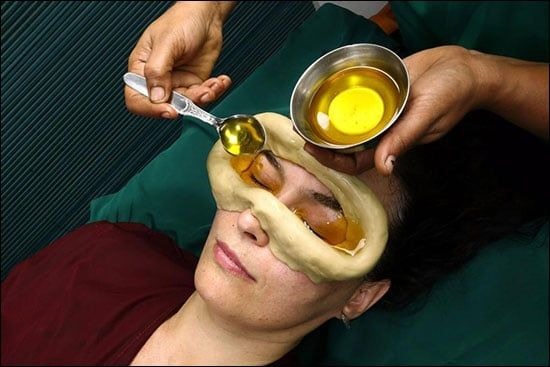
Netra Tarpana is a traditional Ayurvedic eye therapy in which medicated preparations are used around the eyes under professional supervision.
It is traditionally included among Ayurvedic approaches to eye care and is often searched for by people looking for Netra Tarpana Bangalore or Ayurvedic eye treatment Bangalore.
The therapy should be performed according to an individual’s condition and suitability.
It should not be treated as a universal solution for every eye complaint.
If you are considering Netra Tarpana, consultation with a qualified Ayurvedic physician is important to determine whether the therapy is appropriate for you.
Netra Seka for Eye Discomfort
Another Ayurvedic procedure you may encounter is Netra Seka.
Netra Seka involves the controlled pouring of an appropriate liquid preparation over the closed eye region according to Ayurvedic therapeutic principles.
Depending on the individual’s condition, an Ayurvedic physician may consider such therapies as part of a personalized treatment plan.
However, eye procedures should never become a DIY experiment.
Your eyes are not the place to test whatever herbal mixture happens to be trending online.
What About Triphala for Eyes?
Triphala for eyes is another popular search topic.
Triphala is a traditional Ayurvedic formulation containing three fruits and has a long history of use in Ayurveda.
However, there is an important distinction between traditional use and scientifically established treatment for a specific eye disease.
Do not put homemade Triphala preparations, powders or unsterile liquids directly into your eyes.
The eye is highly sensitive, and contaminated preparations can cause irritation or infection.
If you want to use Triphala or another Ayurvedic preparation for eye health, discuss it with a qualified healthcare professional first.
Can Screen Time Cause Eye Strain?
Yes, prolonged screen use can contribute to eye discomfort.
When concentrating on a screen, people often blink less frequently. This can contribute to dryness and irritation.
You can make your screen routine more eye-friendly by:
- Taking regular breaks
- Looking away from the screen periodically
- Adjusting screen brightness
- Reducing glare
- Keeping the screen at a comfortable distance
- Maintaining appropriate lighting
- Blinking regularly
- Getting adequate sleep
- Having your vision checked when necessary
You do not necessarily need to abandon your laptop and return to writing reports on palm leaves.
A few sensible habits can make screen-heavy work more comfortable.
Dry Eyes: Can Ayurveda Help?
Dryness can occur when the eyes do not produce enough tears or when tears evaporate too quickly.
Symptoms may include:
- Burning
- Gritty sensation
- Redness
- Watery eyes
- Irritation
- Fluctuating vision
- Sensitivity to light
People searching for dry eye syndrome Ayurvedic treatment may find various traditional therapies and herbal recommendations online.
Some Ayurvedic approaches may be considered as complementary care depending on the individual’s condition.
But persistent dry eye symptoms deserve proper assessment because dry eye can have multiple causes, including medications, environmental factors, contact lens use and underlying conditions.
What About Eye Allergies?
Itchy, watery and irritated eyes may sometimes be related to allergies.
Dust, pollen, pet dander and other allergens can trigger symptoms.
An Ayurvedic treatment for eye allergies may be considered within an individualized Ayurvedic treatment plan.
However, identifying the trigger remains important.
Avoid rubbing your eyes repeatedly. It can make irritation worse.
If symptoms are severe, recurrent or associated with significant swelling or vision changes, seek appropriate medical evaluation.
Ayurvedic Treatment for Blurred Vision: Is It Appropriate?
Blurred vision is a symptom, not a diagnosis.
It may result from:
- Refractive errors
- Dry eyes
- Eye strain
- Age-related changes
- Cataract
- Diabetes-related eye disease
- Glaucoma
- Retinal conditions
- Other eye disorders
Therefore, searching for Ayurvedic treatment for blurred vision should not replace an eye examination.
If your vision suddenly becomes blurred, particularly in one eye, seek medical attention promptly.
The same principle applies to anyone considering Ayurveda for glaucoma, Ayurveda for diabetic retinopathy or Ayurveda for macular degeneration.
These are potentially serious eye conditions that require appropriate ophthalmic assessment and monitoring.
Ayurvedic care, when considered, should be complementary and professionally supervised rather than promoted as a replacement for necessary eye care.
What About Cataract and Myopia?
Two other commonly searched areas are Ayurvedic cataract treatment and Ayurveda for myopia.
Cataract involves clouding of the eye’s natural lens and can progressively affect vision.
Myopia, meanwhile, is a refractive error in which distant objects appear blurred.
These conditions require proper eye evaluation.
Ayurvedic approaches may be discussed for overall eye wellness or complementary care, but claims that Ayurvedic treatment can universally reverse cataracts or eliminate myopia should be treated cautiously.
There is no reason to gamble with your eyesight because somebody on social media discovered a miracle ingredient yesterday.
Can Ayurveda Help With Presbyopia?
Presbyopia is an age-related change in the eye’s ability to focus on nearby objects.
You may notice that:
- Small text becomes difficult to read
- You hold your phone farther away
- Reading causes eye fatigue
- You need brighter light
- Near objects become increasingly blurry
Ayurveda for presbyopia may involve traditional approaches to maintaining overall eye wellness.
However, age-related focusing changes should be properly assessed, and corrective lenses may be necessary.
What About Stye and Chalazion?
A stye or chalazion can cause a lump or swelling around the eyelid.
People sometimes search for Ayurvedic treatment for stye and chalazion because they want to avoid conventional treatment.
But not every eyelid lump is the same.
Avoid squeezing it or applying unverified herbal preparations around the eye.
If the swelling persists, becomes painful, affects vision or repeatedly returns, consult an appropriate healthcare professional.
Can Shirodhara or Nasyam Help Eye Strain?
Ayurvedic therapies such as Shirodhara for eye strain and Nasyam for eye health are sometimes discussed in traditional wellness approaches.
Whether a particular therapy is appropriate depends on the individual’s health status and Ayurvedic assessment.
These treatments should not be selected simply because a list online says they are “good for the eyes.”
A qualified practitioner should determine whether the therapy is suitable and how it should be administered.
What About Amblyopia and Optic Atrophy?
Conditions such as amblyopia and optic atrophy require particular caution.
Ayurveda for amblyopia and Ayurveda for optic atrophy may appear in online searches, but these conditions should not be approached as routine eye strain.
Amblyopia involves abnormal visual development, while optic atrophy involves damage to the optic nerve.
Appropriate ophthalmic or neurological evaluation may be necessary depending on the condition.
Ayurvedic consultation can be considered as complementary support where appropriate, but it should never delay necessary diagnosis or treatment.
Can Ayurveda Also Help With Ear and ENT Problems?
Interestingly, Shalakya Tantra is not limited to the eyes.
It traditionally encompasses areas involving the eyes, ears, nose and throat.
This is why you may also encounter searches such as:
- Ayurvedic ENT treatment
- Ayurvedic treatment for tinnitus
- Ayurvedic ENT specialist Bangalore
Tinnitus, for example, can have many possible causes.
If you experience persistent ringing, buzzing or other sounds in your ears, professional assessment is important, particularly if the symptom is sudden, one-sided or associated with hearing loss, dizziness or neurological symptoms.
Simple Ayurvedic Eye Care Habits You Can Start Today
You do not need a complicated routine to start taking better care of your eyes.
Focus on practical habits:
1. Give Your Eyes Regular Breaks
If you work continuously on a computer, periodically look away and focus on something farther away.
2. Protect Your Sleep
Poor sleep can leave you feeling exhausted, including around your eyes.
Aim for a consistent sleep schedule.
3. Stay Hydrated
Adequate fluid intake supports general health and may be useful when managing dryness related to lifestyle factors.
4. Avoid Rubbing Your Eyes
Especially if your eyes are itchy.
Rubbing can increase irritation and may worsen allergy-related symptoms.
5. Maintain Good Screen Habits
Adjust brightness, reduce glare and keep the screen at a comfortable viewing distance.
6. Do Not Self-Apply Herbal Preparations
Natural does not automatically mean sterile, safe or suitable for your eyes.
This is particularly important for anything intended to go directly into the eye.
When Should You See an Eye Doctor?
Tired eyes after a long workday may be manageable with rest and better screen habits.
But certain symptoms should not be ignored.
Seek professional eye evaluation if you experience:
- Persistent blurred vision
- Sudden vision changes
- Severe eye pain
- Significant redness
- Light sensitivity
- Flashes of light
- New or increasing floaters
- Loss of vision
- Persistent swelling
- Recurrent eye infections
- Eye symptoms associated with diabetes
If you are searching for an Ayurvedic eye doctor Bangalore, choose a qualified practitioner who takes your medical history seriously and understands when referral to an ophthalmologist is necessary.
Choosing an Ayurvedic Eye Clinic in Bangalore
If you search for an Ayurvedic eye clinic Bangalore, Ayurvedic eye treatment Bangalore or Netra Tarpana Bangalore, do not choose solely based on rankings, reviews or dramatic treatment claims.
Look for a centre that:
- Has qualified Ayurvedic physicians
- Performs individual assessment
- Explains the proposed treatment
- Maintains appropriate hygiene
- Considers existing medical conditions
- Provides professional supervision
- Refers patients when specialist evaluation is required
If travelling to a clinic is difficult, Ayurveda online consultation may be an initial option for discussing symptoms and determining whether an in-person assessment is required.
For ENT concerns, the same principle applies when looking for an Ayurvedic ENT specialist Bangalore.
Ayurvedic Eye Treatment at Healing Earth Ayurveda Hospital
At Healing Earth Multi-Specialty Ayurveda Hospital, Ayurvedic care is planned according to the individual’s condition rather than using one treatment for everyone.
For patients experiencing eye strain, dryness or other concerns, an Ayurvedic consultation can help understand symptoms, lifestyle factors and existing health conditions before deciding whether any Ayurvedic therapy is appropriate.
Depending on the assessment, traditional approaches such as Netra Chikitsa, Netra Tarpana or Netra Seka may be considered where clinically appropriate.
The objective is not to promise a miracle cure.
It is to provide responsible, individualized Ayurvedic care while recognizing when conventional ophthalmic evaluation or referral is necessary.
Looking for Ayurvedic eye treatment in Bangalore? Consult a qualified Ayurvedic physician before starting any eye therapy or herbal preparation.
Book a Consultation with Healing Earth Ayurveda Hospital
Frequently Asked Questions
Why are my eyes always tired?
Tired eyes can be associated with prolonged screen use, reduced blinking, inadequate sleep, dry eyes, allergies, uncorrected vision problems and prolonged visual concentration. Persistent symptoms should be evaluated to identify the underlying cause.
Can Ayurveda help with tired eyes?
Ayurveda may offer individualized approaches to eye care, including traditional therapies such as Netra Chikitsa, Netra Tarpana and Netra Seka. Their suitability depends on the individual’s condition.
What is Netra Tarpana?
Netra Tarpana is a traditional Ayurvedic eye therapy involving a suitable medicated preparation around the eyes under professional supervision. It should be performed only when considered appropriate for the individual.
Is Triphala good for the eyes?
Triphala has a long history of traditional Ayurvedic use. However, this does not mean that Triphala can treat every eye disease. Avoid putting homemade or unsterile preparations into your eyes.
Can Ayurveda treat dry eyes?
Ayurvedic approaches may be considered as complementary care for some people with dry eye symptoms. However, persistent dryness should be assessed because it can have several underlying causes.
Can Ayurveda treat cataracts?
Ayurvedic approaches may be discussed for general eye wellness, but cataracts require appropriate eye evaluation. Do not delay recommended ophthalmic treatment based on claims of an Ayurvedic cure.
Can Ayurveda help with myopia?
Ayurveda may be used as part of an individualized approach to general eye wellness, but myopia is a refractive error that requires proper vision assessment and appropriate correction.
Is Netra Seka the same as Netra Tarpana?
No. They are different traditional Ayurvedic procedures. The appropriate therapy depends on the individual’s condition and should be determined by a qualified Ayurvedic physician.
Can screen time cause eye strain?
Yes. Prolonged screen use can contribute to eye strain, dryness and visual discomfort, particularly when blinking is reduced and breaks are infrequent.
Can Ayurveda treat glaucoma or diabetic retinopathy?
Conditions such as glaucoma and diabetic retinopathy require appropriate ophthalmic assessment and monitoring. Ayurvedic care should not replace necessary medical treatment.
What is Shalakya Tantra?
Shalakya Tantra is a traditional branch of Ayurveda concerned with conditions involving areas such as the eyes, ears, nose and throat.
When should I see an eye doctor?
Seek professional evaluation for persistent blurred vision, severe pain, sudden vision changes, flashes, new floaters, vision loss or other concerning symptoms.
When Should You Consider Ayurvedic Eye Care?
If your eyes feel tired after a long day of screen use, start with simple habits: take breaks, blink regularly, improve your workspace lighting, sleep adequately and avoid unnecessary eye rubbing.
But if the symptoms keep returning, don’t simply keep searching for another home remedy.
Find out why they are happening.
If you are interested in Ayurvedic eye treatment, consult a qualified Ayurvedic physician who can assess your condition and determine whether traditional therapies such as Netra Tarpana or Netra Seka are appropriate.
Your eyes have been doing unpaid overtime all day. They deserve something better than a random WhatsApp remedy.
Book an Ayurvedic Eye Consultation in Bangalore
If you are looking for Ayurvedic eye treatment Bangalore, Ayurvedic eye doctor Bangalore, Ayurvedic eye clinic Bangalore or Netra Tarpana Bangalore, Healing Earth Ayurveda Hospital offers Ayurvedic consultation and individualized treatment under professional supervision.
Book a Consultation with Healing Earth Ayurveda Hospital
Medical Disclaimer
This article is intended for general educational purposes and does not replace professional medical advice, diagnosis or treatment.
Ayurvedic medicines, herbs and therapies should be used under the guidance of a qualified healthcare professional. Do not delay appropriate ophthalmic or medical evaluation because of information presented in this article.
Sudden vision loss, severe eye pain, significant eye injury, new flashes or a sudden increase in floaters require prompt medical attention.