
Healthy vision and proper ear, nose, and throat (ENT) function are foundational to our daily quality of life. However, our modern environment characterized by skyrocketing screen times, urban pollution, chronic allergies, and high-stress lifestyles has driven a massive surge in chronic conditions above the collarbone. Issues like dry eye syndrome, recurrent sinusitis, allergic rhinitis, and chronic throat irritation have become frustratingly common.
While conventional medicine frequently leans on localized, short-term symptom management (such as antihistamines, steroid sprays, or artificial tears), classical Ayurveda targets the root systemic causes. By viewing the eyes, ears, nose, throat, and head as deeply interconnected biological networks, Ayurvedic medicine offers long-term, natural relief designed to restore equilibrium.
What is Shalakya Tantra?
In classical Ayurvedic medicine, Shalakya Tantra is one of the eight specialized branches (Ashtanga Ayurveda). It is dedicated exclusively to the diagnosis, prevention, and treatment of Urdhvajatrugata Vikara diseases occurring above the clavicle (collarbone). This includes targeted therapies for the eyes, ears, nose, throat, teeth, oral cavity, and scalp.
Much of this clinical framework stems from the Sushruta Samhita Uttaratantra, an ancient surgical and medical text. Within its pages, historical healers documented detailed anatomical maps, intricate diagnostic steps, specialized herbal formulations, and advanced instruments like the Shala Yantra (rod-like surgical probes) used for precise localized treatments.
Managing Dosha Imbalances in the Head and Neck
Ayurvedic protocols never follow a one-size-fits-all approach. Effective treatment relies on identifying which of the three doshas (Vata, Pitta, or Kapha) has become aggravated, alongside evaluating Agni (digestive fire) and the accumulation of Ama (metabolic toxins).
| Aggravated Dosha | Typical Head & Neck Manifestations | Clinical Ayurvedic Approach |
| Vata | Dry eyes (Shushkakshipaka), tinnitus, nerve-based headaches, acute ear pain. | Nourishing, lubricating, and warming therapies (Snehana) to counter dryness. |
| Pitta | Burning sensations in the eyes, acute inflammation, photophobia (light sensitivity), red rashes. | Cooling, soothing treatments, bitter herbs, and medicated Ghruta (ghee). |
| Kapha | Chronic sinus congestion, thick mucus discharge, allergic rhinitis, tonsillitis, heavy headaches. | Draining, drying, and warming procedures; mucus-eliminating herbs. |
Ayurvedic Approaches to Eye Care (Netra Roga)
Rather than treating the eye as an isolated camera lens, Ayurvedic ophthalmology recognizes it as a highly vascular tissue heavily influenced by Alochaka Pitta (the sub-dosha responsible for vision) and Prana Vayu (nervous system flow).
The Therapeutic Role of Netra Tarpana
For modern issues like digital eye strain, ocular fatigue, and chronic dry eyes, Shalakya Tantra utilizes localized rejuvenation therapies (Kriya Kalpas). The most famous of these is Netra Tarpana.
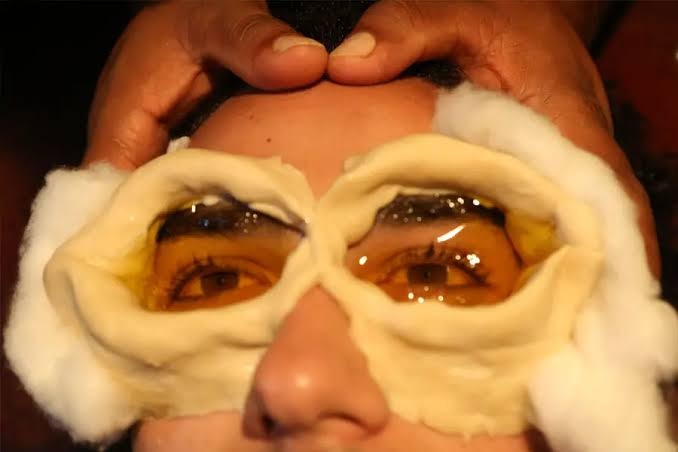
During this specialized procedure, a stable circular wall constructed from black gram (urad dal) dough is built around the patient’s eye orbit. The reservoir is gently filled with lukewarm medicated ghee (such as Triphala Ghruta), and the patient is instructed to open and move their eyes smoothly beneath the surface.
Safety Warning for Patients: While DIY tutorials for “at-home” Netra Tarpana circulate widely online, this procedure requires absolute sterility, precise temperature monitoring, and a professional assessment of your underlying doshas. It should exclusively be performed under the supervision of a certified Ayurvedic physician.
Key Chakshushya (Vision-Supportive) Herbs
Ayurvedic texts highlight a class of botanical remedies known as Chakshushya herbs, which translates directly to “that which nourishes the eyes”:
- Triphala: A legendary three-fruit formulation (Amalaki, Bibhitaki, Haritaki) frequently used as a purifying eyewash or internal tonic to balance all three doshas.
- Yashtimadhu (Licorice): Renowned for its cooling properties, making it highly effective at soothing Pitta-driven burning sensations.
- Amalaki (Indian Gooseberry): Exceptionally rich in natural antioxidants, it directly supports the macular tissues and ocular circulation.
Ayurvedic Care for ENT Conditions (Karna Nasa Shiroroga)
Chronic conditions like sinusitis and recurring upper respiratory infections typically point to deep-seated Kapha accumulation combined with weakened Vyadhikshamatva (immunity).
The Role of Nasya Therapy in Ayurvedic ENT Care
In Panchakarma therapy, the nose is considered Nasehi Siraso Dwaram—the literal gateway to the head and central nervous system. This is why Nasya therapy serves as the primary intervention for chronic sinus conditions, congestion, and allergic rhinitis.

Nasya involves administering specific, pre-warmed medicated oils (such as Anu Taila or Shadbindu Taila) or herbal juices into the nostrils after a thorough facial massage and localized steam treatment (Svedana). This process works to liquefy hardened mucus, clear obstructed sinus pathways, improve airway resistance, and soothe dry, irritated nasal membranes.
Treating Chronic Sinusitis Naturally
To provide lasting relief for chronic sinusitis, a holistic Shalakya Tantra protocol breaks down into a structured, multi-phase routine:
- Mucus Liquefaction: Regular herbal steam inhalations using volatile oils like Eucalyptus, Tulsi, or Camphor to ease tight pressure.
- Passage Cleansing: Administering physician-guided Nasya treatments to clear deep sinus recesses.
- Metabolic Correction: Prescribing warming, spice-based formulations (like Trikatu) to kindle the Agni (digestive fire), clearing the digestive system of Ama (toxins) so it cannot convert into excess respiratory mucus.
Managing Tinnitus and Hearing Loss
Ayurveda categorizes subjective ear ringing or tinnitus primarily as Karnanada, a disorder driven by an aggravated, dry, and hyper-reactive Vata dosha within the auditory canal. Clinical management centers heavily on calming nervous system hyperactivity through:
- Karna Purana: The gentle instillation of warm, Vata-pacifying medicated oils (like Bilva Taila or Apamarga Kshara Taila) directly into the ear canal to nourish the tympanic membrane and auditory nerve path.
- Internal Vata-Nasana Herbs: Utilizing adaptogenic tonics like Ashwagandha and Ginkgo Biloba to improve localized microcirculation and lower neurological stress levels.
The Broader Preventive Benefits of Ayurvedic Care
Transitioning your upper-respiratory and vision care to a Shalakya Tantra framework offers distinct therapeutic advantages over purely pharmaceutical approaches:
- Root-Cause Resolution: Therapies look past temporary symptom relief to correct the underlying metabolic and energetic imbalances.
- Synergistic Formulations: Complex herbal blends balance active botanical benefits with natural protective elements, minimizing secondary side effects.
- Customized Preventive Lifestyles: Patients receive hyper-individualized dietary guides (such as avoiding heavy, cold, or dairy-heavy foods during Kapha flares) and healthy seasonal routines (Ritucharya) to stop recurring infections before they start.
Conclusion:
Shalakya Tantra reminds us that true health above the collarbone requires systemic balance throughout the entire body. By combining specialized, deep-cleansing therapies like Nasya and Netra Tarpana with conscious dietary and lifestyle habits, you can transition away from temporary symptom management and move toward true, sustainable physical vitality.
Ready to explore a natural, root-cause approach to your vision and respiratory health? Schedule an evaluation with a certified Ayurvedic physician today to map out your personalized Shalakya Tantra wellness protocol.
Frequently Asked Questions (FAQs)
Is Ayurvedic treatment effective for chronic, long-term eye conditions?
Ayurveda can be highly effective at relieving chronic eye discomfort, stabilizing progressive vision strain, and managing dry eye syndromes. However, systemic structural issues must be individually evaluated by a qualified BAMS physician to map out realistic, safe therapeutic timelines.
How precisely does Ayurveda treat dry eyes naturally?
Dry eye syndrome (Shushkakshipaka) is treated by restoring the protective lipid layer of the tear film. This is achieved through targeted, moisturizing therapies like Netra Tarpana, internal consumption of healthy medicated fats, and lifestyle modifications designed to lower digital screen strain.
Can Nasya therapy treat a wider range of ENT conditions?
Yes. Beyond clearing standard sinus congestion and reducing the frequency of allergic rhinitis flares, Nasya is clinically indicated for tension headaches, migraines, certain types of voice hoarseness, and upper respiratory stiffness.
Start Your Journey to Better ENT and Eye Health
If you’re experiencing recurring sinus problems, dry eyes, eye strain, allergies, or other ENT and eye disorders, early Ayurvedic care can help restore balance naturally. At Healing Earth Multispeciality Ayurveda Hospital, we offer personalized treatment plans based on the principles of Shalakya Tantra, combining authentic therapies such as Nasya and Netra Tarpana with holistic lifestyle guidance for lasting relief.
Book your consultation today and take the first step toward healthier eyes, ears, nose, and throat.
Visit Healing Earth Multispeciality Ayurveda Hospital or schedule your appointment through our official website: www.healingearth.co.in
Medically Reviewed By
Dr. Farida Khanum, BAMS, MD
Chief Medical Officer
This article has been medically reviewed by Dr. Farida Khanum, Chief Medical Officer at Healing Earth Multispeciality Ayurveda Hospital. With over 15 years of Ayurvedic clinical experience, she ensures that the information published aligns with authentic Ayurvedic principles and the hospital’s commitment to evidence-informed, patient-centred care.