
Medically Reviewed by Dr. Sreelakshmi Suresh, BAMS
Resident Medical Officer, Healing Earth Multi-Specialty Ayurveda Hospital, Bangalore
About Dr. Sreelakshmi Suresh
Dr. Sreelakshmi Suresh is an Ayurvedic physician with 1.5 years of clinical experience. She completed her BAMS from SDM College of Ayurveda, Hassan, and has received specialized training in Kriyakalpa, Panchakarma, pediatric care and women’s health therapies.
Her clinical exposure includes Siravyadha, Ksharasutra, Ksharakarma, venipuncture, wound care, gynecological and proctology examinations, along with participation in Manual Small Incision Cataract Surgery (MSICS). She has also contributed to seminars and academic paper presentations and has clinical experience managing a range of acute and chronic conditions under senior specialist guidance.
Tired Eyes After a Long Day? Here Is Where Netra Seka Fits
You spend hours looking at a laptop. Then there is the phone. Then perhaps another screen before bed.
By the end of the day, your eyes may feel tired, dry, heavy or uncomfortable. While occasional eye fatigue can happen after prolonged visual activity, recurring symptoms deserve proper assessment rather than simply being ignored.
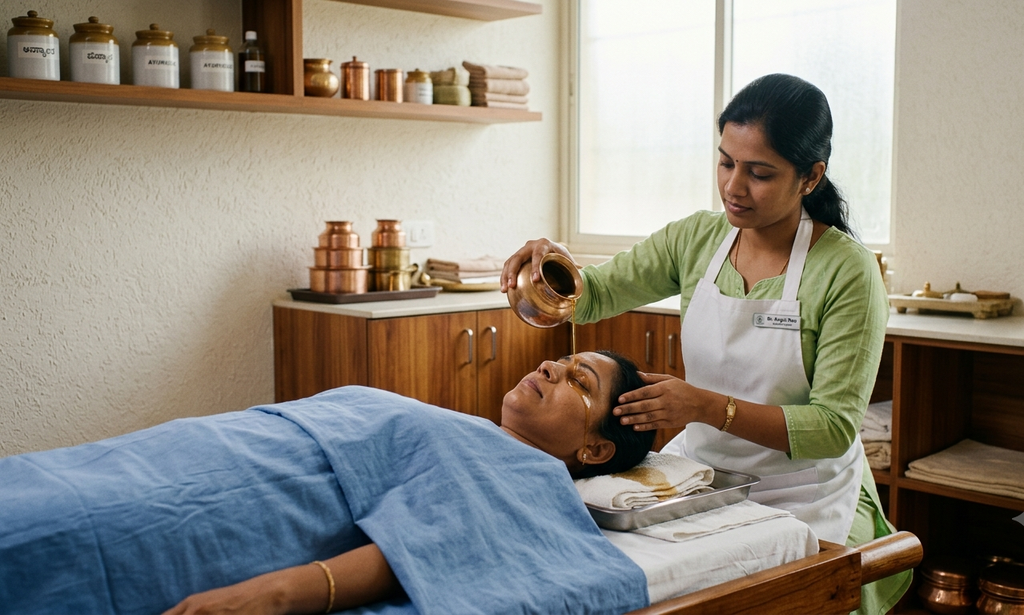
Netra Seka is a traditional Ayurvedic eye-care procedure in which a suitable liquid preparation is gently poured over and around the closed eyes under controlled conditions. It is included within the broader Ayurvedic approach known as Netra Chikitsa, with the exact procedure and preparation selected according to the individual’s condition.
But there is an important distinction: Netra Seka is not a replacement for an eye examination or treatment for serious eye diseases. Persistent blurred vision, sudden vision changes, significant eye pain, flashes, floaters or loss of vision require appropriate medical evaluation.
What Is Netra Seka?
Netra Seka is one of the traditional procedures used in Ayurvedic eye care. The treatment involves the controlled application or pouring of a suitable liquid preparation over the closed eye region.
The choice of preparation, temperature, duration and frequency depends on the person’s symptoms, health status and Ayurvedic assessment.
Netra Seka falls within the broader field of Netra Chikitsa, which focuses on traditional Ayurvedic approaches to eye care. Other procedures may also be considered depending on the individual, including Netra Tarpana and other Kriyakalpa procedures.
The important point is that Ayurvedic eye procedures are not one-size-fits-all treatments. A qualified Ayurvedic physician should determine whether a particular procedure is appropriate.
Why Do Eyes Feel Tired After a Long Day?
Eye fatigue can occur after prolonged periods of visually demanding activities, particularly extended screen use.
You may notice:
- A feeling of tired or heavy eyes
- Temporary discomfort
- Difficulty maintaining visual concentration
- Dryness or irritation
- Headache associated with prolonged visual activity
- Increased sensitivity to prolonged screen exposure
People who spend several hours working on computers or smartphones may also experience symptoms associated with computer vision syndrome Ayurveda approaches to eye care.
However, similar symptoms can occur with refractive errors, dry eye disease, allergies and other eye conditions. This is why recurring symptoms should not automatically be attributed to screen use.
How Is Netra Seka Performed?
A Netra Seka session begins with an assessment rather than immediately starting the procedure.
The physician may consider:
- Current eye-related symptoms
- Duration and frequency of symptoms
- Screen exposure
- Existing eye conditions
- Previous eye procedures or surgeries
- Current medications
- General health
- Allergies or sensitivities
- Ayurvedic assessment findings
If Netra Seka is considered appropriate, the patient is positioned comfortably and the eyes are kept closed during the procedure. A suitable preparation is then applied in a controlled manner according to the treatment plan.
The procedure should be performed by trained personnel under appropriate professional supervision.
The preparation and treatment duration should not be selected simply because a particular formulation is popular online. Eye tissues are sensitive, and treatment should be individualized.
What Are the Potential Uses of Netra Seka?
Within traditional Ayurvedic eye treatment, Netra Seka may be considered as part of an individualized eye-care programme for selected symptoms.
It may be discussed in the context of:
- Eye tiredness
- Mild discomfort associated with visual strain
- Dryness-related complaints
- General Ayurvedic eye-care routines
- Certain conditions where a physician considers Kriyakalpa appropriate
The response to treatment can vary between individuals.
There is also a difference between traditional Ayurvedic use and evidence-based treatment of diagnosed eye disease. Netra Seka should therefore be viewed as part of an individualized Ayurvedic approach rather than as a universal treatment for every eye complaint.
Netra Seka and Screen-Related Eye Strain
Long periods of uninterrupted screen use can contribute to visual discomfort.
Simple habits can complement professional Ayurvedic eye care:
- Take regular breaks from continuous screen work.
- Keep the screen at a comfortable viewing distance.
- Adjust screen brightness to the surrounding environment.
- Avoid working continuously without blinking or resting your eyes.
- Maintain adequate lighting while reading or working.
- Get an eye examination if symptoms persist or affect daily activities.
People searching for dry eye syndrome Ayurvedic treatment should first understand whether their symptoms are actually caused by dry eye disease, screen-related discomfort, allergies or another condition.
Netra Seka should not be started as a substitute for diagnosis.
Netra Seka vs Netra Tarpana
Netra Seka and Netra Tarpana are different Ayurvedic eye procedures.
Netra Seka involves controlled application or pouring of a suitable liquid preparation around the closed eyes.
Netra Tarpana is a different Kriyakalpa procedure in which the eyes are traditionally retained within a prepared enclosure containing a selected medicated substance for a prescribed period.
The choice between procedures depends on the individual’s symptoms and Ayurvedic assessment.
Searching for Netra Tarpana Bangalore may bring up several treatment options, but the procedure should be selected by a qualified practitioner rather than based solely on online descriptions.
What About Other Ayurvedic Eye Treatments?
Ayurveda has a broader system of eye care known as Netra Chikitsa. Depending on the individual’s assessment, a physician may consider different approaches.
Netra Tarpana
Netra Tarpana is traditionally used as a specialized Ayurvedic eye procedure. It should be performed under appropriate supervision with suitable preparations.
Triphala for Eyes
Triphala for eyes is a commonly discussed Ayurvedic topic. However, using homemade Triphala preparations directly in the eyes can introduce contamination or irritation.
Patients should not put homemade herbal preparations, oils or other substances into the eyes without professional guidance.
Nasyam for Eye Health
Nasyam for eye health is another area discussed within Ayurvedic practice. Nasya is traditionally administered through the nasal route and is not the same as applying a substance directly to the eyes.
Shirodhara for Eye Strain
Shirodhara for eye strain is also discussed in Ayurvedic wellness settings. It involves a different therapeutic approach and should not be confused with a direct eye treatment such as Netra Seka.
Can Netra Seka Treat Cataracts, Glaucoma or Vision Loss?
This is where online Ayurvedic content can become dangerously enthusiastic.
Terms such as Ayurvedic cataract treatment, Ayurveda for glaucoma, Ayurveda for diabetic retinopathy, Ayurveda for macular degeneration and Ayurveda for optic atrophy should not be interpreted as evidence that Netra Seka can reverse these conditions.
Cataracts, glaucoma, diabetic retinopathy, macular degeneration and optic atrophy can affect vision seriously and require appropriate ophthalmological assessment and management.
Similarly, Ayurveda for myopia, Ayurveda for presbyopia and Ayurveda for amblyopia should not be presented as a substitute for appropriate eye examinations, corrective measures or specialist treatment.
If you experience a change in vision, an eye specialist should determine the underlying cause before considering any complementary therapy.
What About Blurred Vision, Eye Allergies, Stye or Chalazion?
Blurred vision can have many causes, including refractive errors, dry eye, medication effects and eye disease.
Therefore, Ayurvedic treatment for blurred vision should not begin before the cause of the blurred vision is understood.
Similarly, people searching for Ayurvedic treatment for eye allergies should first identify the trigger and severity of the allergic reaction.
A stye or chalazion may also require appropriate evaluation, particularly when it persists, recurs or affects vision. An Ayurvedic treatment approach should not delay necessary medical care.
When Should You See an Eye Specialist?
Netra Seka is not appropriate for every eye complaint.
Seek prompt medical attention if you experience:
- Sudden loss or significant reduction of vision
- Severe eye pain
- Sudden flashes of light
- A sudden increase in floaters
- Eye injury or chemical exposure
- Significant redness with pain
- Persistent or worsening blurred vision
- New double vision
- Symptoms following eye surgery
These symptoms require proper clinical evaluation rather than self-treatment.
Netra Seka and Ayurvedic ENT Care
Ayurvedic clinics may also provide therapies relating to the ear, nose and throat under Shalakya Tantra, the Ayurvedic specialty concerned with conditions affecting areas above the clavicle.
This broader field includes traditional approaches relating to the eyes, ears, nose, throat and head.
People searching for Ayurvedic ENT treatment, Ayurvedic treatment for tinnitus or an Ayurvedic ENT specialist Bangalore should receive an appropriate assessment for their specific symptoms.
Tinnitus, hearing loss and other persistent ENT symptoms should not be self-treated based only on an online description.
Is Netra Seka Suitable for Everyone?
No.
The suitability of Netra Seka depends on the person’s symptoms, health status, eye condition and clinical assessment.
Before treatment, tell your physician about:
- Existing eye diseases
- Previous eye surgery
- Allergies
- Current medications
- Diabetes or other chronic conditions
- Recent eye infections
- Pregnancy, where relevant
- Any recent change in vision
A physician may recommend another approach or advise against the procedure depending on the findings.
How to Support Ayurvedic Eye Care at Home
Professional treatment is only one part of maintaining healthy visual habits.
You can support everyday Ayurvedic eye care by maintaining regular sleep, taking breaks from prolonged screen work, eating a balanced diet and avoiding unnecessary self-application of herbal preparations to the eyes.
Do not use household oils, herbal liquids or homemade eye washes directly in the eyes without professional guidance.
If you regularly experience eye discomfort, an examination is more useful than repeatedly changing home remedies.
Why Choose Professional Ayurvedic Eye Care in Bangalore?
If you are searching for Ayurvedic eye treatment Bangalore, Ayurvedic eye doctor Bangalore or an Ayurvedic eye clinic Bangalore, look for a qualified practitioner who assesses your symptoms before recommending a procedure.
At Healing Earth Multi-Specialty Ayurveda Hospital, Ayurvedic treatment is planned according to individual clinical assessment rather than applying the same procedure to every patient.
For patients considering Netra Seka, the physician can evaluate whether it is appropriate or whether the symptoms require another form of care or referral.
Those who cannot immediately visit a clinic may also explore an Ayurveda online consultation where available. However, an online consultation may not replace an in-person eye examination when physical examination or specialist assessment is required.
Frequently Asked Questions
What is Netra Seka in Ayurveda?
Netra Seka is a traditional Ayurvedic eye-care procedure involving controlled application or pouring of a suitable liquid preparation over the closed eye region. It is selected according to the individual’s condition and Ayurvedic assessment.
Is Netra Seka useful for tired eyes?
Netra Seka may be considered as part of Ayurvedic care for selected complaints involving eye tiredness or discomfort. Persistent symptoms should first be assessed to identify the underlying cause.
What is the difference between Netra Seka and Netra Tarpana?
Both are traditional Ayurvedic eye procedures, but they are performed differently. Netra Seka involves controlled application of a liquid preparation, while Netra Tarpana involves retaining a selected preparation around the eyes for a prescribed period.
Can Netra Seka treat dry eye syndrome?
Netra Seka should not be promoted as a guaranteed treatment for dry eye disease. Anyone with persistent dryness should receive an appropriate eye assessment before considering Ayurvedic treatment.
Can I use Triphala directly in my eyes?
Do not put homemade Triphala preparations or other herbal substances directly into your eyes without professional guidance. Contamination or irritation can cause harm.
Can Netra Seka replace eye drops or ophthalmic treatment?
No. Netra Seka should not automatically replace prescribed eye drops or ophthalmological treatment. Follow the treatment recommended by your eye-care professional.
Can Netra Seka treat cataracts or glaucoma?
Netra Seka should not be presented as a replacement for appropriate diagnosis or treatment of cataracts, glaucoma or other serious eye diseases. These conditions require qualified medical evaluation.
How often can Netra Seka be performed?
There is no universal frequency. The physician should determine the duration and frequency based on the individual’s symptoms, health and treatment plan.
When to Consider a Consultation
If your eyes frequently feel tired after working on a computer, using a smartphone or performing prolonged close-up work, don’t assume that the problem is simply “screen fatigue.”
A proper assessment can help distinguish everyday eye strain from conditions such as dry eye, refractive errors, allergies or other eye disorders.
For those interested in Netra Seka, an Ayurvedic consultation can help determine whether the procedure is appropriate and whether additional evaluation is needed.
Book an Ayurvedic Consultation in Bangalore
Healing Earth Multi-Specialty Ayurveda Hospital provides Ayurvedic consultation and traditional therapies under qualified medical supervision.
If you are looking for Netra Seka in Bangalore, discuss your symptoms with an Ayurvedic physician before beginning treatment.
Book a Consultation with Healing Earth Ayurveda Hospital
Medical Disclaimer
This article is intended for general educational purposes and does not replace professional medical advice, diagnosis or treatment.
Netra Seka and other Ayurvedic procedures should be recommended only after an appropriate individual assessment. This article does not claim that Netra Seka can cure, reverse or prevent cataracts, glaucoma, diabetic retinopathy, macular degeneration, optic atrophy, myopia, presbyopia, amblyopia or other eye diseases.
Do not stop prescribed eye medication or delay ophthalmological care in favour of an Ayurvedic procedure. Seek prompt medical attention for sudden vision changes, severe eye pain, eye injury or other concerning symptoms.