
You wake up in the morning and feel a familiar ache in your back. Getting out of bed takes a little longer than it used to. You move around, take a warm shower, and gradually feel better. By evening, however, the pain is back.
Perhaps it is your knees that hurt when you climb the stairs. Maybe your shoulders feel stiff after hours at work, or your joints ache after a short walk. You rest for a while, feel some relief, and carry on with your day.
Then the discomfort returns.
When pain becomes a regular part of your life, even simple activities can start to feel like a challenge. You may find yourself avoiding exercise, changing the way you sit, or turning down plans because you are unsure how your body will feel.
The frustrating part is not knowing when the pain will return or how long the relief will last.
If this sounds familiar, you may have started looking beyond your usual approach to pain management. Perhaps you have come across Panchakarma, a traditional Ayurvedic system of therapeutic procedures, and wondered whether it could help.
What is Panchakarma, how does the treatment work, and can it help with recurring pain?
These are important questions to ask before considering any treatment. Panchakarma is used in traditional Ayurveda for selected health concerns, but it is not a guaranteed solution for every type of pain. Its suitability depends on the underlying condition, the procedures involved, and your overall health.
Understanding the treatment, its potential benefits and its limitations can help you decide whether an Ayurvedic consultation is worth exploring.
What Is Panchakarma, and Why Is It Used in Ayurveda?
Panchakarma is a traditional Ayurvedic system of therapeutic procedures intended to address specific health concerns through an individualised treatment plan.
The word Panchakarma is commonly translated as “five actions.” In classical Ayurveda, it refers to a group of procedures traditionally used to support the management of selected health conditions.
Unlike a regular oil massage, Panchakarma treatment may involve an initial assessment, preparatory therapies, specific procedures and a recovery phase. The exact plan varies according to the person’s condition and the practitioner’s assessment.
In Panchakarma in Ayurveda, treatment is traditionally planned with attention to factors such as:
- The type, location and duration of the pain.
- The person’s age, general health and physical capacity.
- Existing medical conditions and prescribed medication.
- Dietary habits, daily routine and activity levels.
- The intended purpose and suitability of the proposed procedures.
Why does this individual approach matter?
Because back pain, knee pain and muscle stiffness can have very different causes. Pain may be related to muscle strain, osteoarthritis, an injury, nerve compression or another medical condition. A treatment that may be appropriate for one person could be unsuitable for another.
For example, someone experiencing muscle discomfort after prolonged sitting may need a different approach from someone with persistent knee pain caused by arthritis.
An Ayurvedic practitioner should therefore assess the person’s symptoms before recommending Panchakarma therapy. Medical evaluation may also be necessary to identify the cause of the pain and determine which treatments are appropriate.
Can Panchakarma Help With Chronic Pain?
Panchakarma may be considered as part of an individualised Ayurvedic care plan for certain pain-related conditions. However, the available clinical evidence varies considerably across the different procedures and conditions.
In traditional Ayurvedic practice, selected therapies are used to address concerns such as joint discomfort, stiffness and restricted movement. Some procedures involve therapeutic oil applications, while others are more intensive and require specific preparation and supervision.
For some people, a suitable treatment may offer temporary relief or improve comfort. However, it is important not to assume that every Panchakarma procedure will reduce pain or that any improvement will last.
The potential benefit depends on several factors:
The underlying cause of the pain: Muscle soreness, osteoarthritis and nerve-related pain require different assessments and treatment approaches.
The procedure selected: Not every Panchakarma therapy is intended for the same condition. The choice should be based on clinical assessment rather than a standard package.
Your general health: Existing illnesses, medication, age and physical capacity can affect whether a procedure is safe.
Other aspects of treatment: Appropriate exercise, rehabilitation, activity modification and medical care may remain important even when someone chooses complementary Ayurvedic treatment.
It is also worth distinguishing temporary comfort from treating the underlying cause. Feeling less stiff after a warm oil application does not necessarily mean that joint damage, nerve compression or another underlying condition has improved.
If you have been experiencing pain for weeks or months, the first step is to understand why it keeps returning. Panchakarma may be one option to discuss with a qualified practitioner, but it should not replace necessary medical evaluation or evidence-based treatment.
Which Panchakarma Therapies May Be Relevant to Pain?
One reason people explore Ayurvedic Panchakarma is that it includes different procedures rather than relying on a single treatment for every complaint.
The procedures described below have traditional uses in Ayurveda. Their suitability and the strength of clinical evidence for pain relief differ, so they should not be treated as interchangeable therapies.
1. Snehana: Therapeutic Oil Application
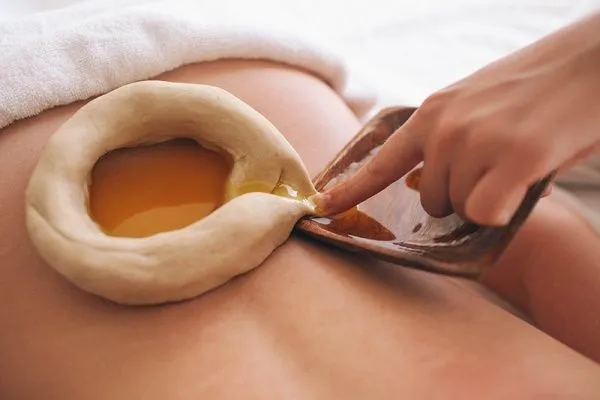
Snehana is a traditional Ayurvedic procedure involving oleation, commonly through the application of oil or other prescribed substances. Depending on the treatment plan, it may involve external oil application or other forms of oleation.
External oil application is often associated with Abhyanga, the traditional Ayurvedic oil massage.
Why might this interest someone with recurring muscle discomfort?
When your back or shoulders feel tight after a long day, gentle massage and warmth may provide temporary comfort. A supervised oil application may also give you an opportunity to rest and relax.
However, the effects of massage should not be confused with proof that Snehana treats the underlying cause of chronic pain. Evidence for massage and related therapies varies according to the condition, technique and treatment schedule.
The practitioner should also consider whether massage is appropriate. Areas affected by acute injury, infection, significant inflammation or certain skin conditions may require a different approach.
2. Swedana: Traditional Therapeutic Heating

Swedana refers to traditional Ayurvedic heating or sudation procedures. Depending on the method, these may involve controlled warmth or herbal steam.
The treatment is traditionally used in Ayurveda as part of certain therapeutic plans, including preparation before selected procedures.
Warmth can feel soothing for some people experiencing muscle tension or stiffness. However, a comfortable sensation during treatment does not establish that Swedana can treat every condition associated with pain.
Heat may be unsuitable in some circumstances, particularly when an injury is recent or the affected area is acutely inflamed. People with reduced sensation, circulation problems or conditions that affect temperature regulation may also need additional precautions.
A qualified practitioner should determine whether the procedure is appropriate and explain how it will be performed safely.
3. Basti: A Traditional Ayurvedic Procedure
Basti is one of the major procedures described in classical Panchakarma. It generally involves the administration of prescribed substances through the rectum under appropriate clinical supervision.
In traditional Ayurvedic practice, Basti is used for selected indications, including certain conditions associated with joint and musculoskeletal complaints.
However, Basti is not equivalent to an ordinary massage or relaxation treatment. It is an internal procedure that requires careful assessment, appropriate preparation and professional supervision.
Claims that Basti can cure chronic back pain, arthritis or nerve-related conditions should be approached cautiously. Strong clinical evidence establishing its effectiveness for these conditions remains limited.
The practitioner should explain why Basti is being considered, what the procedure involves, its potential risks and whether other treatment options are more appropriate.
4. Other Procedures Based on Individual Assessment
Classical Panchakarma may also include procedures such as Vamana, Virechana, Nasya and Raktamokshana, although the procedures included in a treatment plan can vary.
These are not all pain treatments, and they should not be prescribed simply because someone experiences recurring discomfort.
For example, Vamana and Virechana involve therapeutic elimination procedures, while Nasya involves the administration of prescribed substances through the nose. Each has distinct traditional indications, precautions and potential risks.
The important question is not how many procedures a treatment package contains. It is whether a specific procedure is appropriate for your condition and whether its expected benefits justify the risks.
What Are the Panchakarma Treatment Steps?
If you are considering Panchakarma for pain relief, you may be wondering what actually happens after you book a consultation.
The Panchakarma procedure is not identical for everyone. Some people may be considered for selected external therapies, while others may be advised against intensive procedures because of their medical history or current symptoms.
Broadly, the Panchakarma treatment steps may involve the following stages.
Step 1: Initial Consultation and Assessment
The first step is understanding the pain rather than immediately starting treatment.
The practitioner should ask where the pain occurs, when it started, what makes it worse and whether it affects your sleep, work or movement.
You should also share information about existing diagnoses, previous injuries, prescribed medication, supplements and other treatments you have tried.
Depending on your symptoms, a conventional medical assessment may be necessary before proceeding. Sudden severe pain, new weakness, significant swelling or pain associated with fever should not be managed through an Ayurvedic treatment plan alone.
Step 2: Purvakarma, or Preparation
Purvakarma refers to preparatory procedures traditionally performed before selected main Panchakarma interventions.
Two procedures commonly discussed during this stage are Snehana and Swedana.
Snehana may involve prescribed oil application, while Swedana involves selected heating or sudation procedures. Their use depends on the treatment plan, and not everyone requires both.
Preparation is intended to support the planned procedure within the traditional Ayurvedic framework. It should be prescribed according to the person’s health and the intended treatment.
It is not a universal detox routine that everyone needs to complete.
Step 3: The Selected Therapeutic Procedure
After the assessment and any necessary preparation, the practitioner may recommend a specific procedure if it is appropriate.
The treatment may involve one or more traditional interventions, depending on the person’s condition and the plan established during consultation.
Before starting, ask what the procedure is intended to achieve, what you may experience during treatment, how discomfort or side effects will be managed, and what alternatives are available.
You should also understand whether the treatment is expected to complement existing medical care or whether the practitioner is proposing changes that need to be discussed with your other healthcare providers.
Step 4: Recovery and Follow-Up
Recovery is an important part of treatment planning, particularly after more intensive procedures.
The practitioner may provide instructions about meals, hydration, rest, physical activity and follow-up appointments, depending on the procedure performed.
It is important to follow individualised instructions rather than relying on a general Panchakarma diet or recovery routine found online.
Follow-up also provides an opportunity to review whether your symptoms have changed. If the pain persists, becomes worse or affects your daily functioning, the treatment plan may need to be reassessed.
Panchakarma Preparation: What Should You Know Before Starting?
Preparation involves more than deciding what day to attend the hospital. Depending on the proposed procedures, it may require changes to your routine and a discussion of your health history.
Before beginning Panchakarma treatment, keep the following points in mind.
- Share your medical history: Explain any existing conditions, previous surgeries, injuries and allergies.
- Discuss your medication: Tell the practitioner about prescribed medicines, supplements and herbal products you currently use.
- Ask about dietary changes: Do not begin fasting, restrictive diets or intensive cleansing practices without appropriate clinical guidance.
- Understand the proposed procedure: Ask about the purpose, expected effects, possible side effects and recovery requirements.
- Discuss your physical limitations: Make sure the practitioner knows if you have difficulty walking, reduced sensation, balance problems or other mobility concerns.
- Plan for recovery: Some procedures may require time away from strenuous activities, depending on your condition and the treatment performed.
People with significant medical conditions may need additional assessment before undergoing certain procedures. Pregnancy, frailty, dehydration, nutritional problems and conditions affecting the heart, kidneys or other organs can influence treatment suitability.
Natural or traditional treatments are not automatically risk-free. Preparation should be guided by a qualified professional who understands the proposed procedures and your health circumstances.
What Are the Potential Panchakarma Benefits for People With Recurring Pain?
When people search for Panchakarma benefits, they often want to know one thing: Will I finally be able to move more comfortably and get through the day without constantly thinking about pain?
That is an understandable concern, especially when discomfort has continued for a long time.
In traditional Ayurvedic practice, Panchakarma is used within treatment plans for selected health concerns. Depending on the procedure and the individual’s condition, potential areas of interest may include:
Temporary relief from muscle tension: Some external therapies, including massage, may help certain people feel more comfortable in the short term.
Attention to movement and daily habits: A consultation may encourage people to review activity levels, posture, rest and other factors that influence their symptoms.
An individualised treatment plan: An assessment can help clarify which procedures are being considered and why they may or may not be appropriate.
Ongoing review of symptoms: Follow-up appointments can help assess whether the person’s comfort, mobility or ability to carry out daily activities has changed.
These are potential supportive aspects of care, not proof that Panchakarma directly treats the cause of chronic pain.
There is no guarantee that every patient will experience pain relief, improved mobility or lasting results. Evidence also varies between individual Ayurvedic procedures, and findings from one therapy should not be applied to all Panchakarma treatments.
A more useful question to ask your practitioner is: Which improvement are we trying to achieve, and how will we assess whether the treatment is helping?
For example, you might track how comfortably you walk, whether you can climb stairs more easily or how much the pain interferes with your sleep.
Clear goals can help you and your healthcare team make more informed decisions about continuing, modifying or stopping a treatment.
How Long Does Panchakarma Take?
There is no single answer to the question, “How long does Panchakarma take?”
The duration depends on the procedures selected, the person’s health, the treatment setting and the time required for preparation and recovery.
A plan involving selected external therapies may differ considerably from a plan involving more intensive traditional procedures. Some treatments are performed during individual sessions, while others may require a longer supervised schedule.
Before beginning, ask the practitioner to explain:
- How many sessions or treatment days are being proposed.
- Whether preparatory procedures are necessary.
- How much time recovery may require.
- Whether you need to make temporary changes to your work or activity schedule.
- When your symptoms and progress will be reviewed.
Be cautious of anyone promising that a fixed number of Panchakarma sessions will eliminate chronic pain. The response to treatment varies, and the underlying cause of the pain remains an important consideration.
Is Panchakarma Suitable for Every Type of Pain?
No. Pain is a symptom, not a diagnosis, and different causes require different approaches.
| Type of pain | What to consider |
| Muscle discomfort after prolonged sitting | Activity changes, appropriate movement and selected therapies may help, depending on the cause. |
| Persistent lower back pain | Assessment may be needed to identify muscular, joint, nerve-related or other causes. |
| Knee pain associated with osteoarthritis | Exercise, physiotherapy and appropriate medical management remain important. |
| Pain following an injury | The injury should be assessed before massage, heat or other procedures are considered. |
| Pain with numbness or weakness | Medical evaluation is important, particularly if symptoms are new or worsening. |
| Sudden, severe or unexplained pain | Prompt medical assessment is necessary rather than relying on Panchakarma alone. |
Panchakarma should not be considered a substitute for necessary investigations, medication, physiotherapy or other evidence-based care.
Seek emergency medical attention if back pain occurs with new bladder or bowel control problems, numbness around the groin or new or progressive leg weakness. Severe pain accompanied by fever, major trauma or other concerning symptoms also warrants prompt assessment.
If your pain is persistent but not an emergency, a healthcare professional can help identify its likely cause and discuss suitable treatment options. You can then explore whether an Ayurvedic approach has a reasonable role in your overall care.
Panchakarma vs. Regular Pain Management: What Should You Know?
When pain returns repeatedly, it is natural to look for something that offers more lasting relief. However, choosing between treatment options should depend on the cause of the pain rather than on whether an approach is described as natural or traditional.
| Approach | Potential role | Important consideration |
| Panchakarma therapy | May be considered for selected conditions within traditional Ayurvedic care | Evidence for specific pain conditions is limited or variable. |
| Massage and heat therapy | May provide temporary relief for some types of muscle discomfort | Not suitable for every injury or medical condition. |
| Physiotherapy and exercise | Can support strength, mobility and function for many musculoskeletal conditions | Exercises should be tailored to the diagnosis and physical capacity. |
| Medication | May help manage certain types of pain | Choice depends on the condition, other medicines and potential side effects. |
| Medical assessment | Helps identify the cause of persistent or unexplained pain | Important before starting a treatment that may be unsuitable for the underlying condition. |
These approaches are not necessarily mutually exclusive. In some cases, complementary care may be considered alongside conventional treatment, provided the healthcare professionals involved understand the plan and any potential risks.
The priority is to find a safe and appropriate way to manage the pain, preserve mobility and address the underlying condition where possible.
Exploring Panchakarma Treatment at Healing Earth Ayurveda Hospital, Bangalore
Living with recurring pain can make everyday tasks feel harder than they should. You may find yourself planning your day around your symptoms, avoiding activities you once enjoyed or worrying about whether the discomfort will return.
If you are exploring Ayurvedic care, the first step is not to assume that Panchakarma is the answer. It is to understand your condition and discuss which treatment options may be appropriate.
At Healing Earth Ayurveda Hospital in HSR Layout, Bangalore, you can enquire about an Ayurvedic consultation to discuss your symptoms and learn about the available treatment options.
During your consultation, explain where the pain occurs, how long you have experienced it and whether it affects your movement, sleep or daily activities. Share details of any previous diagnosis, ongoing treatment and medication.
If Panchakarma is being considered, ask the practitioner to explain the proposed procedures, preparation requirements, expected duration, potential risks and limitations of the available evidence.
The right plan should be based on your individual assessment, not on the assumption that everyone with joint pain, back pain or stiffness needs the same treatment.
Looking for guidance on recurring pain?
Contact Healing Earth Ayurveda Hospital to enquire about a consultation and discuss whether an Ayurvedic approach may be suitable for your condition.
The goal is to make an informed decision about your health, with realistic expectations and appropriate medical care.
Frequently Asked Questions About Panchakarma for Pain Relief
1. What is Panchakarma, and how does it work?
Panchakarma is a traditional Ayurvedic system of therapeutic procedures used for selected health concerns. Depending on the treatment plan, it may involve preparation, specific procedures and recovery guidance. The process should be individualised according to the person’s health and clinical assessment.
2. Can Panchakarma help with chronic pain?
Panchakarma may be considered within traditional Ayurvedic care for selected pain-related conditions. However, evidence for pain relief varies by procedure and condition. It should not be regarded as a guaranteed cure or a replacement for necessary medical treatment.
3. What are the main Panchakarma benefits?
Potential areas of interest include temporary comfort from certain external therapies, attention to daily habits and an individualised treatment plan. The actual benefits depend on the person’s condition and the procedure performed. Lasting pain relief is not guaranteed.
4. What are the stages of Panchakarma?
The broad stages may include an initial consultation, Purvakarma or preparatory procedures, selected therapeutic interventions and recovery with follow-up. Not every person requires the same procedures or treatment schedule.
5. What is Purvakarma in Panchakarma treatment?
Purvakarma refers to traditional preparatory procedures performed before selected Panchakarma interventions. These may include Snehana, involving oleation, and Swedana, involving heating or sudation. The preparation depends on the treatment plan and the individual’s health.
6. How long does Panchakarma take?
The duration varies according to the procedures selected, the person’s health and the preparation and recovery required. Ask your practitioner for an individualised schedule rather than relying on a fixed duration advertised for every patient.
7. Is Panchakarma preparation necessary for everyone?
No. Preparation depends on the planned procedure. Some people may require traditional preparatory therapies, while others may not be suitable for particular interventions. Preparation should always be prescribed by a qualified practitioner.
8. Is Panchakarma suitable for knee pain and back pain?
It may be considered as complementary care in selected cases, but suitability depends on the cause and severity of the pain. Persistent symptoms, injuries, numbness or weakness require appropriate medical assessment before treatment is selected.
9. Is Panchakarma safe for everyone?
No. Certain procedures may carry risks or be unsuitable for people with specific medical conditions. A qualified practitioner should review your health history, medication and physical capacity before recommending treatment.
10. Can Panchakarma replace pain medication or physiotherapy?
Panchakarma should not automatically replace prescribed medication, physiotherapy or other recommended treatment. If you are considering complementary Ayurvedic care, discuss it with your healthcare team. Do not stop prescribed medication without advice from the clinician responsible for your care.
Final Thoughts: Recurring Pain Deserves More Than Guesswork
When pain keeps returning, it can gradually change the way you live. You may begin avoiding certain movements, reducing your activities or accepting discomfort as something you simply have to live with.
But recurring pain deserves attention, particularly when it affects your sleep, mobility or ability to carry out everyday tasks.
Panchakarma offers a traditional Ayurvedic framework involving different procedures, some of which may be considered for selected pain-related conditions. However, the evidence supporting these procedures varies, and no treatment can guarantee relief for everyone.
Start by understanding the possible cause of your pain. Ask questions about the treatments available, what they are expected to achieve and how their benefits and risks compare with other options.
If you are interested in Ayurvedic Panchakarma, a consultation with a qualified practitioner can help you explore its possible role in your care. Continue appropriate medical treatment and seek further assessment if symptoms persist or worsen.
The aim is not simply to try another treatment. It is to find a safe, informed approach that helps you manage your symptoms and maintain your quality of life.
Medical Disclaimer
This article is intended for general educational purposes only. It does not replace professional medical advice, diagnosis or treatment. Evidence supporting Panchakarma and its individual procedures for chronic pain varies by condition and remains limited for many applications.
Consult a qualified healthcare professional if you experience persistent, severe or unexplained pain. Discuss any Ayurvedic procedure or herbal preparation with an appropriate practitioner, particularly if you have an existing medical condition or take prescribed medication. Do not delay necessary medical evaluation or discontinue prescribed treatment in favour of complementary therapies.