
You finish a long day of work, close your laptop, and expect your eyes to feel better. Instead, they still burn. Your eyelids feel heavy, reading becomes uncomfortable, and even looking at your phone for a few minutes seems exhausting.
Perhaps you have tried resting your eyes, adjusting your screen brightness, or using eye drops. The discomfort keeps returning, leaving you wondering whether there is another approach worth exploring.
If this sounds familiar, you are not alone. Long hours in front of digital screens, dry environments, allergies, contact lenses, and uncorrected vision problems can all contribute to eye discomfort.
While conventional eye care remains essential for identifying and treating the underlying cause, some people also explore traditional approaches to eye wellness. One such practice is Netra Seka, an Ayurvedic eye therapy that involves the controlled pouring of a suitable liquid preparation over the closed eye region under professional supervision.
But what exactly happens during Netra Seka? What is it traditionally used for, and could it be appropriate for someone experiencing tired or irritated eyes?
Before deciding whether this treatment deserves your attention, it helps to understand what it involves, what its limitations are, and when an eye examination should come first.
What Is Netra Seka in Ayurveda?
Netra Seka is a traditional Ayurvedic procedure associated with eye care. It involves gently pouring a suitable liquid preparation over the closed eye region in a controlled manner, following the principles of Ayurvedic practice.
Within Ayurveda, eye-related therapies fall under Netra Chikitsa, which forms part of Shalakya Tantra. This branch traditionally addresses conditions involving the eyes, ears, nose, throat, and related structures.
Netra Seka may be considered by an Ayurvedic practitioner when assessing certain complaints involving eye discomfort. However, its suitability depends on the person’s symptoms, medical history, and the cause of the problem.
It is important to understand one distinction: a therapy’s traditional use does not automatically establish that it can treat a specific eye disease. High-quality clinical evidence demonstrating the effectiveness and safety of Netra Seka for particular eye conditions remains limited.
If your eyes hurt frequently, the first step is to understand why. A qualified healthcare professional can help determine whether the problem relates to screen use, dryness, an infection, a vision issue, or another condition requiring treatment.
Why Do Your Eyes Feel Uncomfortable Even After Rest?
Eye discomfort does not always disappear after a good night’s sleep. Sometimes, the cause is connected to your daily routine. In other cases, it may point to an underlying eye condition.
Here are some common reasons your eyes may feel tired, irritated, or uncomfortable.
1. Long Hours in Front of Screens
When you concentrate on a laptop or mobile phone, you may blink less frequently than usual. This can contribute to tear evaporation, dryness, and irritation.
People experiencing these symptoms often search for Computer vision syndrome Ayurveda because they want to explore different approaches to screen-related eye discomfort.
Before considering a traditional therapy, try taking regular screen breaks, reducing glare, adjusting your display, and checking whether your workstation is comfortable. Persistent symptoms deserve an eye examination.
2. Dry Eyes and Burning Sensations
Dry eye disease can occur when your eyes do not produce enough tears or when tears evaporate too quickly.
You might notice:
- A gritty or sandy sensation.
- Burning or stinging.
- Redness and irritation.
- Watery eyes despite feeling dry.
- Blurred vision that fluctuates throughout the day.
People searching for Dry eye syndrome Ayurvedic treatment should know that dry eyes have several possible causes. Medications, contact lenses, environmental conditions, ageing, and certain health conditions can contribute.
An eye specialist can identify the cause and recommend appropriate treatment. Ayurvedic approaches may be discussed as complementary care when suitable, but they should not replace established dry eye management.
3. Allergies and Environmental Irritation
Dust, pollen, smoke, and other environmental triggers can cause itchy, watery, or irritated eyes.
Although people may look for an Ayurvedic treatment for eye allergies, identifying the trigger and determining whether the symptoms are caused by an allergy, infection, or another condition is important.
Avoid rubbing your eyes or applying unverified herbal preparations. These practices can worsen irritation or introduce contaminants.
4. An Uncorrected Vision Problem
Sometimes, what feels like eye strain is actually a vision problem.
You may squint while reading, experience headaches after working, or struggle to focus on objects at different distances. An outdated spectacle prescription or an uncorrected refractive error could be responsible.
No eye massage, herbal preparation, or traditional therapy should be assumed to correct a refractive error. An appropriate eye examination can help identify what you need.
How Does Netra Seka Work as a Traditional Ayurvedic Procedure?
Netra Seka is performed according to traditional Ayurvedic principles, with the preparation and procedure selected by a qualified practitioner.
The process generally involves the following stages.
1. Initial assessment
The practitioner discusses your symptoms, medical history, existing eye conditions, medications, allergies, and previous treatments. This assessment helps determine whether the procedure is appropriate or whether you need an ophthalmologist first.
2. Selection of the preparation
The liquid preparation is selected according to the practitioner’s assessment and the intended traditional use. It should not be replaced with a homemade herbal mixture or an unverified product.
3. Preparation and positioning
If the procedure is considered suitable, the practitioner prepares the treatment area and positions the patient appropriately. Hygiene and prevention of eye contamination are essential.
4. Administration
The selected preparation is poured over the closed eye region in a controlled manner, following the practitioner’s protocol.
5. Post-procedure guidance
The practitioner provides instructions on aftercare and explains which symptoms should prompt further medical evaluation.
The exact method may vary according to the practitioner and treatment protocol. Patients should ask what preparation will be used, how the procedure will be performed, what risks are known, and what benefits can realistically be expected.
A critical safety point: Netra Seka should not involve putting unsterile liquids into the eyes. If you have significant eye pain, an eye infection, an injury, or unexplained vision changes, seek appropriate medical assessment before considering any traditional eye procedure.
What Are the Potential Benefits of Netra Seka?
Netra Seka has a place in traditional Ayurvedic discussions of eye care. However, it is important to distinguish its traditional uses from benefits established through modern clinical research.
Depending on the preparation and method used, practitioners may consider the procedure as part of an individualized approach to eye wellness.
People commonly interested in this therapy want to know whether it could help with:
- Eye discomfort: Understanding whether a traditional therapy is appropriate for certain non-emergency complaints.
- Screen-related strain: Exploring complementary care alongside screen breaks, suitable lighting, and vision assessment.
- Eye irritation: Investigating the underlying cause before choosing a treatment.
- Personalized Ayurvedic care: Discussing traditional approaches with a qualified practitioner who understands the patient’s medical history.
However, there is insufficient high-quality evidence to conclude that Netra Seka reliably relieves eye pain, treats dry eye disease, improves eyesight, or prevents eye disorders.
The right treatment depends on the diagnosis. If your discomfort is caused by dry eye disease, an allergy, an infection, or a vision problem, the appropriate treatment may be very different.
Netra Seka vs. Netra Tarpana: Are They the Same?
Not exactly. Netra Seka and Netra Tarpana are different traditional Ayurvedic procedures, although both are associated with eye care.
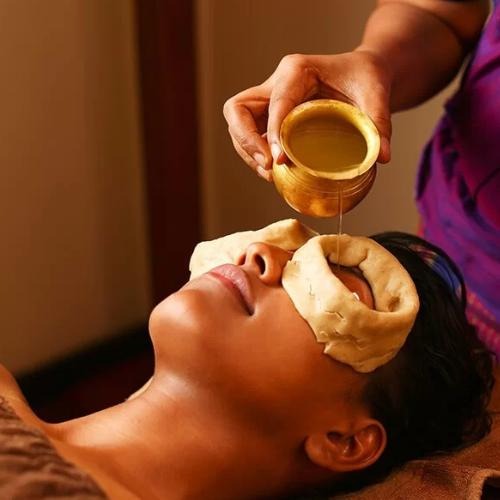
A liquid preparation is poured in a controlled manner over the closed eye region according to the traditional procedure.
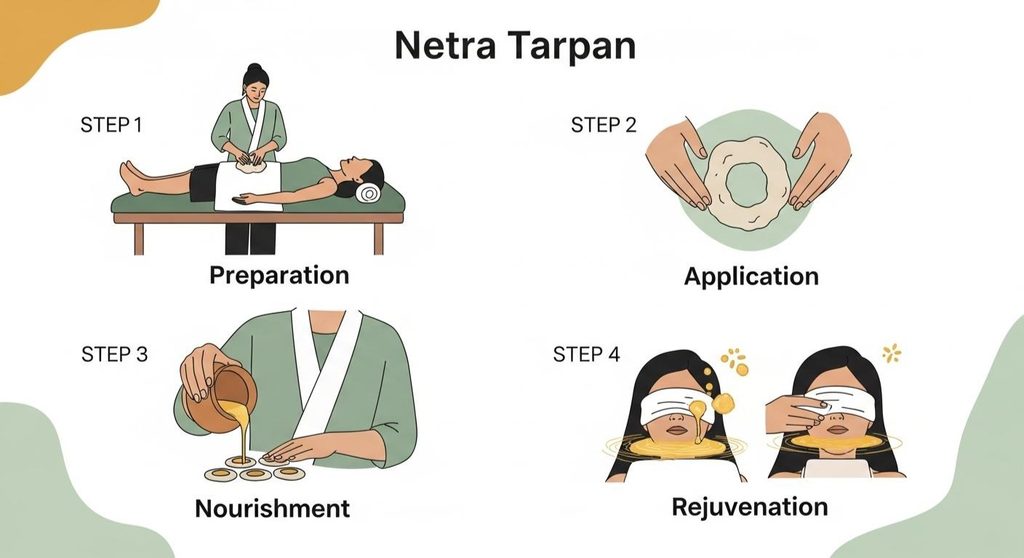
A traditional procedure in which a suitable medicated preparation, commonly ghee-based, is retained around the eyes within a specially constructed boundary under professional supervision.
The procedures differ in their method of application and the way the preparation is used.
Netra Tarpana Bangalore is a search phrase used by people looking for this traditional therapy. However, the treatment name alone does not establish that it is suitable for a particular eye complaint.
A qualified practitioner should explain the differences, discuss the available evidence, and consider whether either procedure is appropriate for your circumstances.
Can Netra Seka Help With Computer-Related Eye Strain?
Imagine spending most of your working day switching between spreadsheets, emails, video calls, and a mobile phone. By evening, your eyes feel dry, and concentrating on small text becomes uncomfortable.
It is understandable to look for something beyond eye drops.
However, screen-related eye strain often improves when the contributing factors are addressed. Practical measures include:
- Taking regular breaks from near work.
- Looking at distant objects periodically.
- Blinking consciously when using digital devices.
- Reducing screen glare and adjusting brightness.
- Keeping the display at a comfortable distance.
- Using prescribed glasses when needed.
- Getting adequate sleep.
If the discomfort continues, an eye examination can help identify dry eye disease, refractive errors, or other causes.
People searching for Computer vision syndrome Ayurveda may discuss traditional therapies with a qualified Ayurvedic physician. Still, there is not enough reliable evidence to recommend Netra Seka as an established treatment for computer vision syndrome.
Do not assume that recurring discomfort is simply a consequence of screen time. Persistent symptoms deserve proper assessment.
What About Other Ayurvedic Eye Treatments?
Netra Seka is not the only therapy people encounter when researching Ayurvedic eye care. Other traditional practices and herbal formulations are also discussed.
Understanding the differences can help you avoid choosing a treatment based on its popularity alone.
Triphala for Eyes
Triphala is a traditional Ayurvedic formulation made from three fruits. It is frequently discussed in relation to general wellness and eye care.
However, traditional use does not establish that Triphala treats eye disease. Never put homemade Triphala water, powders, or other unsterile preparations directly into your eyes.
Nasyam for Eye Health
Nasyam is a traditional Ayurvedic procedure involving the administration of preparations through the nose. It is discussed within Ayurvedic practice for various purposes.
Despite searches for Nasyam for eye health, reliable clinical evidence does not establish it as a treatment for eye diseases. Its suitability should be assessed individually, and it should not replace ophthalmic care.
Shirodhara for Eye Strain
Shirodhara involves the controlled pouring of liquid over the forehead as part of a traditional Ayurvedic procedure.
Some people explore Shirodhara for eye strain because they associate their discomfort with stress or fatigue. However, evidence is insufficient to establish that Shirodhara treats eye strain or underlying eye conditions.
If your eyes are uncomfortable, first determine whether the cause is visual, environmental, medical, or related to another factor.
Can Ayurveda Treat Cataracts, Myopia, or Glaucoma?
This is where careful decision-making becomes particularly important.
Searches for Ayurvedic cataract treatment, Ayurveda for myopia, and Ayurveda for glaucoma are common among people interested in traditional healthcare. However, these conditions are not interchangeable with ordinary eye fatigue.
Cataracts
A cataract develops when the eye’s natural lens becomes cloudy. It can cause blurred vision, glare, and difficulty seeing clearly.
There is no reliable evidence that Ayurvedic therapies reverse an established cataract. Appropriate ophthalmic assessment is essential, and surgery may be recommended when the cataract significantly affects vision.
Myopia and Presbyopia
Myopia makes distant objects appear blurry, while presbyopia is an age-related reduction in the ability to focus on nearby objects.
People searching for Ayurveda for myopia or Ayurveda for presbyopia should understand that these conditions require appropriate vision assessment. Spectacles, contact lenses, or other suitable interventions may be needed.
Netra Seka should not be presented as a proven way to reverse either condition.
Glaucoma
Glaucoma can damage the optic nerve and may lead to permanent vision loss. It often progresses without obvious early symptoms.
Ayurveda for glaucoma should never be used as a substitute for prescribed treatment, eye pressure monitoring, or specialist follow-up.
Diabetic Retinopathy and Macular Degeneration
Diabetic retinopathy affects the blood vessels of the retina, while macular degeneration affects the central part of the retina.
Both conditions require appropriate ophthalmic assessment and monitoring. Ayurveda for diabetic retinopathy and Ayurveda for macular degeneration are search topics, not evidence that traditional therapies can reverse retinal damage.
Do not delay established treatment for these conditions while trying Netra Seka or another alternative therapy. Protecting your vision requires timely diagnosis and appropriate medical care.
What About Styes, Chalazion, Amblyopia, and Optic Atrophy?
Some eye conditions require a different approach altogether.
- Stye and chalazion: These can cause eyelid swelling or lumps. Avoid squeezing them or applying unverified herbal preparations. Persistent, painful, or vision-affecting swelling needs professional assessment.
- Amblyopia: Often called lazy eye, this condition involves abnormal visual development. Treatment depends on the person’s age and individual circumstances.
- Optic atrophy: This refers to damage to the optic nerve. The underlying cause needs assessment, and established nerve damage cannot be assumed to be reversible through Ayurvedic treatment.
Searches for Ayurvedic treatment for stye and chalazion, Ayurveda for amblyopia, and Ayurveda for optic atrophy should lead to appropriate evaluation rather than self-treatment.
Netra Seka is not an established cure for these conditions.
How Does Shalakya Tantra Relate to Eye and ENT Care?
Shalakya Tantra is a traditional branch of Ayurveda concerned with disorders involving the eyes, ears, nose, throat, and related structures.
This is why Ayurvedic eye care and Ayurvedic ENT treatment are often discussed within the same traditional medical framework.
For example, someone experiencing persistent ringing or buzzing in the ears may search for Ayurvedic treatment for tinnitus. Tinnitus can have several causes, including hearing loss, earwax, medication effects, and other medical conditions.
Sudden tinnitus accompanied by hearing loss requires urgent assessment. Persistent symptoms should also be evaluated by an appropriate healthcare professional.
If you are exploring an Ayurvedic ENT specialist Bangalore, look for a qualified practitioner who explains the treatment’s limitations and refers patients for specialist assessment when necessary.
Although these therapies belong to the broader traditional framework of Shalakya Tantra, a treatment intended for an ear or nasal complaint should not be assumed to benefit the eyes.
Who Should Consider a Consultation Before Netra Seka?
If your eyes feel tired occasionally after working, simple changes to your screen habits may help. If the discomfort keeps returning, a consultation is a sensible next step.
Consider seeking professional advice if you experience:
- Repeated burning or irritation.
- Persistent dryness or excessive watering.
- Discomfort that interferes with reading or work.
- Recurring symptoms despite lifestyle changes.
- Existing eye disease or previous eye surgery.
- Symptoms while managing diabetes or another chronic condition.
An Ayurvedic physician can discuss your symptoms and explain whether traditional care may be appropriate. An ophthalmologist can evaluate eye conditions that require specialist diagnosis or treatment.
Seek urgent medical attention for sudden vision changes, severe eye pain, significant redness with pain, eye injury, new flashes or floaters, or loss of vision. Do not wait for an Ayurvedic appointment when these warning signs occur.
Choosing an Ayurvedic Eye Clinic in Bangalore
If you are searching for Ayurvedic eye treatment Bangalore, an Ayurvedic eye doctor Bangalore, or an Ayurvedic eye clinic Bangalore, look beyond promotional claims.
Before choosing a provider, check whether the clinic:
- Employs appropriately qualified Ayurvedic physicians.
- Takes a detailed medical and medication history.
- Explains the procedure and its limitations.
- Maintains suitable hygiene and treatment protocols.
- Considers existing eye conditions and previous surgeries.
- Recognizes when an ophthalmologist’s assessment is necessary.
- Avoids claims of guaranteed cures or restored vision.
Patients looking for Netra Seka or Netra Tarpana Bangalore should ask specifically about the preparation used, how the procedure is administered, the known risks, and whether evidence supports its intended use.
If visiting a clinic is difficult, Ayurveda online consultation may help you discuss your medical history and determine the next steps. However, an online consultation cannot replace an eye examination when physical assessment or diagnostic testing is necessary.
Explore Ayurvedic Eye Care at Healing Earth Ayurveda Hospital
At Healing Earth Ayurveda Hospital in Bangalore, patients can consult a qualified Ayurvedic physician to discuss their symptoms, medical history, and potential treatment options.
For people exploring traditional therapies such as Netra Seka or Netra Tarpana, an individualized consultation can help clarify the purpose of the procedure, its limitations, and whether it is appropriate to consider.
The decision should be based on your individual circumstances, not simply on a list of claimed benefits.
If you are experiencing recurring eye discomfort, do not settle for repeatedly trying products or home remedies without understanding the cause. A suitable treatment plan begins with proper assessment and clear information about your options.
Interested in Ayurvedic eye care in Bangalore? Contact Healing Earth Ayurveda Hospital to discuss your concerns and find out whether an Ayurvedic consultation is appropriate for you.
Frequently Asked Questions
1. What is Netra Seka in Ayurveda?
Netra Seka is a traditional Ayurvedic eye procedure involving the controlled pouring of a suitable liquid preparation over the closed eye region. It should be performed under appropriate professional supervision, with attention to hygiene and individual suitability.
2. Can Netra Seka relieve eye pain?
There is insufficient high-quality clinical evidence to establish Netra Seka as a reliable treatment for eye pain. The cause of the pain should be identified before treatment is considered. Severe or sudden eye pain requires prompt medical evaluation.
3. Is Netra Seka suitable for dry eyes?
Netra Seka is not an established treatment for dry eye disease. Persistent dryness should be assessed by an eye care professional, who can recommend appropriate management. Any complementary Ayurvedic procedure should be discussed with qualified practitioners.
4. What is the difference between Netra Seka and Netra Tarpana?
Netra Seka involves pouring a liquid preparation over the closed eye region, while Netra Tarpana traditionally involves retaining a suitable preparation around the eyes within a constructed boundary. They are different procedures and are not interchangeable.
5. Can Netra Seka improve eyesight?
There is no reliable evidence that Netra Seka improves visual acuity or reverses refractive errors, cataracts, glaucoma, or retinal disease. Vision changes should be evaluated by an ophthalmologist.
6. Is Netra Seka safe to try at home?
You should not attempt Netra Seka at home using homemade herbal mixtures or unsterile liquids. Incorrect preparation or application can cause irritation or contamination. Consult a qualified healthcare professional before considering an eye-related procedure.
7. How do I find Netra Seka treatment in Bangalore?
Look for a reputable Ayurvedic hospital or clinic with qualified practitioners, appropriate hygiene protocols, and transparent information about the procedure. Ensure the provider recommends ophthalmic assessment when required and does not promise guaranteed results.
8. Can I use Ayurvedic treatment instead of prescribed eye drops?
Do not stop or replace prescribed eye drops without discussing it with the prescribing clinician. Some eye conditions can worsen without appropriate treatment, even when symptoms are mild.
Final Thoughts: Is Netra Seka Worth Exploring?
When your eyes feel uncomfortable day after day, it is natural to look for another way to manage the problem. Netra Seka is one traditional Ayurvedic procedure you may encounter while researching eye care.
But the important question is not simply whether the therapy is traditional. It is whether it is appropriate for your particular condition, whether its potential benefits are supported by evidence, and whether it can be considered without delaying necessary treatment.
Start by understanding what is causing your symptoms. Improve your screen habits where relevant, avoid unverified eye remedies, and seek professional evaluation when discomfort persists.
If you are interested in Ayurvedic eye treatment, speak with a qualified practitioner about the available options, including Netra Seka, and their limitations.
Your eyesight is too important to leave to guesswork.
Medical Disclaimer
This article is for educational purposes only and does not replace professional medical advice, diagnosis, or treatment. Evidence supporting Netra Seka for specific eye conditions is limited. Ayurvedic procedures and preparations should be considered only after appropriate professional assessment. Do not delay or discontinue prescribed eye treatment. Sudden vision loss, severe eye pain, eye injury, or sudden visual disturbances require prompt medical attention.