
Medically reviewed by: Dr. Shabeena Deshmukh (BAMS, MS), Consultant, Prasoothi & Stree Roga
When a couple has been trying for a baby without success, the first question is usually, “What is going wrong?” The honest answer is that female infertility causes are rarely simple. Conception needs several things to work together at the right time: a healthy egg, open fallopian tubes, a receptive uterus, balanced hormones and healthy sperm. A problem with any one of these can make pregnancy harder.
Ayurveda looks at the same picture through its own lens, with a focus on digestion, the menstrual cycle, daily routine and the balance of the doshas. At Healing Earth, our Prasooti & Stree Roga (Gynaecology) department reads this classical approach alongside your medical history and test reports. This blog explains the common causes of infertility in women, how Ayurveda views women’s reproductive health, and when it is time to see a doctor.
What Is Female Infertility?
Infertility is usually defined as not conceiving after 12 months of regular, unprotected intercourse. The World Health Organization estimates that about 1 in 6 adults worldwide experience infertility at some point in their lives, so if you are facing this, you are far from alone.
The 12-month rule is only a guide. Doctors usually suggest an earlier check if you are 35 or older, if your periods are very irregular or absent, or if you have endometriosis or a history of pelvic infection or surgery. Seeing a doctor early does not mean you will need heavy treatment. It simply helps you find out what is getting in the way.
Female Reproductive Health: The Ayurvedic View
Classical Ayurvedic texts describe four factors that must come together for conception: Ritu (the right time in the cycle), Kshetra (the reproductive organs), Ambu (nourishment) and Beeja (the egg and sperm). Healthy digestion, known as Agni, and a balanced Vata dosha, which Ayurveda links with movement in the body, including ovulation and menstruation, are also considered important for female reproductive health.
So Ayurveda does not treat infertility as one disease with one cure. An Ayurvedic doctor looks at your menstrual pattern, digestion, sleep, stress, diet and past health together. These are traditional concepts and they do not match modern diagnoses one to one, which is why we always read them alongside your scans and blood tests.
Common Causes of Infertility in Women
Female infertility can have many causes, and sometimes more than one is involved. The NHS lists problems with ovulation, blocked or damaged fallopian tubes, endometriosis, thyroid disorders and fibroids among the common ones. It also notes that in about 1 in 4 couples, no clear cause is found.
Ovulation Problems and Infertility
Ovulation, the monthly release of an egg, is the starting point of conception. When it is irregular or absent, getting pregnant becomes difficult. Late, early or missed periods are common clues. Hormonal conditions such as PCOS and thyroid disorders are frequent reasons behind ovulation problems and infertility.
Blocked Fallopian Tubes
The fallopian tubes carry the egg to the uterus. Past pelvic infections, surgery, endometriosis and adhesions can damage or block them. Many women search for blocked fallopian tube ayurvedic treatment, but a blockage first needs to be confirmed with a test such as an HSG. Ayurvedic care should never be presented as a guaranteed way to open a tube. Where there is significant tubal disease, a gynaecologist may recommend specific medical or surgical options.
Fibroids and Other Uterine Conditions
Fibroids, polyps or scarring inside the uterus can affect fertility, depending on their size and position. The link between fibroids and infertility is not the same for every woman, which is why an ultrasound is a useful early step.
Irregular or Heavy Periods
Your cycle tells you a lot about your reproductive health. Irregular periods, very heavy bleeding or severe pain are worth discussing with a doctor, even if you are not trying to conceive yet. Many women look up irregular periods ayurvedic treatment or heavy periods ayurvedic treatment. The right approach depends on the cause, so the first step is a proper assessment rather than a standard remedy.
PCOS and Infertility
PCOS is one of the most common reasons for irregular ovulation. Along with irregular periods, it can cause acne, weight gain and excess hair growth. Not every woman with PCOS struggles to conceive, but ovulation can be unpredictable, so it may take longer.
From the Ayurvedic side, we look closely at digestion, metabolism and dosha balance, and we guide you on diet, sleep, movement and routine. Where blood sugar, thyroid or hormone levels need attention, you can also consult our General and Internal Medicine department.
Endometriosis and Infertility
Endometriosis happens when tissue similar to the lining of the uterus grows outside it. It can cause painful periods and pelvic pain, and it can damage the ovaries or fallopian tubes, which is how it affects fertility. It can take time to diagnose, so period pain that keeps coming back deserves attention.
Ayurveda often connects painful periods with Vata imbalance. Ayurvedic care may help with symptoms and overall wellbeing, but when fertility is the goal it should go hand in hand with a proper medical evaluation.
Male Factor Infertility
Fertility involves two people. Male factor infertility, such as low sperm count or poor sperm movement, contributes to many couples’ difficulty in conceiving. That is why a semen analysis is usually part of the first round of tests. Checking only the woman can delay answers, so we encourage couples to come in together.
Secondary Infertility Causes
Secondary infertility means difficulty conceiving after you have already had at least one pregnancy. It surprises many couples, but the causes are much like those of primary infertility. Secondary infertility causes can include age-related changes, new conditions such as PCOS, fibroids or thyroid problems, scarring after a pelvic infection or surgery, and changes in the partner’s sperm health. Having conceived easily before does not rule out a new problem.
Panchakarma for Infertility
Panchakarma is Ayurveda’s set of cleansing and restorative therapies, and it is never one-size-fits-all. At Healing Earth, our doctors first assess your health, cycle and reports before suggesting any plan. Panchakarma usually begins with preparatory steps such as Snehana (oiling) and Swedana (sweating therapy) before a suitable cleansing procedure is considered.
Two therapies come up often in women’s health. Virechana is a supervised cleansing therapy that clears excess Pitta. Uttarabasti is a medicated oil therapy for gynaecological concerns and is planned around the menstrual cycle. Either may be considered in selected cases after a doctor’s examination. Neither suits everyone, for example during pregnancy or with certain medical conditions, and neither should be seen as a guaranteed fix for a structural problem.
If you are looking into panchakarma for infertility in Bangalore, the right first step is a consultation, not a package.
Diet, Yoga and Lifestyle Support
Lifestyle is where many women have the most control, and it forms a big part of preconception care.
Food: An ayurvedic diet for fertility focuses on freshly cooked, balanced meals at regular times, which supports Agni. Your doctor can tailor it to your health and constitution.
Yoga and movement: Many women ask about yoga for fertility. Gentle yoga, walking and breathing practices can support sleep, stress and general health, but they add to treatment and do not replace it. Our Yoga and Naturopathy department can guide you on a routine that suits you.
Sleep and stress: Stress does not explain every case of infertility, and nobody should blame themselves for it. Still, a steadier routine makes this phase easier to handle.
Herbs: Shatavari for fertility is a common search. It is traditionally regarded as a nourishing herb for women, and Ashoka and Lodhra appear in classical women’s health formulations. Even so, ayurvedic herbs for female fertility should only be taken under a qualified doctor, especially if you are on fertility medicines. Natural does not always mean suitable.
Preconception care: Discuss folic acid and any other supplements with your doctor, avoid tobacco and too much alcohol, and have your current medicines reviewed. If you are asking about ayurvedic medicine for pregnancy planning, please do not self-prescribe.
If you want to know how to improve fertility naturally, the honest answer is to start with these basics and get the cause checked.
Fertility Tests and When to See a Doctor
Fertility tests for women commonly include a pelvic ultrasound, follicular monitoring, hormone and thyroid tests, an ovarian reserve check and an HSG to look at the fallopian tubes. Healing Earth has in-house lab facilities, so your tests can be done as part of your care.
When to see a doctor for infertility:
- Under 35: after 12 months of trying
- Age 35 or older: after 6 months of trying
- Sooner if your periods are very irregular or absent, you have known or suspected endometriosis, or you have had a pelvic infection or surgery
Female infertility treatment options depend on the cause. They can include medicines to support ovulation, surgery for fibroids, endometriosis or tubal problems, and assisted conception such as IUI or IVF. Ayurvedic care can be explored alongside these where appropriate. Please tell every doctor involved about all the medicines you take.
Ayurvedic Treatment for Infertility in Bangalore at Healing Earth
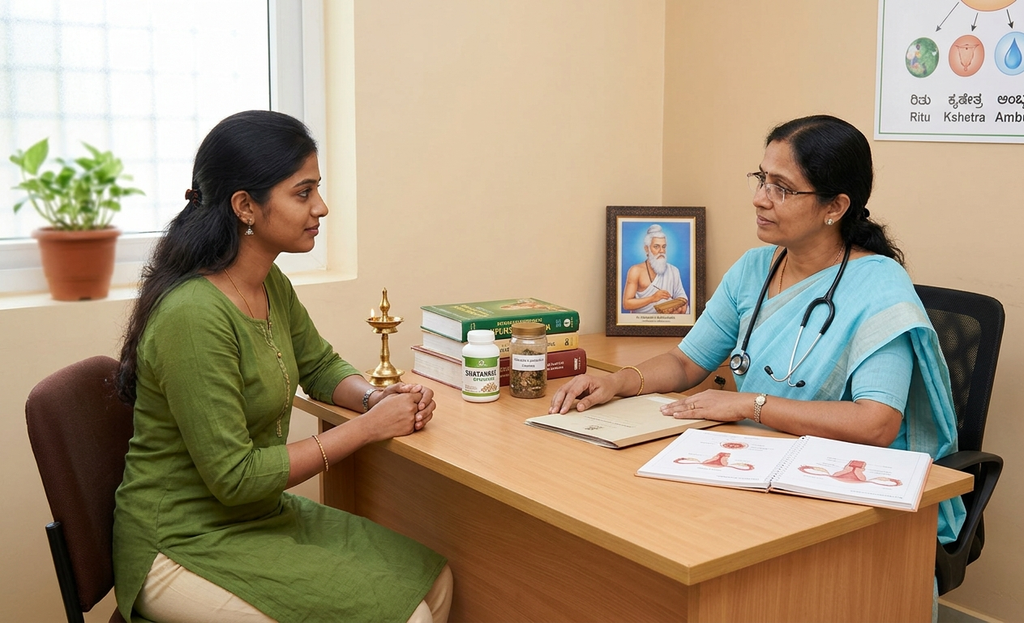
Healing Earth is an NABH-accredited Ayurveda hospital in HSR Layout, Bangalore, and Prasuti Evam Stri Roga is part of its accredited scope of services. If you are looking for ayurvedic treatment for infertility in Bangalore, or ayurvedic treatment for female infertility in Bangalore, our Gynaecology and Obstetrics department is the place to begin. A first visit with an Ayurvedic doctor for female infertility in Bangalore usually covers your menstrual history, earlier reports, lifestyle and a physical examination, followed by any tests that are needed. You can read about our team of doctors before you book.
People often compare options for the best Ayurvedic hospital for women’s health in Bangalore. Whichever you choose, look for accreditation, qualified doctors, a clear explanation of treatment and costs, and a willingness to work with your gynaecologist. If you live nearby, ayurvedic infertility treatment in HSR Layout is available with both OPD and in-patient options. Eligible in-patient treatment may be covered by insurance depending on your policy, so please check the insurance details with our team before admission.
Frequently Asked Questions
1. What are the most common female infertility causes?
Ovulation problems, PCOS, blocked or damaged fallopian tubes, endometriosis, fibroids, thyroid disorders and age-related changes are the usual ones. Often more than one factor is involved.
2. Can Ayurveda treat female infertility?
Ayurveda may support women’s reproductive health through diet, lifestyle, herbs and therapies, but no single treatment suits every cause. A proper diagnosis comes first, and Ayurvedic care can be explored alongside gynaecological care.
3. Is Uttarabasti safe for infertility?
Uttarabasti is a doctor-administered therapy that is planned after assessment. It does not suit everyone, and it is not a guaranteed way to open blocked tubes.
4. When should I see a doctor about infertility?
See a doctor after 12 months of trying if you are under 35, or after 6 months if you are 35 or older. Go sooner if your periods are very irregular or absent, or if you have endometriosis or a history of pelvic infection.
5. Can I take Ayurvedic medicines along with fertility treatment?
It may be possible, but you should tell both your Ayurvedic doctor and your fertility specialist about everything you are taking, so that interactions and delays in necessary treatment can be avoided.
Conclusion
Female infertility has many possible causes, so understanding the reason behind the delay is the most useful first step. Ayurveda offers a way of looking at digestion, cycles, routine and overall balance, while modern tests show which reproductive factors need attention. Used together and with proper guidance, the two can help you make a clearer plan.
If you would like to talk through your concerns and reports, book a consultation with the Gynaecology and Obstetrics team at Healing Earth, HSR Layout, Bangalore.
About the Author
Dr. Shabeena Deshmukh (BAMS, MS) is a Consultant in Prasoothi & Stree Roga (Gynaecology and Obstetrics) at Healing Earth Multi-Speciality Ayurveda Hospital, HSR Layout, Bangalore. Her work is focused on women’s health in Ayurveda. You can learn more about the Gynaecology and Obstetrics department or meet the Team of Doctors.
Medical Disclaimer: This blog is for general information only and does not replace professional medical advice, diagnosis or treatment. Please consult a qualified doctor before making changes to your treatment, diet or lifestyle. Results vary from person to person.