
Medically reviewed by: Dr. Preethikanth C S (BAMS, MD), Consultant, Kayachikitsa, Healing Earth Multispeciality Ayurveda Hospital, HSR Layout, Bangalore
Living with psoriasis can be tiring. The red, scaly patches, the itching and the unpredictable flare-ups affect more than the skin. They affect sleep, confidence and daily routine. Many people start looking for Ayurvedic treatment for psoriasis after years of psoriasis treatment with creams and tablets that settle the skin for a while but do not stop the patches from returning.
Ayurveda does not look at psoriasis as a skin problem alone. It looks at digestion, stress, daily habits and the person’s constitution, and it plans care around all of these. This guide explains how Ayurveda understands psoriasis, what the treatment approach usually involves, and what you can do at home to manage it better.
What Is Psoriasis?
Psoriasis is a chronic skin condition in which skin cells multiply much faster than normal. The extra cells pile up on the surface and form thick, dry, scaly plaques. It is not contagious, but it tends to come and go over the years.
Psoriasis symptoms
The most common psoriasis symptoms include:
- Red or dark patches covered with silvery-white scales
- Dry, cracked skin that may itch or bleed
- Burning or soreness around the patches
- Thickened, pitted or ridged nails
- Stiff or swollen joints in some people
The elbows, knees, lower back and scalp are the most affected areas, though psoriasis can appear anywhere.
Psoriasis Causes and Common Triggers
Modern medicine describes psoriasis as an immune-related condition influenced by genetics and the environment. The exact psoriasis causes are not fully understood, but several triggers are well known:
- Emotional stress and poor sleep
- Throat or skin infections
- Injury to the skin, such as cuts, scratches or sunburn
- Cold, dry weather
- Smoking and alcohol
- Certain medicines
- Irregular, heavy or incompatible food habits
If you are looking at Ayurvedic treatment for skin diseases in general, you will notice that Ayurveda pays close attention to many of these same triggers, especially food and stress.
How Ayurveda Understands Psoriasis
In Ayurveda, most chronic skin disorders fall under the group called Kushta. Psoriasis is commonly compared with Ekakushta and Kitibha, where the skin becomes dry, rough and scaly, with itching and discolouration.
According to the classical texts, the condition develops when the doshas, mainly Vata and Kapha and sometimes Pitta, become imbalanced. This imbalance affects the skin (twak), the blood (rakta) and the body fluids. Weak digestion (agni) is believed to produce ama, or undigested waste, which settles in the tissues and keeps the problem going. This is why Ayurvedic doctors treat the digestion and the blood, and not only the patches on the skin.
Ayurvedic Treatment Approach for Psoriasis
There is no single medicine for everyone. The Ayurvedic treatment approach for psoriasis is built around a full consultation, and the plan usually has these parts.
1. Detailed assessment
The doctor studies the type of patches, how long you have had them, your digestion, sleep, stress, diet and family history. The treatment is then planned according to your dosha balance and the stage of the disease.
2. Shodhana (cleansing therapies)
For long-standing cases, doctors often recommend Panchakarma treatment for psoriasis to remove accumulated toxins from the body. Panchakarma therapy for psoriasis is carried out in stages and, depending on your strength and condition, may include:
- Snehapana (internal medicated ghee) to prepare the body
- Virechana, a supervised cleansing therapy that clears excess Pitta and is widely used in skin conditions
- Vamana or Raktamokshana, only where the doctor finds them suitable
These therapies are not meant for everyone. They are planned only after the doctor checks your strength, age and general health.
3. Shamana (internal medicines)
After cleansing, Ayurvedic medicine for psoriasis is prescribed to calm the doshas, support digestion and purify the blood. The length of treatment depends on your condition and how your skin responds. Please do not start herbal medicines by yourself, because the type and dose depend on your body type and condition.
4. External therapies
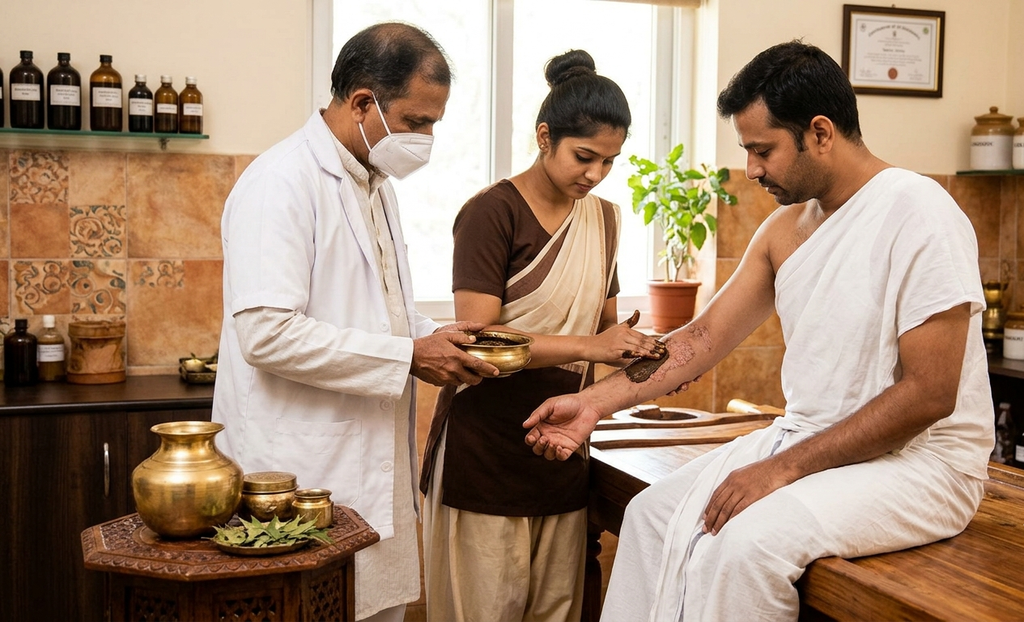
Medicated oils, herbal pastes (lepa) and soothing treatments such as Takradhara may be used to soften the scales, reduce dryness and ease itching. In suitable cases, your doctor may also suggest Sarvanga Ksheera Dhara, a full-body therapy in which warm medicated milk is poured over the body in a steady rhythm. It is not meant for everyone and is avoided during conditions such as fever or indigestion.
Ayurvedic treatment for scalp psoriasis
Scalp psoriasis treatment needs extra care, since the thick scales can cause constant itching and flaking. The Ayurvedic treatment for scalp psoriasis usually combines medicated oils, herbal washes and, in suitable cases, therapies such as Shirodhara to ease stress, a common flare-up trigger. Avoid scratching or picking the scales, as this can trigger new patches.
Ayurvedic Herbs Commonly Used for Psoriasis
A few Ayurvedic herbal medicines are traditionally used in skin disorders. A physician may choose among them based on your symptoms:
- Neem (Nimba) for its cleansing and soothing action on the skin
- Turmeric (Haridra) for its traditional use in inflammatory skin conditions
- Manjistha to support blood purification
- Guduchi for general immune balance
- Khadira for chronic skin disorders
This psoriasis herbal treatment works best as part of a planned programme with the right diet and lifestyle. Taking herbs without guidance can cause side effects, especially if you already take other medicines.
Psoriasis Diet: What to Eat and What to Avoid
Food plays a big part in Ayurvedic care. A simple psoriasis diet plan should be agreed with your doctor, but these general guidelines are a good start.
Foods that are usually encouraged
- Freshly cooked, warm and easily digestible meals
- Bitter and astringent vegetables such as bitter gourd, bottle gourd and ridge gourd
- Green gram (moong dal), barley and old rice
- Plenty of warm water and light buttermilk during the day
Foods to avoid in psoriasis
- Incompatible combinations, such as milk with fish or fruit
- Excess sour, salty, spicy and fried food
- Curd at night, fermented items, bakery products and packaged snacks
- Alcohol and smoking
- Eating late at night or before the previous meal is digested
Notice which foods make your skin worse and discuss them with your doctor. These foods that may trigger psoriasis flare-ups differ from person to person.
How to Manage Psoriasis Flare-Ups: Daily Habits
If you are wondering how to manage psoriasis flare-ups, simple routines make psoriasis management easier between treatments:
- Moisturise the skin regularly, especially after a bath
- Use lukewarm water and mild, fragrance-free soaps
- Go to bed on time and keep a regular meal schedule
- Practise yoga, pranayama or meditation to keep stress in check
- Get gentle sunlight in the early morning, if your doctor agrees
- Protect the skin from cuts, scratches and harsh chemicals
These natural ways to manage psoriasis support your treatment but do not replace it. If you are taking any modern medicines for psoriasis, do not stop them without speaking to your doctor first.
Psoriasis Treatment in Bangalore at Healing Earth
If you are looking for psoriasis treatment in Bangalore, Healing Earth is an NABH-accredited Ayurveda hospital in HSR Layout. If you want a psoriasis specialist in Bangalore who takes an Ayurvedic approach, our team of Ayurvedic doctors examines each patient and plans Ayurvedic skin treatment in Bangalore that may include Panchakarma, internal medicines, diet and lifestyle guidance. In-patient care and cashless insurance support are available for eligible treatments.
You can read about similar skin conditions we treat on our diseases page, or see how we approach eczema treatment in Ayurveda.
For reliable general information on the condition itself, you can also refer to the National Institute of Arthritis and Musculoskeletal and Skin Diseases and the Ministry of Ayush.
When Should You See a Doctor?
Please consult a doctor if the patches spread quickly, crack or bleed, become painful, or if you have joint pain or swelling along with the skin symptoms. Early psoriasis treatment makes the condition easier to manage.
Final Thoughts
Psoriasis is a long-term condition, and improvement takes time and patience. The Ayurvedic treatment for psoriasis focuses on correcting digestion, calming the doshas, purifying the blood and guiding you towards a skin-friendly lifestyle. Results vary from person to person, and the right plan always begins with a proper consultation.
If you are struggling with psoriasis, you can book a consultation with our doctors at Healing Earth, HSR Layout, Bangalore.
Frequently Asked Questions
1. Can Ayurveda cure psoriasis completely?
Psoriasis is a long-term condition, so Ayurveda focuses on managing it rather than promising a cure. With the right treatment, diet and lifestyle changes, many people see fewer flare-ups and calmer skin, but results vary from person to person. Please continue any medicines prescribed by your dermatologist until your doctor advises otherwise.
2. How long does Ayurvedic treatment for psoriasis take?
There is no fixed timeline. It depends on how long you have had psoriasis, how widespread the patches are and how your body responds. Your doctor will review your progress at regular follow-ups and adjust the plan.
3. Is Panchakarma safe for psoriasis?
Panchakarma treatment for psoriasis is safe when it is planned and supervised by a qualified Ayurvedic doctor. It is not suitable for everyone, so your doctor will first check your strength, age and overall health before choosing the therapies.
4. Which foods should I avoid if I have psoriasis?
Ayurveda advises avoiding incompatible food combinations, such as milk with fish, along with excess sour, salty, spicy and fried food, packaged snacks, curd at night and alcohol. Since the foods that trigger psoriasis flare-ups differ from person to person, keep a simple food diary and share it with your doctor.
5. Where can I get Ayurvedic treatment for psoriasis in Bangalore?
You can consult the doctors at Healing Earth Multispeciality Ayurveda Hospital in HSR Layout, Bangalore. After a detailed assessment, they plan treatment that may include Panchakarma, internal medicines, diet and lifestyle guidance. You can book a consultation through the website.
About the Author
Dr. Preethikanth C S (BAMS, MD) is a Consultant in Kayachikitsa at Healing Earth Multispeciality Ayurveda Hospital, HSR Layout, Bangalore. He treats long-standing skin, digestive and lifestyle conditions through classical Ayurvedic medicine, Panchakarma and personalised diet and lifestyle guidance. He also guides patients through each phase of their treatment at the hospital.
Medical Disclaimer: This article is for informational purposes only and is not a substitute for professional medical advice, diagnosis or treatment. Consult a qualified Ayurvedic physician or dermatologist before starting any treatment. Do not stop prescribed medication without medical guidance.