
Joint pain and stiffness can gradually affect the way we live. Simple everyday activities such as walking, climbing stairs, getting up from a chair, or standing for long periods may become uncomfortable. One of the common reasons behind these difficulties is osteoarthritis, a joint condition that develops when the protective cartilage between bones gradually wears down.
Osteoarthritis commonly affects the knees, hips, hands, and spine. Although it is more common with increasing age, it can also affect younger individuals due to previous injuries, excess body weight, repetitive joint stress, and other contributing factors.
Many people explore traditional healthcare approaches to understand how they can manage joint discomfort and maintain mobility. Osteoarthritis treatment in Ayurveda focuses on understanding individual health conditions, lifestyle habits, dietary patterns, and joint-related symptoms.
At Healing Earth Ayurveda Hospital, individuals can explore an integrated approach to joint wellness through personalised Ayurvedic consultations, appropriate therapies, dietary guidance, and lifestyle recommendations.
What Is Osteoarthritis?
Osteoarthritis is a degenerative joint condition in which the cartilage that cushions the ends of bones gradually breaks down. Cartilage helps joints move smoothly by reducing friction between bones.
As cartilage becomes thinner, the surrounding joint structures may experience increased stress. This can contribute to pain, stiffness, swelling, and reduced movement.
Knee osteoarthritis is particularly common because the knees support much of the body’s weight during everyday activities.
People looking for the Best Ayurvedic Hospital in Bangalore often want to understand the available approaches to managing joint discomfort while maintaining their everyday activities.
Common Symptoms of Osteoarthritis
Osteoarthritis symptoms can develop gradually and may become more noticeable over time. The severity varies from person to person.
Some commonly experienced symptoms include:
Joint pain: Discomfort during walking, climbing stairs, or physical activity.
Morning stiffness: Difficulty moving the affected joint after waking up or sitting for extended periods.
Swelling: Mild swelling around the affected joint.
Reduced flexibility: Difficulty bending, stretching, or moving the joint comfortably.
Tenderness: Pain when pressure is applied around the joint.
Crepitus: A clicking, cracking, or grinding sensation during joint movement.
Reduced mobility: Difficulty performing routine activities due to discomfort.
Knee osteoarthritis treatment depends on the individual’s symptoms, joint condition, functional limitations, and overall health.
Recognising these symptoms early can help individuals seek appropriate medical evaluation and discuss suitable management options.
What Causes Osteoarthritis?
Osteoarthritis does not develop because of a single reason. Several factors can contribute to cartilage degeneration and changes in the surrounding joint structures.
1. Increasing Age
As people grow older, the cartilage and other joint structures may undergo gradual changes. This can increase the likelihood of developing osteoarthritis.
2. Excess Body Weight
Additional body weight places greater pressure on weight-bearing joints, particularly the knees and hips. Maintaining a healthy weight can help reduce unnecessary stress on these joints.
3. Previous Joint Injuries
Old sports injuries, fractures, ligament damage, or repeated strain may increase the risk of developing osteoarthritis later in life.
4. Repetitive Joint Stress
Activities involving repeated bending, lifting, squatting, or prolonged physical strain may contribute to joint problems over time.
5. Genetic Factors
A family history of osteoarthritis may increase an individual’s susceptibility to developing the condition.
6. Muscle Weakness and Reduced Activity
Weak muscles surrounding the joints may affect stability and movement. Limited physical activity can also contribute to reduced flexibility and strength.
Understanding these contributing factors is an important part of planning appropriate Osteoarthritis treatment in Ayurveda alongside medically recommended care.
Understanding Osteoarthritis Through Ayurveda
In Ayurveda, joint-related discomfort is commonly discussed in relation to Vata dosha. Vata is associated with movement, flexibility, and bodily functions.
An imbalance in Vata is traditionally considered one of the factors associated with joint dryness, stiffness, discomfort, and restricted movement.
Ayurvedic practitioners assess individual symptoms, body constitution, digestive health, lifestyle habits, and other health factors before recommending an appropriate management approach.
The Ayurvedic perspective on joint health may include:
- Understanding individual Prakriti and Vikriti.
- Assessing digestive health and dietary habits.
- Identifying lifestyle factors that may influence joint discomfort.
- Recommending suitable dietary and daily routine modifications.
- Considering appropriate external therapies.
- Supporting mobility through individualised movement practices.
People searching for the Best Ayurvedic Treatment in Bangalore should look for a healthcare facility that provides proper assessment and personalised recommendations rather than a single treatment for everyone.
Ayurvedic Management of Osteoarthritis
Ayurvedic management may include a combination of therapies, dietary modifications, lifestyle adjustments, and prescribed medicines based on individual assessment.
The treatment approach should be selected according to the person’s symptoms, medical history, and overall joint condition.
1. Abhyanga – Ayurvedic Oil Massage
Abhyanga is a traditional Ayurvedic massage performed using suitable herbal oils.
Depending on the individual’s condition, it may help promote relaxation, comfort, and a sense of flexibility.
The oil and massage technique should be selected by a qualified Ayurvedic practitioner, particularly when joint swelling or acute inflammation is present.
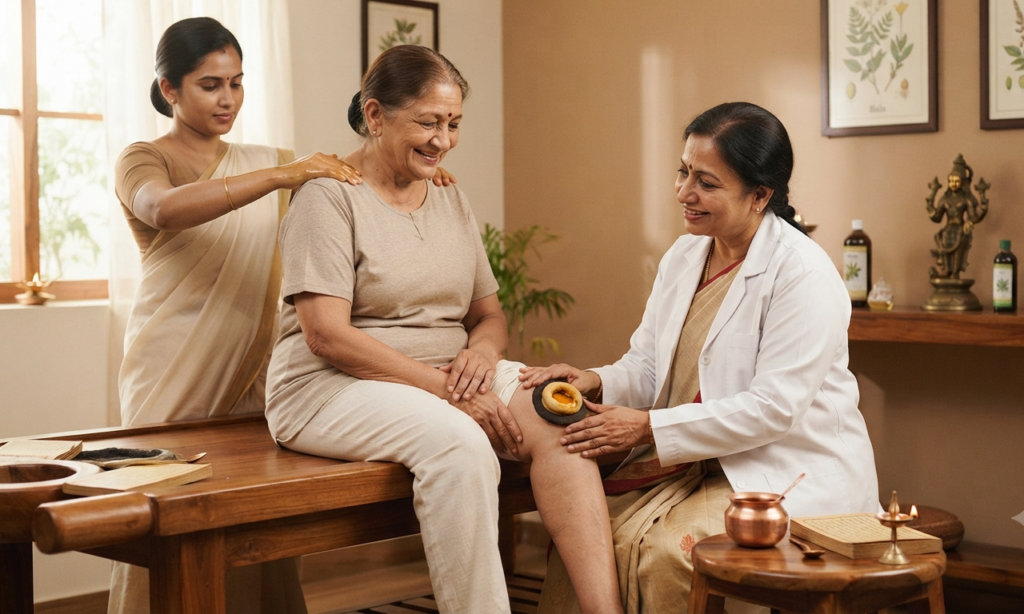
2. Janu Basti – Traditional Knee Therapy
Janu Basti is a specialised Ayurvedic external therapy traditionally used for knee-related discomfort.
During this procedure, a ring-shaped boundary is placed around the knee, and comfortably warm medicated oil is retained within it for a specified period.
This traditional therapy may be considered as part of an individualised joint-care plan. Its suitability depends on the patient’s condition and should be assessed by a qualified practitioner.
3. Swedana – Therapeutic Fomentation
Swedana refers to traditional Ayurvedic heat-based therapies.
Depending on the individual’s symptoms, appropriate fomentation may be recommended to support relaxation and ease stiffness.
Heat-based therapies are not suitable for every condition, especially when significant swelling or acute inflammation is present.
4. Basti – Ayurvedic Therapeutic Enema
Basti is one of the traditional Panchakarma procedures associated with Vata management in Ayurveda.
A qualified practitioner may consider specific Basti procedures as part of an individualised treatment plan.
The procedure, medicines, duration, and suitability must be determined through professional assessment.
5. Ayurvedic Medicines
Ayurvedic medicine for osteoarthritis may be prescribed depending on the individual’s constitution, symptoms, digestive health, and medical history.
Certain traditional formulations are used in Ayurvedic practice for joint-related complaints. However, their effectiveness and safety can vary, and they should not be self-prescribed.
Patients should inform their healthcare providers about all medicines and supplements they are taking to avoid possible interactions.
Dietary Recommendations for Joint Health
Food choices and daily eating habits can influence overall health, body weight, and physical well-being.
A balanced diet can support general joint health and help individuals maintain a healthy weight.
Some practical dietary recommendations include:
- Include a variety of vegetables and seasonal fruits.
- Add adequate protein sources such as pulses, lentils, and other suitable foods.
- Include healthy fats in moderate quantities.
- Maintain adequate hydration throughout the day.
- Choose whole grains and fibre-rich foods.
- Limit excessive consumption of highly processed foods.
- Maintain regular meal timings according to individual needs.
In Ayurveda, dietary recommendations may also be based on an individual’s Prakriti, digestive capacity, and overall health.
Lifestyle Changes That Support Joint Health
Along with professional treatment, everyday habits play an important role in managing osteoarthritis.
Stay Physically Active
Low-impact activities such as walking, swimming, and appropriate cycling may help maintain joint mobility. Exercise should be adjusted according to pain levels and physical capacity.
Practise Suitable Yoga
Gentle yoga movements may help maintain flexibility, balance, and muscle strength. Avoid positions that place excessive pressure on painful joints.
Maintain a Healthy Weight
Weight management can help reduce the mechanical load placed on the knees and other weight-bearing joints.
Avoid Prolonged Sitting
Take regular movement breaks instead of remaining in the same position for extended periods.
Get Adequate Rest
A healthy sleep routine and appropriate recovery periods can support general physical well-being.
These measures can complement knee joint pain treatment in Ayurveda and other medically recommended approaches.
Can Osteoarthritis Be Managed Without Surgery?
One common concern among individuals experiencing persistent knee pain is whether surgery can be avoided.
Osteoarthritis treatment without surgery may be suitable for some individuals, particularly during the early and moderate stages of the condition.
Depending on the severity, healthcare professionals may recommend:
- Physiotherapy and strengthening exercises.
- Weight management.
- Appropriate pain-relieving medicines.
- Activity modification.
- Supportive devices when required.
- Individualised Ayurvedic therapies as complementary care.
However, advanced osteoarthritis may require additional medical or surgical interventions.
Ayurvedic management should not be presented as a guaranteed alternative to surgery or as a method of restoring permanently damaged cartilage.
People considering the Best Ayurvedic Hospital in HSR Layout should choose a facility that evaluates their joint condition and explains the available treatment options realistically.
When Should You Consult a Doctor?
Do not ignore persistent joint pain or stiffness, especially when it begins affecting everyday activities.
Consider consulting a healthcare professional if you experience:
- Knee pain that continues for several weeks.
- Increasing difficulty walking or climbing stairs.
- Persistent joint swelling.
- Reduced joint movement.
- Pain that interferes with sleep.
- Sudden severe pain or an inability to bear weight.
A hot, red, significantly swollen joint, particularly with fever, requires prompt medical evaluation.
Early assessment can help identify the underlying cause and determine the most appropriate management approach.
Why Choose Healing Earth Ayurveda Hospital for Joint Wellness?
Finding the right healthcare facility is an important step when dealing with long-term joint discomfort.
Healing Earth Ayurveda Hospital provides Ayurvedic healthcare services with an emphasis on individual assessment and personalised treatment planning.
Individuals exploring an Ayurvedic Hospital in Bangalore can learn about traditional Ayurvedic approaches and discuss their suitability with qualified practitioners.
The approach to joint wellness may include:
- Individual Ayurvedic consultations.
- Assessment of joint-related symptoms and lifestyle factors.
- Personalised dietary and lifestyle recommendations.
- Appropriate traditional Ayurvedic therapies.
- Guidance on maintaining mobility and physical activity.
- Follow-up consultations to review progress.
If you are looking for an Ayurvedic Hospital Near Me, it is important to consider the practitioner’s qualifications, the quality of consultation, treatment suitability, and access to appropriate medical evaluation.
For individuals exploring the Best Ayurvedic Treatment in Bangalore, Healing Earth Ayurveda Hospital offers an opportunity to understand traditional Ayurvedic approaches to joint health through personalised consultations.
Visit Healing Earth Ayurveda Hospital to learn more about its healthcare services and treatment approaches.
Frequently Asked Questions (FAQs)
1. What is the best Ayurvedic treatment for osteoarthritis?
Ayurvedic management depends on the individual’s symptoms and overall health. Therapies such as Abhyanga, Janu Basti, and selected Panchakarma procedures may be considered after professional assessment.
2. Can Ayurveda help with knee osteoarthritis?
Ayurvedic therapies may help some individuals manage discomfort and stiffness as part of a comprehensive care plan. Results vary, and Ayurveda should complement rather than replace necessary medical treatment.
3. Is osteoarthritis treatment possible without surgery?
Many individuals can initially manage osteoarthritis through exercise, physiotherapy, weight management, medication, and other conservative approaches. Surgery may be considered when symptoms are severe and other treatments do not provide sufficient relief.
4. Does osteoarthritis cause permanent cartilage damage?
Osteoarthritis involves progressive changes in joint cartilage and other joint structures. Currently, there is no established treatment that reliably restores naturally worn cartilage to its original condition.
5. Which Ayurvedic therapy is traditionally used for knee pain?
Janu Basti and Abhyanga are among the traditional therapies used for knee-related complaints. Their suitability depends on the individual’s symptoms and clinical assessment.
6. Can lifestyle changes improve joint health?
Yes. Maintaining a healthy weight, performing suitable exercises, eating a balanced diet, and avoiding prolonged inactivity can support joint function and overall health.
Conclusion
Living with osteoarthritis can be challenging, particularly when joint pain and stiffness begin affecting everyday activities. Understanding the condition, recognising its symptoms, and seeking appropriate medical guidance are important steps towards managing joint health.
Ayurveda offers traditional approaches that may form part of an individualised joint-care plan through therapies, dietary recommendations, and lifestyle modifications. However, treatment should always be based on proper assessment and realistic expectations.
At Healing Earth Ayurveda Hospital, individuals can explore personalised Ayurvedic healthcare approaches and receive guidance on maintaining joint comfort, mobility, and overall well-being.
Take the first step towards better joint health with informed healthcare decisions and appropriate professional guidance.