
Ayurveda describes several traditional treatment approaches to support health and manage various health conditions. Among these approaches, Raktamokshana Treatment is a specialised Ayurvedic procedure traditionally associated with the controlled removal of blood. It is one of the therapeutic procedures discussed in classical Ayurvedic literature and is commonly referred to as Ayurvedic Bloodletting Therapy.
Raktamokshana is traditionally considered in selected clinical situations where an Ayurvedic practitioner identifies the need for the procedure after assessing an individual’s health condition, medical history and suitability. Different Raktamokshana Treatment Methods include Jalauka Avacharana (leech therapy), Siravedha (venesection) and Prachanna Karma (controlled superficial incisions).
Understanding the Types of Raktamokshana, its procedure and important precautions is essential before considering this traditional therapy. The procedure requires appropriate clinical assessment, trained practitioners, sterile equipment and careful monitoring.
Individuals looking for Raktamokshana Treatment in Bangalore should consult qualified Ayurvedic practitioners to understand the available treatment options. At Healing Earth Ayurveda Hospital, HSR Layout, patients can explore Ayurvedic healthcare services and receive professional guidance regarding suitable treatment approaches.
If you are searching for the Best Ayurvedic Hospital in Bangalore, choosing a healthcare facility that prioritises clinical assessment, practitioner qualifications and patient safety is important.
What Is Raktamokshana in Ayurveda?
Raktamokshana is a traditional Ayurvedic therapeutic procedure involving controlled bloodletting. The term comes from two Sanskrit words: ‘Rakta’, meaning blood, and ‘Mokshana’, meaning release or removal.
In Ayurveda, Rakta (blood) is considered one of the important body tissues (Dhatus). Classical Ayurvedic texts discuss Raktamokshana in Ayurveda as a specialised procedure associated with managing certain conditions traditionally linked to Rakta Dushti (vitiation of blood).
Raktamokshana Treatment is not a general detoxification method or a procedure suitable for everyone. Its application depends on an individual’s health status, clinical presentation, age, physical strength and other medical considerations.
The procedure may involve different techniques depending on the practitioner’s assessment. These techniques are selected according to traditional Ayurvedic principles and individual suitability.
People exploring Ayurvedic Treatment in HSR Layout or other locations in Bangalore should understand that Raktamokshana requires professional supervision rather than self-treatment or home-based practices.
Why Is Raktamokshana Practised in Ayurveda?
In traditional Ayurvedic practice, Raktamokshana is discussed as a specialised treatment approach for selected conditions associated with Rakta Dushti.
An experienced Ayurvedic Doctor in Bangalore may consider this procedure after evaluating symptoms, examining the patient and identifying whether the treatment is appropriate.
Some traditional indications discussed in Ayurveda include:
- Certain inflammatory skin conditions.
- Selected skin disorders associated with itching and irritation.
- Localised swelling and discomfort.
- Certain conditions traditionally associated with Rakta Dushti.
- Specific conditions where controlled bloodletting is considered appropriate under classical Ayurvedic principles.
However, these traditional indications should not be interpreted as proof that Raktamokshana treats or cures these conditions. Modern medical evaluation is important to identify the underlying cause of symptoms and determine appropriate treatment.
If you are considering Raktamokshana Therapy in Bangalore, consult a qualified practitioner to understand its suitability and potential risks.
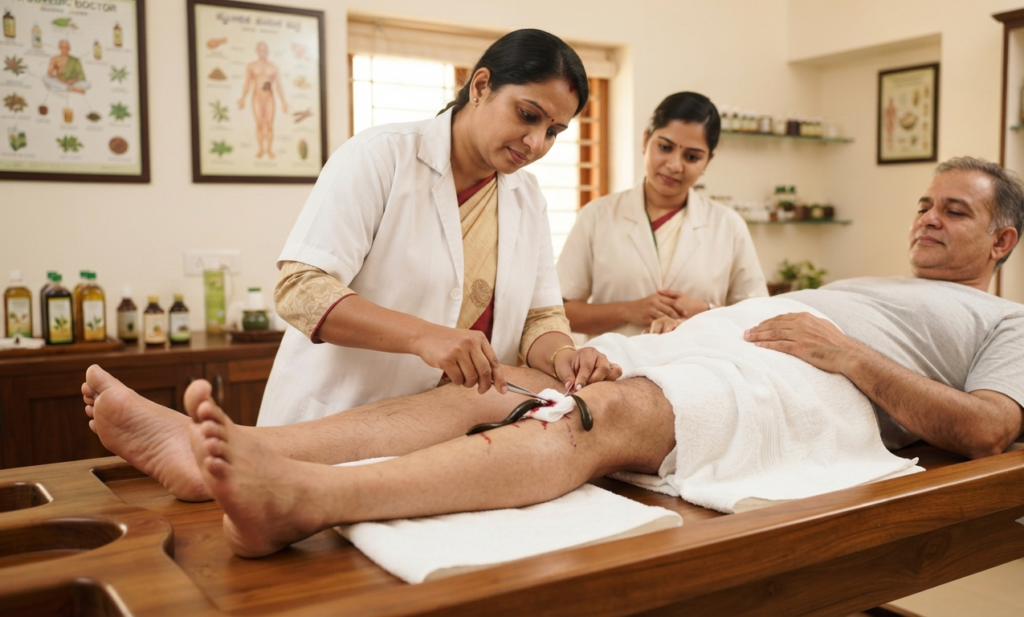
Types of Raktamokshana in Ayurveda
Classical Ayurvedic literature describes different Raktamokshana Treatment Methods. Each method has a specific technique and clinical application.
The selection depends on the patient’s condition, treatment area and practitioner’s assessment.
Jalauka Avacharana (Leech Therapy)
Jalauka Avacharana is a traditional Ayurvedic method of bloodletting performed using medicinal leeches. It is also known as Ayurvedic Leech Therapy.
In this technique, medicinal leeches are used to draw blood from a selected area under controlled clinical conditions. This method is traditionally discussed for selected localised conditions where a practitioner considers leech application appropriate.
Important considerations include:
- The procedure must be performed by a trained healthcare professional.
- Only appropriately sourced and medically suitable leeches should be considered.
- The treatment area must be assessed before the procedure.
- Infection prevention and proper wound care are essential.
- Patients should be monitored for excessive bleeding, allergic reactions and other complications.
Leech therapy is not suitable for everyone, particularly individuals with certain bleeding disorders, anaemia or other medical conditions.
Siravedha (Venesection)
Siravedha is a traditional Ayurvedic bloodletting technique involving controlled blood removal from a selected vein. It is one of the recognised methods discussed under Raktamokshana in Ayurveda.
This procedure requires detailed anatomical knowledge, appropriate clinical training and careful patient assessment. It should never be attempted without qualified medical supervision.
Important considerations include:
- Proper patient assessment before treatment.
- Knowledge of vascular anatomy.
- Sterile, single-use medical equipment.
- Monitoring of blood loss and vital signs.
- Appropriate post-procedure observation.
Because Siravedha involves venous access and blood removal, it carries risks such as bleeding, infection, fainting and vascular injury.
Prachanna Karma (Controlled Superficial Incisions)
Prachanna Karma is a traditional technique involving controlled superficial incisions in a selected area to allow a limited amount of blood to be released.
In classical Ayurvedic practice, this method is discussed for certain localised conditions. The Raktamokshana Procedure requires careful assessment of the treatment area and appropriate clinical precautions.
Important considerations include:
- The procedure must be performed by a qualified practitioner.
- Sterile instruments must be used.
- The depth and treatment area require professional judgement.
- Bleeding must be monitored carefully.
- Proper wound cleaning and dressing are necessary.
Prachanna Karma should not be confused with ordinary skin scraping or home-based cutting techniques.
Shringa Avacharana
Shringa Avacharana is a traditional Ayurvedic bloodletting technique associated with the use of a horn-shaped instrument.
Historically, this method was described for drawing blood through suction from a selected area. It is one of the specialised Raktamokshana Treatment Methods discussed in classical Ayurvedic literature.
Its use requires appropriate expertise, clinical assessment and strict hygiene precautions.
Alabu Avacharana
Alabu Avacharana is another traditional bloodletting method described in Ayurveda. It involves the use of a hollowed gourd-like instrument to create suction over a selected area.
The technique is traditionally associated with drawing blood from superficial tissues under specific conditions.
As with other types of Raktamokshana, its suitability depends on individual assessment. Modern infection-control standards and clinical safety requirements must always take priority.
Raktamokshana Treatment Procedure: What Happens During the Process?
The Raktamokshana Treatment Procedure involves several stages. The exact process varies according to the technique selected and the patient’s health condition.
People searching for Raktamokshana Treatment in Bangalore should understand the importance of professional evaluation before undergoing any bloodletting procedure.
Initial Consultation and Health Assessment
Before considering the procedure, the Ayurvedic practitioner reviews the patient’s symptoms, medical history, medications and existing health conditions.
The assessment may include:
- General physical examination.
- Review of previous medical conditions.
- Evaluation of current symptoms.
- Assessment of bleeding-related risks.
- Review of medications, including anticoagulants.
- Relevant laboratory investigations, when indicated.
The practitioner determines whether the patient is suitable for the procedure.
Selection of the Appropriate Method
After the assessment, the practitioner identifies the traditional method that may be considered.
Depending on the clinical situation, this may involve Jalauka Avacharana, Siravedha, Prachanna Karma or another method.
Not every patient requires the same technique. The selection must be based on individual clinical considerations.
Preparation Before the Procedure
The treatment area and necessary medical equipment are prepared according to infection-control requirements.
The practitioner explains the procedure, possible risks and expected aftercare. Patient consent should be obtained before proceeding.
Performing the Procedure
The selected technique is performed under appropriate clinical supervision.
The practitioner monitors the patient throughout the procedure and ensures that blood loss remains within clinically acceptable limits.
The procedure should be stopped if unexpected bleeding, dizziness, fainting or other concerning symptoms occur.
Post-Procedure Care and Monitoring
After the procedure, the treatment area is assessed and appropriate wound care is provided.
The patient may be observed for signs of excessive bleeding, weakness, dizziness or other complications.
Follow-up instructions depend on the procedure performed and the individual’s recovery.
Potential Raktamokshana Benefits According to Ayurvedic Practice
Raktamokshana Benefits are traditionally discussed in Ayurvedic literature in relation to selected conditions associated with Rakta Dushti.
Its traditionally described purposes include:
- Supporting the management of selected localised conditions.
- Addressing certain conditions traditionally associated with Rakta Dushti.
- Forming part of an individualised Ayurvedic treatment plan.
- Providing a traditional therapeutic approach when clinically indicated.
Some people also explore Jalauka Avacharana as part of traditional Ayurvedic care for selected localised conditions.
However, the potential benefits depend on the individual’s condition, procedure and clinical circumstances. Scientific evidence supporting the effectiveness of Raktamokshana for many of its traditional indications remains limited.
It should not replace established medical treatment, prescribed medication or necessary diagnostic investigations.
Important Raktamokshana Precautions Before Treatment
Raktamokshana Precautions are essential because this is an invasive procedure involving blood removal. Patient safety must be the primary consideration.
Before undergoing treatment, patients should discuss their medical history and current medications with the treating practitioner.
Inform the Practitioner About Existing Health Conditions
Patients should disclose conditions such as anaemia, bleeding disorders, low blood pressure, cardiovascular problems and other relevant medical concerns.
Discuss All Medications
Blood-thinning medications, antiplatelet drugs and other medicines may increase bleeding risks. Patients should never stop prescribed medication without consulting the prescribing doctor.
Check for Infection Risks
The procedure must follow appropriate hygiene and infection-control standards. Reusable instruments require validated sterilisation, while single-use equipment must be disposed of safely.
Consider Individual Suitability
Children, older adults, pregnant individuals and people with compromised health require particular caution and individual medical assessment.
Choose a Qualified Practitioner
The procedure should only be considered under appropriately qualified healthcare professionals with relevant training and suitable clinical facilities.
Follow Aftercare Instructions
Patients should follow wound-care instructions, attend recommended follow-ups and report unusual symptoms promptly.
Who Should Avoid or Exercise Caution With Raktamokshana?
Not everyone is suitable for bloodletting procedures. Certain medical conditions can increase the risk of complications.
Raktamokshana may be unsuitable or require specialist assessment in individuals with:
- Anaemia or low haemoglobin levels.
- Bleeding disorders.
- Low blood pressure.
- Severe weakness or dehydration.
- Active infection at the proposed treatment site.
- Certain cardiovascular conditions.
- Pregnancy.
- Use of anticoagulant or antiplatelet medications.
- Poor wound healing or compromised immunity.
This is not an exhaustive list. The decision must be made through an individual medical assessment.
Patients should seek modern medical evaluation when experiencing unexplained bleeding, persistent skin changes, swelling or other concerning symptoms rather than relying exclusively on traditional treatment.
Difference Between Raktamokshana and Panchakarma Treatment
Raktamokshana and Panchakarma are related concepts in traditional Ayurvedic practice, but they are not interchangeable terms.
Panchakarma refers to a group of traditional Ayurvedic purification procedures. Raktamokshana is discussed as a specialised bloodletting procedure and is included among the classical Shodhana approaches in certain Ayurvedic traditions.
| Raktamokshana | Panchakarma |
| Traditional bloodletting procedure | Group of traditional Ayurvedic purification procedures |
| Involves controlled blood removal | Includes different therapeutic approaches |
| Includes methods such as Jalauka and Siravedha | Includes Vamana, Virechana, Basti, Nasya and other procedures depending on classification |
| Requires specific clinical assessment | Requires individual treatment planning |
| Involves bleeding-related risks | Risks vary according to the procedure |
People exploring Panchakarma Treatment in Bangalore should understand that the
appropriate therapy depends on their health condition and individual assessment.
Not every person undergoing Panchakarma requires Raktamokshana. A qualified practitioner can explain the differences between these Panchakarma Therapies and other specialised Ayurvedic procedures.
Aftercare Tips Following Raktamokshana
Proper aftercare is important following any procedure that involves blood removal or creates a wound.
The practitioner will provide instructions according to the method used.
Some general precautions include:
- Keep the treated area clean and follow the recommended dressing instructions.
- Avoid touching, scratching or disturbing the treatment site.
- Avoid strenuous physical activity until advised by the practitioner.
- Maintain adequate hydration.
- Follow the recommended dietary and recovery instructions.
- Attend scheduled follow-up appointments.
- Do not apply unprescribed oils, herbal preparations or creams to the wound.
Seek immediate medical attention if you experience persistent bleeding, increasing pain, fever, spreading redness, pus, severe dizziness or fainting.
These symptoms may indicate complications requiring prompt evaluation.
Why Consult an Ayurvedic Hospital Before Raktamokshana?
Choosing an appropriate healthcare facility is an important step when considering any specialised Ayurvedic procedure.
A professional consultation helps determine whether the treatment is suitable, identify possible contraindications and understand the available alternatives.
When searching for the Best Ayurvedic Hospital in Bangalore, patients should consider the qualifications of the treating practitioners, clinical facilities, hygiene standards, patient assessment procedures and follow-up care.
At Healing Earth Ayurveda Hospital, HSR Layout, Bangalore, patients can explore Ayurvedic healthcare services and consult practitioners regarding suitable traditional treatment approaches.
The hospital provides Ayurvedic consultations and treatment services across different healthcare departments. Patients can discuss their health concerns and understand the treatment options available based on individual clinical requirements.
If you are searching for an Ayurvedic Hospital Near Me, prioritise professional qualifications, patient safety and appropriate medical assessment rather than choosing a facility based only on treatment claims.
Visit Healing Earth Ayurveda Hospital to learn more about its Ayurvedic healthcare services and consultation facilities.
Frequently Asked Questions About Raktamokshana
What is Raktamokshana Treatment in Ayurveda?
Raktamokshana Treatment is a traditional Ayurvedic bloodletting procedure involving the controlled removal of blood through specialised techniques. It is considered for selected conditions following individual assessment by a qualified practitioner.
What are the different Types of Raktamokshana?
The traditional methods include Jalauka Avacharana (leech therapy), Siravedha (venesection), Prachanna Karma (controlled superficial incisions), Shringa Avacharana and Alabu Avacharana.
Is Raktamokshana part of Panchakarma?
Raktamokshana is traditionally discussed among the classical Shodhana procedures and is associated with Panchakarma in some Ayurvedic classifications. However, its classification and application may vary across Ayurvedic traditions.
Is Raktamokshana suitable for everyone?
No. Individuals with anaemia, bleeding disorders, low blood pressure, certain cardiovascular conditions and other medical concerns may not be suitable candidates. A professional medical assessment is necessary before considering the procedure.
Is Jalauka Avacharana the same as Raktamokshana?
Jalauka Avacharana is one specific method of Raktamokshana that uses medicinal leeches for controlled blood removal. Raktamokshana is the broader term covering several traditional bloodletting techniques.
What precautions should be followed after Raktamokshana?
Patients should maintain proper wound hygiene, follow dressing instructions, avoid strenuous activity until advised and attend follow-up consultations. Persistent bleeding, fever, increasing pain or signs of infection require medical attention.
Where can I consult an Ayurvedic Doctor in Bangalore for Raktamokshana?
You can consult a qualified Ayurvedic practitioner at an established Ayurvedic healthcare facility in Bangalore. Healing Earth Ayurveda Hospital in HSR Layout provides Ayurvedic consultation services. Contact the hospital to confirm whether the specific procedure is offered and whether it is appropriate for your condition.
Conclusion
Raktamokshana is a specialised traditional Ayurvedic procedure that involves controlled blood removal through different techniques. Understanding its types, procedure, potential benefits and precautions is essential before considering this treatment.
From Jalauka Avacharana to Siravedha and Prachanna Karma, each method has different clinical considerations and safety requirements. The procedure should only be performed by appropriately qualified professionals after a detailed health assessment.
If you are exploring Raktamokshana Treatment in Bangalore, consult an experienced Ayurvedic practitioner to understand its suitability, possible risks and available alternatives.
For Ayurvedic consultations and healthcare information, visit Healing Earth Ayurveda Hospital, HSR Layout, Bangalore.