
Bleeding during bowel movements can be uncomfortable and concerning. One possible cause is haemorrhoids, commonly known as piles. They develop when blood vessels in and around the lower rectum or anus become swollen. Although bleeding piles are common, recurring bleeding should never be ignored.
Ayurvedic treatment for piles focuses on understanding the individual’s symptoms, digestive health, bowel habits and overall condition before recommending an appropriate treatment approach. In Ayurveda, piles are commonly discussed under the term Arsha. Depending on the clinical assessment, treatment may involve dietary changes, lifestyle modifications, medicines or selected procedures such as Kshara Karma.
For people exploring piles treatment in Bangalore, consulting an experienced healthcare professional is an important first step. At Healing Earth Ayurveda Hospital, patients can consult Ayurvedic doctors to understand their symptoms and discuss suitable treatment options.
What Are Bleeding Piles?
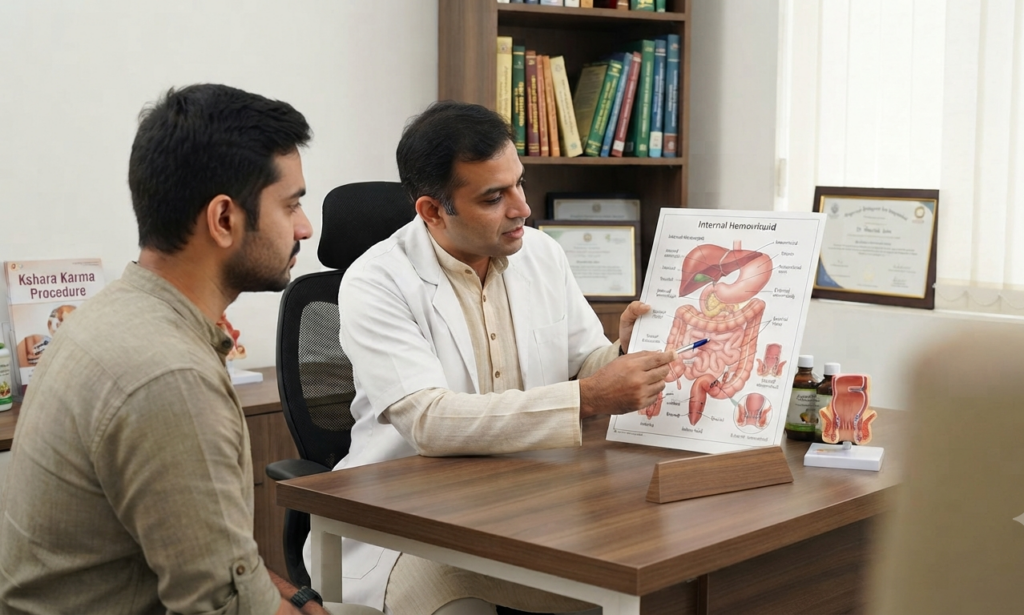
Piles, or haemorrhoids, are swollen blood vessels that develop inside the rectum or around the anus. They are generally classified into two main types:
Internal haemorrhoids: These develop inside the rectum. They are often painless but may cause bright red blood during or after bowel movements.
External haemorrhoids: These develop beneath the skin around the anus. They may cause pain, itching, swelling and discomfort, particularly when a blood clot forms.
Bleeding can occur when the surface of an internal haemorrhoid becomes irritated or damaged during bowel movements. However, rectal bleeding is not always caused by piles. Anal fissures, inflammatory bowel conditions, polyps and other gastrointestinal problems can also cause bleeding.
Common Causes of Bleeding Piles
Several factors can contribute to the development or worsening of haemorrhoids. Understanding the causes of bleeding piles can help people identify habits that may increase their risk.
Chronic Constipation
Passing hard stools can irritate the anal region and increase pressure on the blood vessels. Repeated straining during bowel movements may contribute to haemorrhoid development.
Excessive Straining
Spending too much time on the toilet or straining to pass stools can increase pressure around the rectum and anus.
Low-Fibre Diet
A diet that lacks sufficient fibre may contribute to constipation. Insufficient intake of fruits, vegetables, whole grains and other fibre-rich foods can affect bowel regularity.
Prolonged Sitting
Sitting for extended periods, particularly on the toilet, may increase pressure around the anal region.
Pregnancy
Changes in hormone levels, increased abdominal pressure and constipation during pregnancy can contribute to haemorrhoids.
Age-Related Changes
The supporting tissues around the rectum and anus may weaken with age, increasing the likelihood of developing piles.
Bleeding Piles Symptoms You Should Know
Recognising bleeding piles symptoms can help people seek timely medical attention. Common symptoms include:
- Bright red blood on toilet paper or in the toilet bowl after passing stools.
- Itching or irritation around the anus.
- Swelling or a lump near the anal opening.
- Discomfort or pain during bowel movements.
- A feeling of incomplete bowel emptying.
- Mucus discharge or irritation around the anal region.
The symptoms can vary depending on the type and severity of haemorrhoids.
Important: Rectal bleeding should not automatically be considered a symptom of piles. Heavy bleeding, persistent bleeding, dizziness, unexplained weight loss, changes in bowel habits or severe pain require prompt medical evaluation.
Understanding Piles in Ayurveda
In Ayurveda, piles are described as Arsha. Traditional Ayurvedic explanations associate the condition with disturbances in the body’s doshas and factors affecting digestion and bowel movements.
The term Rakta Arsha is used in Ayurvedic descriptions of piles associated with bleeding. However, this traditional classification should not replace a modern medical examination to identify the actual cause of rectal bleeding.
The Ayurvedic approach to managing piles may consider:
- Digestive health and bowel regularity.
- Dietary habits and food choices.
- Constipation and straining during bowel movements.
- Individual symptoms and overall health.
- The type and severity of the condition.
The choice of Ayurvedic treatment for bleeding piles depends on individual assessment. Not every patient requires the same treatment or procedure.
Kshara Karma for Piles: Procedure and Applications
Kshara Karma is a specialised Ayurvedic para-surgical procedure that uses medicinally prepared alkaline substances, traditionally known as Kshara. It is used in selected conditions under the supervision of a qualified Ayurvedic practitioner.
Kshara Karma for piles may be considered for certain cases of haemorrhoids after evaluating the type, grade and clinical condition of the patient.
How Does Kshara Karma Work?
The procedure involves the controlled application of a prepared alkaline substance to the affected tissue. The specific method and suitability depend on the condition being treated and the practitioner’s assessment.
The treatment process may involve:
- Initial consultation and examination.
- Assessment of the type and severity of haemorrhoids.
- Evaluation of medical history and associated symptoms.
- Selection of an appropriate treatment approach.
- The procedure, if clinically suitable.
- Follow-up consultations to monitor healing and recovery.
The procedure is not suitable for every patient. Its potential benefits, risks, discomfort and alternatives should be discussed with the treating practitioner before proceeding.
People searching for Ayurvedic treatment for piles should understand that Kshara Karma is a specific procedure, not a general treatment for every form of haemorrhoids.
Kshara Karma vs Kshara Sutra: Understanding the Difference
Kshara Karma and Kshara Sutra are two different Ayurvedic para-surgical procedures. Although both involve the traditional use of Kshara, their methods and applications differ.
| Aspect | Kshara Karma | Kshara Sutra |
| Method | Controlled application of medicinal alkaline substances | Use of a specially prepared medicated thread |
| Application | Used in selected conditions, including certain piles cases | Primarily associated with fistula-in-ano |
| Procedure | Application to the affected tissue | Placement of the medicated thread through the fistula tract |
| Treatment approach | Depends on the condition and clinical assessment | Generally involves planned thread changes and follow-up |
Kshara Sutra is primarily associated with the management of fistula-in-ano. It should not be confused with Kshara Karma for piles.
To understand the separate procedure and its applications, read our guide to Kshara Sutra Treatment in Bangalore.
Ayurvedic Diet and Lifestyle Management for Piles
Dietary and lifestyle changes can help support bowel regularity and reduce constipation-related straining. They may form part of an overall Ayurvedic treatment for haemorrhoids plan, depending on individual needs.
Include Fibre-Rich Foods
Consider adding foods such as:
- Fresh fruits, including papaya, pears and apples.
- Green leafy vegetables.
- Whole grains and oats.
- Beans, lentils and other fibre-rich foods.
- Vegetables that support regular bowel movements.
Increase fibre gradually and drink adequate water unless your doctor has advised fluid restriction.
Maintain Proper Hydration
Drinking sufficient water throughout the day can help support softer stools and regular bowel movements.
Avoid Excessive Straining
Do not force bowel movements or spend unnecessary time sitting on the toilet. Responding to the natural urge to pass stools can also help maintain regular bowel habits.
Stay Physically Active
Walking and other suitable physical activities may support digestion and bowel regularity. Choose activities according to your health and comfort.
Follow Individual Dietary Advice
Food recommendations may vary depending on digestion, associated medical conditions and the treatment plan. Consult a qualified practitioner before using herbal medicines or supplements for piles.
When Should You Consult a Doctor for Bleeding Piles?
Medical evaluation is important when you notice bleeding during bowel movements, even if you suspect piles.
Consult a healthcare professional if you experience:
- Repeated episodes of rectal bleeding.
- Persistent pain or discomfort around the anus.
- A painful or swollen lump near the anal opening.
- Changes in bowel habits.
- Symptoms that do not improve with basic dietary and lifestyle changes.
Seek urgent medical attention for heavy bleeding, fainting, dizziness or severe pain.
An appropriate examination helps identify whether the symptoms are caused by haemorrhoids or another condition. Treatment should be based on the diagnosis rather than symptoms alone.
Piles Treatment in Bangalore at Healing Earth Ayurveda Hospital
People looking for piles treatment in Bangalore should choose a healthcare facility where the condition can be properly assessed and suitable treatment options explained.
Healing Earth Ayurveda Hospital in HSR Layout, Bangalore, offers Ayurvedic consultations and treatment services. Patients experiencing symptoms of piles can consult the medical team to understand their condition and discuss appropriate management options.
The hospital’s Ayurvedic approach considers individual symptoms, digestive health, bowel habits and overall medical history before recommending a treatment plan. Where appropriate, the doctor may discuss procedures such as Kshara Karma.
If you are searching for the Best Ayurvedic Hospital in Bangalore or the Best Ayurvedic Hospital in HSR Layout, arrange a consultation to understand the available treatment options and whether they are suitable for your condition.
Frequently Asked Questions
What is the Ayurvedic treatment for bleeding piles?
Ayurvedic management may include dietary modifications, lifestyle changes, medicines and selected procedures such as Kshara Karma. The appropriate approach depends on the type and severity of the condition and should be decided after clinical assessment.
What is Kshara Karma for piles?
Kshara Karma is an Ayurvedic para-surgical procedure involving the controlled application of medicinal alkaline substances to selected affected tissues. It may be considered for certain cases of haemorrhoids under qualified supervision.
Is Kshara Karma the same as Kshara Sutra?
No. Kshara Karma involves the application of a medicinal alkaline preparation, while Kshara Sutra uses a specially prepared medicated thread. Kshara Sutra is primarily associated with fistula-in-ano, whereas Kshara Karma may be used in selected piles cases.
What are the common symptoms of bleeding piles?
Common symptoms include bright red blood during or after bowel movements, itching, irritation, swelling and discomfort. However, rectal bleeding can have causes other than piles and should be medically evaluated.
Can constipation make bleeding piles worse?
Yes. Constipation can lead to hard stools and straining, which may irritate existing haemorrhoids and worsen symptoms. Adequate fibre, hydration and appropriate bowel habits can help reduce constipation.
Where can I consult an Ayurvedic doctor for piles in Bangalore?
You can contact Healing Earth Ayurveda Hospital in HSR Layout, Bangalore, for an Ayurvedic consultation. The doctor can assess your symptoms and explain suitable treatment options.
About the Author
Dr. Shrenik Jain, BAMS, MS (Ayu)
Consultant in Shalya Tantra | Healing Earth Ayurveda Hospital, Bangalore
Dr. Shrenik Jain is a Consultant in Shalya Tantra at Healing Earth Ayurveda Hospital, Bangalore. His clinical expertise includes anorectal disorders, wound management and Ayurvedic para-surgical procedures, including Kshara Sutra therapy. He focuses on the assessment and management of conditions such as fistula, piles and anal fissures through individualised treatment approaches.
For consultation, visit the Healing Earth Ayurveda Hospital team page or book an appointment.
Medical Disclaimer: This article is for educational purposes only and does not replace professional medical advice or treatment. Rectal bleeding requires medical evaluation, and Ayurvedic treatments should be considered only after individual clinical assessment.