
Reaching for a shelf, fastening a bra or turning over in bed should not feel like a negotiation with your shoulder. Yet for people with frozen shoulder, these small movements slowly turn painful and stiff.
Frozen shoulder (adhesive capsulitis) affects roughly 2% to 5% of people, according to StatPearls from the U.S. National Library of Medicine. It often shows up as:
- Shoulder pain that gets worse at night
- Stiffness when you reach overhead or behind your back
- Trouble dressing, combing your hair or driving
Painkillers can dull the ache, but they rarely loosen a tight joint. That is where frozen shoulder ayurvedic treatment can help. Ayurveda calls the condition Avabahuka and treats the dryness and stiffness behind the pain. In this guide, you will learn the stages, the therapies and the recovery path at Healing Earth, an NABH-accredited Ayurveda hospital in HSR Layout, Bangalore.
What Is a Frozen Shoulder? Adhesive Capsulitis and Avabahuka Explained
Frozen shoulder, medically called adhesive capsulitis, is a condition in which the tissue around the shoulder joint becomes thick, inflamed and tight. You lose movement gradually, especially when you lift your arm or turn it outward. Even when someone else moves your arm for you, it will not go as far as it should.
How Ayurveda explains Avabahuka
Ayurveda describes this pattern as Avabahuka (also written Apabahuka), a disorder of the shoulder joint, or Amsa Sandhi. The classical texts link it mainly to aggravated Vata. Vata brings dryness and stiffness. In the early stage, the natural lubrication of the joint, called Shleshaka Kapha, starts to dry up. Later, Kapha adds heaviness and stiffness, and the shoulder “freezes.”
Think of a door hinge that has lost its oil. It does not snap, but it grinds, sticks and resists. Treatment, then, is not only about calming pain. It aims to restore what the joint has lost: warmth, lubrication and smooth movement.
A clinical examination matters here. Frozen shoulder is mainly diagnosed by checking how the shoulder moves, so your doctor may use scans only to rule out other problems such as arthritis or a rotator cuff tear.
Frozen Shoulder Stages: Freezing, Frozen and Thawing
Frozen shoulder usually move through three overlapping stages. Knowing yours helps your doctor choose the right therapy and the right amount of movement.
- Freezing (painful stage): Pain builds over weeks and often feels worst at night or when you lie on that side. Shoulder pain at night can disturb your sleep long before the stiffness peaks. Movement starts to shrink.
- Frozen (stiff stage): The sharp pain eases, but stiffness takes over. Reaching behind your back, fastening clothes or combing your hair becomes hard.
- Thawing (recovery stage): Movement slowly returns. The thawing stage of frozen shoulder can feel uneven, with good days and stubborn days.
Each stage can last several months, and the stages blur into one another. For example, your doctor may begin with gentle oil therapies and warmth in the freezing stage, because forcing the arm can inflame the joint further. As the shoulder softens, the plan may shift toward more active movement and strengthening.
If you notice early signs, do not wait for the shoulder to “thaw” on its own. Early assessment helps you protect your sleep, your routine and the other shoulder.
Who Is More Likely to Get Frozen Shoulder?
Anyone can develop a frozen shoulder, but some groups face a higher risk:
- Age 40 to 60: It is a classic middle-age shoulder problem.
- Women around menopause: Frozen shoulder and menopause are often linked, and hormonal change is one suspected reason.
- Diabetes: A meta-analysis in PubMed Central found diabetes in about 30% of people with frozen shoulder. StatPearls also notes that people with diabetes may respond less well to treatment.
- Thyroid disorders: An underactive thyroid is a recognised risk factor.
- Long immobilisation: An arm kept still after an injury, fracture, surgery or stroke can stiffen into a secondary frozen shoulder.
Ayurveda also looks at everyday habits that aggravate Vata, such as carrying heavy loads on the shoulders, sleeping in an awkward posture, exposure to cold, and irregular or dry, cold food.
Having a risk factor does not mean you will get a frozen shoulder. If you have diabetes or a thyroid condition, tell your doctor and keep taking your regular medicines. Good blood-sugar control supports recovery whichever treatment you choose.
Frozen Shoulder Ayurvedic Treatment at Healing Earth: Therapies for Avabahuka
Ayurveda treats a frozen shoulder in layers. Your doctor first examines the shoulder, identifies your stage and checks conditions such as diabetes. The plan may then combine external therapies, internal medicines, diet and gentle movement. Our Orthopaedic Neurology department looks after shoulder, joint and nerve concerns like this, and you can read about our team of doctors before you visit.
Therapies are chosen for you, so your plan may include some or all of these:
Abhyanga and Bashpa Sweda
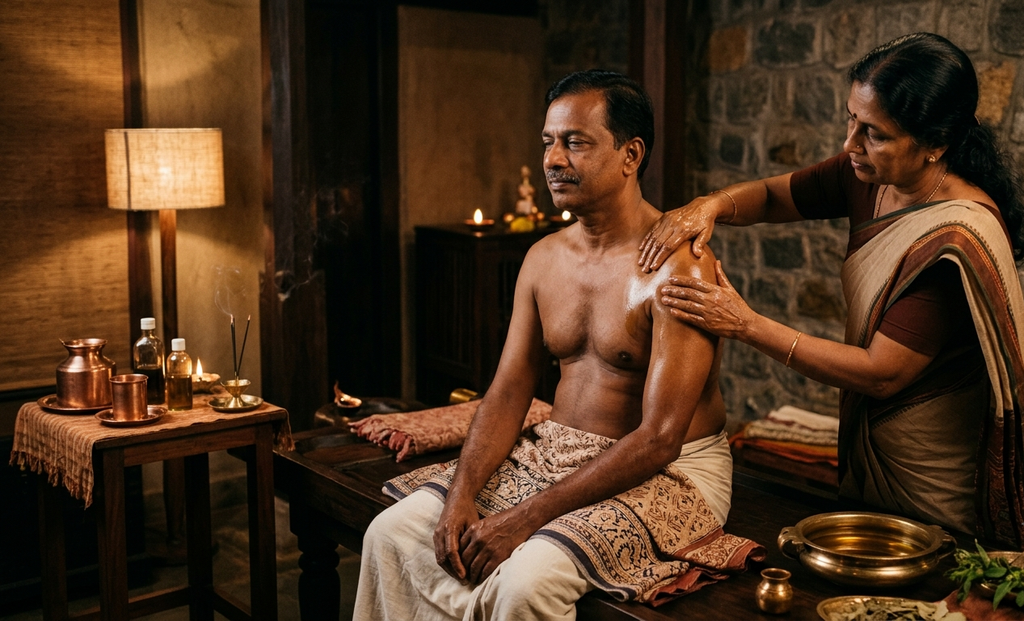
A warm medicated oil massage (Abhyanga) softens tight muscles and eases dryness. Bashpa Sweda, a herbal steam therapy, follows to release stiffness and carry the oil deeper.
Patra Pinda Sweda
Patra Pinda Sweda, also called Ela Kizhi, uses warm boluses of medicinal leaves dipped in oil and pressed over the shoulder in a steady rhythm. Many people describe the shoulder feeling lighter afterwards.
Greeva Vasti, Nasya Karma and Upanaha Sweda
- Greeva Vasti holds warm oil over the neck and upper back, which helps when neck stiffness adds to shoulder pain.
- Nasya Karma places medicated oil in the nostrils to balance Vata in the head, neck and shoulder region.
- Upanaha Sweda wraps the joint in a warm herbal poultice to keep the effect going between sessions.
Depending on your condition, your doctor may also advise Panchakarma therapies such as Vasti. Panchakarma for shoulder pain suits some people and not others, so the choice always follows your examination.
Ayurvedic Treatment for Shoulder Pain: Medicines, Diet and Daily Habits
No single Ayurvedic medicine for frozen shoulder works for everyone. Your doctor prescribes internal medicines, such as herbal decoctions or tablets, and medicated oils for the shoulder after examining you. The choice depends on your stage, how long the shoulder has been stiff and your other health conditions. Please take medicines only on a doctor’s advice, and keep taking your diabetes or thyroid medicines as prescribed.
Simple habits support the therapies:
- Keep the shoulder warm. A warm shower or compress before movement helps. Avoid cold air from a fan or AC blowing on the joint.
- Eat warm, freshly cooked food. Soups, cooked vegetables and mildly oily meals suit a Vata-type condition better than dry, cold or stale food.
- Support your sleep. Use a pillow to stop the arm from rolling forward, and avoid lying on the sore side in the painful stage.
- Avoid heavy lifting. Do not carry loads on the affected side while it is stiff.
- Do not stay completely still. Total rest lets the joint tighten further, so keep up gentle movement within a comfortable range.
For example, a software professional who types for hours may need a posture and desk check as much as an oil therapy. Your doctor can build those small changes into your plan.
Frozen Shoulder Physiotherapy and Home Exercises
Movement is part of every good frozen shoulder plan. Our consultant physiotherapist works alongside the Ayurvedic doctors, so your exercises match your stage instead of following a generic sheet.
Two gentle options are commonly used:
- Pendulum exercise for the shoulder: Lean forward, let the arm hang and swing it in small circles. Gravity does the work, so it is usually the safest first movement, even in the painful stage.
- Towel stretch or gentle wall slide: Once the sharpest pain eases, these help you work toward your lost range without forcing it.
Some rules help you stay safe:
- Move little and often rather than once for a long time.
- Stop if a movement causes sharp pain.
- Avoid yanking the arm to “stretch it out.”
- Ask before trying frozen shoulder yoga. Gentle postures can help after the acute stage, but only those cleared for your shoulder. Our Yoga and Naturopathy department can guide you.
For frozen shoulder physiotherapy in Bangalore, you do not need to choose between two clinics. At Healing Earth, the therapies and the exercises sit under one roof, which makes follow-up simpler.
Frozen Shoulder Treatment Without Surgery: Ayurveda, Injections and Surgery Compared
Most frozen shoulders improve without surgery, though the natural course can take a long time. Standard care usually includes physiotherapy, anti-inflammatory medicines and sometimes a frozen shoulder injection into the joint. A steroid injection can ease pain for a period. Surgery, such as manipulation under anaesthesia or arthroscopic release, is generally kept for stubborn cases.
Ayurvedic treatment for frozen shoulder without surgery takes a different route. It works on the stiffness and dryness of the joint through warmth, oils, steam, Nasya and medicines, together with exercise.
So, is Ayurveda effective for frozen shoulder? Here is an honest answer. Published evidence so far comes mostly from small studies and case reports, including studies on Nasya for Avabahuka, and many report improvement in pain and movement. Larger trials are still needed, and results differ from person to person. Ayurveda is not an overnight cure.
These options are not rivals. Many people use Ayurvedic care alongside physiotherapy, and your doctor can tell you if an injection or an orthopaedic opinion also makes sense for you.
Frozen Shoulder Recovery Timeline: What to Expect
How long does ayurvedic treatment take for frozen shoulder? It depends on your stage, how long the shoulder has been stiff and whether you have diabetes or a thyroid problem. Early cases may respond within weeks. Long-standing stiffness often needs months of treatment, follow-up visits and daily exercises.
A realistic recovery usually looks like this:
- Early (freezing stage): The focus is calming pain, protecting sleep and keeping gentle movement.
- Middle (frozen stage): Therapies work on loosening stiffness while you build range step by step.
- Late (thawing stage): You rebuild strength and prepare to prevent a repeat.
Pain often eases before movement returns, so do not judge progress by pain alone. A shoulder that has fully recovered rarely freezes again, but the other shoulder can become affected, especially with diabetes. That is why maintenance exercises, warmth and blood-sugar control matter after treatment ends. Your doctor will explain what to expect for your own shoulder after the first consultation.
When Shoulder Pain Needs a Different Check First
Not every sore shoulder is a frozen shoulder. See a doctor promptly if:
- Your pain follows a fall or injury, which may mean a fracture.
- You cannot lift your arm at all, or it gives way, which may signal a rotator cuff tear.
- The pain spreads from your neck, or comes with numbness running into the hand.
- You have fever, redness, swelling or an unexplained lump.
Go to an emergency department immediately if arm or shoulder pain comes with chest tightness, sweating or breathlessness. These can be signs of a heart problem. Once other causes are ruled out, Ayurvedic care works best as part of well-guided treatment.
Why Choose Healing Earth for Frozen Shoulder Treatment in HSR Layout, Bangalore
If you are searching for frozen shoulder treatment in Bangalore, here is what you can expect at Healing Earth:
- NABH-accredited care: Healing Earth is an NABH-accredited Ayurveda hospital (Certificate No. AH-2020-0094) and is KPME registered.
- A dedicated department: Our Orthopaedic and Neurology department is headed by Dr. Farida Khanum (BAMS, MD), who has more than 15 years of Ayurvedic practice.
- Ayurveda plus physiotherapy: A consultant physiotherapist works with our doctors for your exercise plan.
- Full examination first: Every treatment plan begins with an assessment by a qualified BAMS/MD doctor, with in-house lab facilities when tests are needed.
- Flexible care: Choose OPD visits or in-patient stay, and book an online consultation if you cannot travel.
- Insurance support: Cashless and reimbursement options are available with partner insurers, subject to your policy terms. Check our insurance page before admission.
Whether you are looking for an Ayurvedic doctor for frozen shoulder in HSR Layout, an Ayurvedic hospital for shoulder pain in Bangalore, or Ayurvedic orthopaedic treatment in Bangalore, our team will assess your shoulder first and then explain every step before treatment begins.
Address: 149 HSR, Outer Ring Rd, Sector 5, 1st Block Koramangala, HSR Layout 5th Sector, Bengaluru, Karnataka 560102 | Phone/WhatsApp: +91 78999 03943
Frequently Asked Questions
What is the best frozen shoulder ayurvedic treatment?
There is no single best therapy. Treatment usually combines Abhyanga, Swedana, Patra Pinda Sweda, Greeva Vasti and Nasya Karma with medicines and gentle exercise, chosen for your stage after a doctor’s examination.
Is Ayurveda effective for frozen shoulder?
Small studies and case reports suggest improvement in pain and movement, but larger trials are still needed. Ayurvedic care aims to loosen the joint and ease pain sooner than waiting alone, and results vary from person to person.
How long does ayurvedic treatment take for frozen shoulder?
Early cases may improve within weeks. Chronic or diabetes-related stiffness can need several months of treatment and daily exercise. Your doctor will set a realistic plan after examining your shoulder.
Can Panchakarma help shoulder pain?
Some people with shoulder pain benefit from Panchakarma therapies such as Vasti and Nasya, while others need only external therapies. Your doctor decides after assessing your stage and health. You can ask about Panchakarma for shoulder pain in Bangalore at Healing Earth.
Is frozen shoulder linked to menopause?
Frozen shoulder is more common in women in their 40s and 50s, which overlaps with perimenopause and menopause. Hormonal change is one suspected factor, alongside diabetes and thyroid conditions. Treatment follows the same stage-based approach.
Can I do yoga or exercises for a frozen shoulder?
Yes, but match the movement to your stage. Pendulum swings are usually safe early on. Avoid forcing the arm in the painful stage, and ask your doctor before starting yoga.
Does insurance cover Ayurvedic treatment at Healing Earth?
Healing Earth offers cashless and reimbursement options with partner insurers, subject to your policy terms and insurer approval. Confirm the details with our insurance desk before admission.
Conclusion
Frozen shoulder is frustrating because it changes small, everyday movements, and it rarely hurries. The good news is that you do not have to wait it out alone. Ayurveda treats Avabahuka by restoring warmth, lubrication and movement, through therapies like Patra Pinda Sweda, Greeva Vasti and Nasya Karma, along with medicines, physiotherapy and simple daily habits. The earlier you start, the more you protect your sleep, your routine and your other shoulder.
If your shoulder is stiff, painful or slowly locking up, book a consultation with the Healing Earth team in HSR Layout, Bangalore. We will examine your shoulder, explain your stage and plan your care step by step.
This article is for general information and does not replace medical advice. Treatment outcomes vary from person to person.