
You have probably heard of Panchakarma.
Maybe someone told you it is an Ayurvedic detox. Maybe you have seen videos of people receiving oil treatments, herbal therapies or steam treatments. Or perhaps you have searched for Panchakarma treatment because you want to understand what actually happens during the process.
But there is one part of Panchakarma that most online explanations skip.
What really happens after you enter the treatment room?
Does the treatment start with oil massage?
Why are some people given Snehana and Swedana first?
Why does the doctor ask about digestion, appetite, sleep and bowel habits before planning the treatment?
And why can two people undergoing Ayurvedic Panchakarma end up with completely different treatment plans?
The answer is simple.
Panchakarma is not one treatment. It is a planned therapeutic process.
The treatment you receive depends on your health, symptoms, strength, digestion, age and the physician’s assessment.
So before you book a Panchakarma package or decide which procedure you want, it helps to understand what actually happens behind the treatment room door.
Medically Reviewed by Dr. Ayesha Moona, BAMS
Resident Medical Officer, Healing Earth Multi-Specialty Ayurveda Hospital, Bangalore
About Dr. Ayesha Moona
Dr. Ayesha Moona is an Ayurvedic physician with 2 years of clinical experience and currently serves as the Resident Medical Officer at Healing Earth Ayurveda Hospital.
She completed her BAMS from Atreya Ayurvedic Medical College, Hospital and Research Center, Doddaballapur.
As part of her clinical practice, Dr. Ayesha is involved in inpatient care, treatment planning, coordination with therapists and supervised delivery of Ayurvedic therapies.
She has received specialized training in Uttara Vasti and has assisted in para surgical procedures including Kshara Karma, Kshara Sutra, Agnikarma and Siravyadha.
Her clinical interests include gynecological disorders, ano rectal conditions, pain related concerns and lifestyle diseases. She also has a particular interest in preventive care, detoxification and Panchakarma therapy.
Her approach combines classical Ayurvedic principles with practical clinical experience and individualized patient care.
What Is Panchakarma?
So, what is Panchakarma actually?
Panchakarma is a classical Ayurvedic therapeutic approach involving selected procedures intended to support therapeutic cleansing and management of certain health conditions according to Ayurvedic principles.
The word Panchakarma comes from two Sanskrit words.
“Pancha” means five.
“Karma” refers to therapeutic action or procedure.
The five classical procedures associated with Panchakarma in Ayurveda are:
- Vamana
- Virechana
- Basti
- Nasya
- Raktamokshana
But there is an important point that often gets missed.
Not everyone undergoing Panchakarma receives all five procedures.
The treatment is selected according to the individual’s condition and the physician’s assessment.
That is why Panchakarma should not be understood as a fixed five step package.
The treatment room may look similar from one patient to another, but what happens inside can be very different.
Panchakarma Does Not Start When You Enter the Treatment Room
This may surprise you.
Your first Panchakarma session may not involve the main procedure at all.
Before beginning Panchakarma treatment, an Ayurvedic physician may first assess your overall health and decide whether the treatment is appropriate.
The consultation may include questions about:
- Your present health concerns
- Appetite and digestion
- Bowel habits
- Sleep
- Lifestyle
- Previous illnesses
- Current medications
- Previous treatments
- Physical strength
- Age
- Existing medical conditions
This information helps the physician decide how the treatment should be planned.
So if a clinic starts a Panchakarma procedure without asking much about your health, it is reasonable to ask questions.
Panchakarma preparation begins with understanding the person, not simply preparing the treatment room.
What Are the Stages of Panchakarma?
The Stages of Panchakarma are generally discussed in three broad phases:
Purvakarma
Preparation before the main procedure.
Pradhana Karma
The selected main Panchakarma procedure.
Paschat Karma
Post treatment care and recovery.
The exact Panchakarma treatment steps can vary depending on the person and the therapy selected.
This is why there is no single timetable that can accurately describe every Panchakarma programme.
Stage 1: Purvakarma
Before the main Panchakarma procedure, the body may be prepared through therapies collectively referred to as Purvakarma.
Two therapies frequently discussed during this stage are Snehana and Swedana.
This preparation is not something to rush through.
The physician decides whether these therapies are appropriate, how they should be performed and for how long.
Snehana
Snehana refers to Ayurvedic oleation therapy.
Depending on the treatment plan, it may involve internal or external oleation.
External Snehana commonly involves the application of medicated oils over the body using a suitable therapeutic method.
This is one reason people often associate Panchakarma with oil therapy.
But there is a difference between receiving a relaxing oil massage and receiving Snehana as part of a physician planned Panchakarma therapy.
The purpose, oil, duration and method may be selected according to the individual’s requirements.
Swedana
Swedana is an Ayurvedic sweating therapy involving controlled application of heat.
It may be used as part of Panchakarma preparation when considered appropriate by the physician.
The temperature, duration and method should be selected according to the patient’s condition and tolerance.
More heat does not mean better treatment.
The aim is controlled therapeutic application, not simply making the body sweat as much as possible.
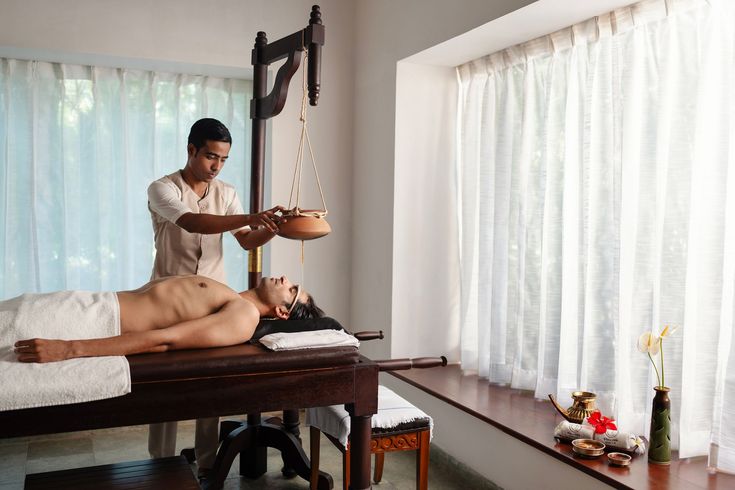
What Happens Inside the Panchakarma Treatment Room?
Now we come to the part you were probably searching for.
You enter the treatment room.
What happens next?
First, the therapist confirms the planned procedure and prepares the required medicines, oils or equipment.
You are positioned according to the therapy being performed.
The procedure is then carried out according to the treatment plan.
During the session, the therapist observes your comfort and response.
After the procedure, you may receive instructions regarding rest, food, hydration or other aspects of your routine.
It may sound simple.
But the important part is what happens before, during and after the therapy.
A Panchakarma treatment room is not simply a place where a procedure is performed.
It is part of a supervised treatment process.
What Happens During the Main Panchakarma Procedure?
The main treatment depends on the procedure selected by the physician.
The five classical Panchakarma procedures include Vamana, Virechana, Basti, Nasya and Raktamokshana.
Each has a different therapeutic approach.
Vamana
Vamana is a therapeutic emesis procedure described in classical Ayurveda.
It is not something that should be attempted independently.
Proper patient selection, preparation and supervision are essential.
Virechana
Virechana refers to therapeutic purgation.
The medicines, preparation and timing are selected according to the individual’s Ayurvedic assessment.
It should not be confused with taking a random laxative or attempting a home detox.
Basti
Basti is an Ayurvedic therapeutic procedure involving administration through the rectal route.
Different types of Basti may be selected depending on the treatment plan.
Because the procedure involves specific medicines, preparation and technique, professional supervision is important.
Nasya
Nasya involves administration of selected substances through the nasal route.
It is traditionally used within Ayurvedic treatment for conditions involving areas above the clavicle.
The preparation and method depend on the individual’s condition.
Raktamokshana
Raktamokshana refers to therapeutic bloodletting described in classical Ayurvedic texts.
Its use today requires careful clinical consideration and appropriate professional supervision.
The important point is that these procedures are not interchangeable.
Your Panchakarma treatment should be selected for you, not copied from someone else’s treatment plan.
Why Does Panchakarma Look Different for Different People?
You might compare two people’s experiences and wonder why their treatment plans are not the same.
One person may undergo Snehana and Swedana.
Another may have a different preparatory plan.
One person may be advised a particular Panchakarma procedure.
Another may be advised against it.
That is not necessarily a contradiction.
Ayurveda traditionally considers individual factors while planning treatment.
Your symptoms, digestive capacity, strength, age, season, existing health conditions and treatment objective can all influence the approach.
This is why a good Panchakarma procedure cannot be selected simply by looking at an online list.
What Are the Panchakarma Benefits?
The phrase Panchakarma benefits is one of the most searched aspects of this treatment.
Within Ayurvedic practice, Panchakarma is traditionally used as a therapeutic approach for selected conditions and may also be incorporated into preventive and wellness oriented care.
The potential benefits discussed in Ayurveda depend on the procedure performed and the individual’s condition.
Some people may report changes in digestive comfort, appetite, bowel patterns, general wellbeing or other symptoms following treatment.
However, these experiences can differ considerably.
Panchakarma should not be promoted as a guaranteed cure or as a universal solution for every health problem.
A realistic treatment plan starts with assessment rather than promising a particular result.
How Long Does Panchakarma Take?
Another question patients frequently ask is:
How long does Panchakarma take?
There is no fixed answer.
The duration can depend on:
- The selected treatment
- Preparation required
- The individual’s health condition
- Response to treatment
- Strength and age
- Physician’s assessment
- Post treatment care
The treatment may involve a preparatory period before the main procedure and a recovery period afterwards.
So when someone says, “Panchakarma takes five days,” that should not be treated as a universal rule.
Your Panchakarma programme may be different.
What Is Panchakarma Preparation Really Like?
The preparation phase can be the part patients underestimate.
You may be asked to modify your diet.
Your daily routine may change.
You may need to reduce strenuous activity.
You may be advised to rest more.
Preparatory therapies such as Snehana and Swedana may be included where appropriate.
The physician may also monitor how you respond before moving to the next stage.
This is why Panchakarma preparation should not be treated as an optional extra.
It is part of the overall treatment plan.
What Happens After Panchakarma?
The treatment does not necessarily end when you leave the treatment room.
The body may need time to return to a regular routine depending on the procedure performed.
Your physician may advise dietary changes, rest and gradual return to normal activities.
Post treatment instructions can differ according to the procedure and individual response.
Following these instructions is an important part of the overall Panchakarma treatment steps.
A treatment should not be judged only by what happens during the procedure itself.
Is Panchakarma Just an Ayurvedic Detox?
This is probably the biggest misconception surrounding Panchakarma.
Search online and you will find Panchakarma described almost everywhere as an “Ayurvedic detox.”
The word may make the treatment sound simple.
But classical Panchakarma is more structured than a weekend detox programme.
It involves assessment, preparation, selected therapeutic procedures and post treatment care.
Calling every oil massage, steam bath or herbal drink “Panchakarma” also creates confusion.
Panchakarma in Ayurveda is a therapeutic system, not a collection of spa treatments.
Can You Do Panchakarma at Home?
Some Ayurvedic practices may be recommended for home use under professional guidance.
However, several Panchakarma procedures require trained personnel and appropriate supervision.
Trying to perform procedures such as Vamana, Virechana or Basti at home based on instructions found online is not appropriate.
Even therapies such as Snehana and Swedana may need to be modified according to an individual’s condition.
The internet can explain what a treatment is.
It cannot examine you.
Who Should Avoid Self Selecting Panchakarma?
People with existing medical conditions should tell their physician before starting treatment.
This is particularly important if you:
- Take regular medication
- Have undergone recent surgery
- Have a chronic health condition
- Have an acute illness or infection
- Are pregnant or recently postpartum
- Have significant digestive problems
- Have weakness or reduced physical strength
- Have recently experienced a major change in health
The physician may modify the treatment, postpone it or recommend another approach.
Panchakarma and Your Everyday Lifestyle
Panchakarma does not happen in isolation from the rest of your routine.
Sleep, food, physical activity, stress and daily habits can all influence your overall wellbeing.
During treatment, your physician may therefore discuss more than the procedure itself.
You may receive guidance about:
- Food
- Sleep
- Rest
- Physical activity
- Daily routine
- Follow up care
This broader approach is one reason Ayurvedic Panchakarma is different from simply booking an individual massage.
When Should You Seek Medical Evaluation Instead?
Panchakarma should not delay appropriate medical care.
If you have symptoms that are severe, sudden or worsening, seek evaluation from an appropriately qualified healthcare professional.
This is especially important for symptoms such as:
- Sudden severe pain
- Fainting
- Significant bleeding
- Severe dehydration
- Sudden neurological symptoms
- Persistent vomiting or diarrhoea
- Difficulty breathing
- Sudden changes in health
Ayurvedic treatment and modern medical care should not be treated as competing choices when urgent evaluation is needed.
The priority is appropriate care for the condition.
Why Professional Panchakarma Care Matters
If you are searching for Panchakarma treatment, you will find many centres offering different packages.
Some may advertise three day programmes.
Others may offer seven day, fourteen day or longer packages.
But duration alone does not tell you whether the treatment is appropriate.
Look for a centre where:
- A qualified Ayurvedic physician assesses you first
- Your medical history is considered
- The Panchakarma procedure is explained
- Preparation is planned appropriately
- Therapies are supervised
- Your response is monitored
- Post treatment instructions are provided
The right question is not:
“Which Panchakarma package has the most treatments?”
It is:
“Which treatment is appropriate for me?”
Panchakarma at Healing Earth Ayurveda Hospital
At Healing Earth Multi-Specialty Ayurveda Hospital, Panchakarma is approached as an individualized Ayurvedic treatment process.
The treatment plan begins with a clinical assessment.
Based on the individual’s condition, the physician may determine whether Panchakarma is appropriate and which preparatory and therapeutic procedures should be considered.
Therapies such as Purvakarma, Snehana and Swedana may be incorporated where clinically appropriate.
The treatment is carried out under professional supervision rather than following a fixed routine for every patient.
For someone considering Panchakarma in Ayurveda, this individualized approach can help you understand not only what treatment you may receive, but also why it has been selected.
Frequently Asked Questions
What is Panchakarma?
Panchakarma is a classical Ayurvedic therapeutic approach involving selected procedures along with preparation and post treatment care. The treatment plan is individualized according to the person’s condition and Ayurvedic assessment.
What are the five Panchakarma procedures?
The five classical Panchakarma procedures are Vamana, Virechana, Basti, Nasya and Raktamokshana. Not every person undergoing Panchakarma will necessarily receive all five.
What are the Panchakarma treatment steps?
The broad Panchakarma treatment steps include preparation or Purvakarma, the selected main therapeutic procedure and post treatment care. The exact sequence varies according to the individual.
What are the benefits of Panchakarma?
The Panchakarma benefits discussed in Ayurveda depend on the selected procedure and the individual’s condition. Panchakarma should not be presented as a guaranteed cure for every disease.
How long does Panchakarma take?
There is no universal duration. The length of Panchakarma depends on the treatment plan, preparation required, individual health status, response to treatment and post treatment care.
Is Panchakarma the same for everyone?
No. The Panchakarma treatment plan can vary significantly between individuals depending on their condition, strength, digestion, age and other clinical factors.
Can I do Panchakarma at home?
Several Panchakarma procedures require professional supervision. They should not be self administered based solely on online instructions.
Is Panchakarma only for people with health problems?
Panchakarma may be considered within Ayurvedic therapeutic and preventive care depending on the individual. However, suitability should be assessed by a qualified Ayurvedic physician rather than assumed.
When Should You Consider a Panchakarma Consultation?
If you have been thinking about Panchakarma because you feel that your health, digestion, lifestyle or general wellbeing needs attention, do not start by choosing a package.
Start with a consultation.
A physician can help you understand whether Panchakarma is appropriate, which Panchakarma therapy may be considered, whether preparation is required and how long the treatment may take.
Because sometimes the most useful answer is not another treatment.
It is knowing which treatment you actually need.
Book a Panchakarma Consultation in Bangalore
Healing Earth Multi-Specialty Ayurveda Hospital provides Ayurvedic consultation and traditional therapies under qualified medical supervision.
If you are looking for Panchakarma treatment, discuss your health concerns with an Ayurvedic physician before beginning the programme.
Your consultation can help you understand the appropriate Panchakarma procedure, preparation, Stages of Panchakarma, expected duration and suitable therapies for your individual requirements.
Book a Consultation with Healing Earth Ayurveda Hospital
Medical Disclaimer
This article is intended for general educational purposes and does not replace professional medical advice, diagnosis or treatment.
Panchakarma and other Ayurvedic therapies should be recommended only after an appropriate individual assessment. The information provided in this article should not be interpreted as a claim that Panchakarma can cure, reverse or prevent any specific disease.
Do not stop prescribed medication or delay necessary medical care in favour of Panchakarma or any other complementary therapy.
If you have severe, sudden or worsening symptoms, seek appropriate medical evaluation.