
Finding a smooth, round bald patch on the scalp can be unsettling, especially when it appears without warning. Many people start looking for Ayurvedic treatment for alopecia areata after learning that the condition is unpredictable and that modern options do not work equally well for everyone. This guide explains what alopecia areata is, how Ayurveda traditionally understands it, which supportive therapies a doctor may consider, and what to ask before starting any treatment. It is written for readers in Bangalore and beyond who want clear, balanced information.
What Is Alopecia Areata?
Alopecia areata is a condition that causes hair to fall out in round or oval patches. MedlinePlus, from the US National Institutes of Health, describes it as patchy hair loss that can sometimes progress to loss of all scalp hair. It is generally understood to be an autoimmune condition, which means the body’s defence system mistakenly targets its own hair follicles. The follicles are not destroyed, which is why hair can grow back, sometimes even without treatment.
Anyone can be affected. Alopecia areata in women is often noticed late because longer hair can hide small patches, while alopecia areata in men may first show up in the beard. Eyebrows and eyelashes can also be involved. When the whole scalp is affected, doctors call it alopecia totalis, and loss of hair across the whole body is called alopecia universalis.
Alopecia Areata Symptoms and Early Signs
The pattern is usually quite distinctive. Common alopecia areata early signs include:
- One or more small bald patches on the head, usually smooth and round
- Skin in the patch that looks normal, rather than red, scaly or scarred
- Hair coming out in clumps on the pillow, comb or bathroom floor
- Mild itching or tingling in the area before a patch appears, in some people
- Tiny pits or roughness on the fingernails
The British Association of Dermatologists’ patient information notes that the patches are typically not inflamed or scaly and that some people also develop nail changes. Round bald patches on the scalp are often first spotted by a hairdresser or family member rather than the person themselves. Early evaluation matters because other conditions, such as a fungal scalp infection, can look similar and need a completely different approach.
Alopecia Areata Causes and Risk Factors
The exact cause is not known. Researchers believe a mix of genetic tendency and immune activity is involved, and the same British Association of Dermatologists resource lists infections and stress among the suspected triggers. Stress is a theory rather than a proven cause, so it is best not to blame yourself for the condition.
Possible risk factors include:
- A family history of alopecia areata
- Other autoimmune or allergic conditions, such as thyroid disease or eczema
- A recent illness, or a period of major physical or emotional strain
Alopecia areata is not contagious. It is also worth knowing that patchy hair loss causes are not always the same. Iron deficiency, thyroid problems, fungal infection and habitual hair pulling can look similar, which is why a proper examination should come first.
How Alopecia Areata Is Diagnosed and Treated in Modern Medicine
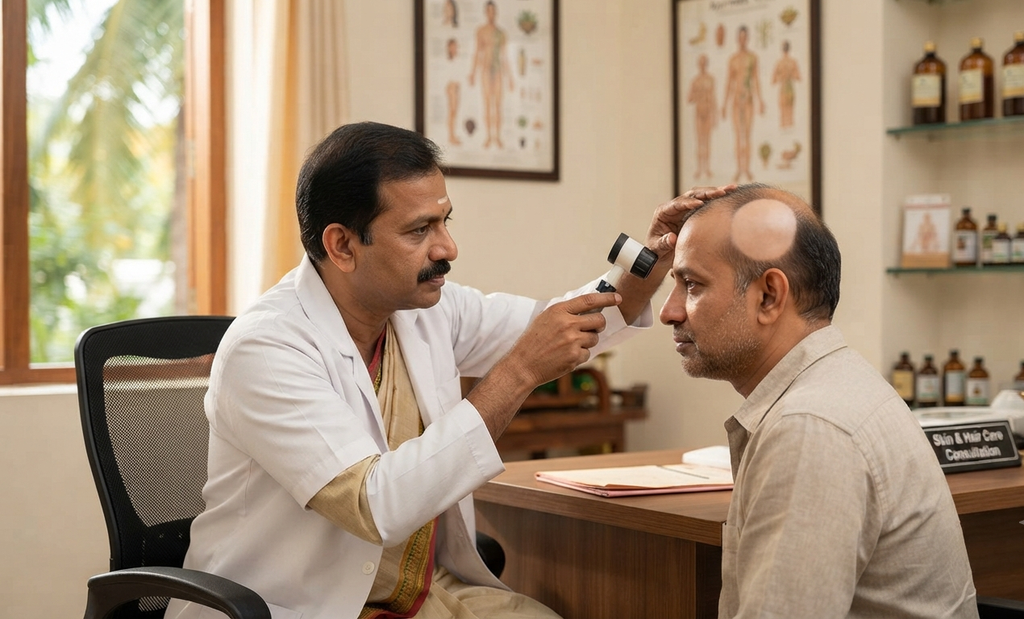
Diagnosis usually starts with a close look at the scalp and the pattern of hair loss. A dermatologist may use a magnifying device called a dermoscope and may suggest blood tests, such as thyroid or iron levels, if there is a reason to check. A scalp biopsy is rarely needed.
Treatment depends on how much hair is affected. People with mild disease may not need treatment, as hair can regrow on its own, according to the British Association of Dermatologists. When treatment is advised, options include corticosteroid creams, injections into the patches or tablets, minoxidil, and contact immunotherapy. For severe cases, specialists may consider newer medicines called JAK inhibitors. The British Association of Dermatologists guideline in the British Journal of Dermatology reviews the evidence for these approaches.
One honest point deserves mention. Because hair can regrow spontaneously and the condition often relapses, it is difficult to say whether any single treatment, including an Ayurvedic one, caused the regrowth. Please do not stop or change any prescribed medicine without speaking to your doctor.
Alopecia Areata in Ayurveda
Classical Ayurvedic texts describe patchy hair loss under a condition called Indralupta, which is often compared with alopecia areata. This is a traditional comparison and not an exact match with the modern diagnosis. In this framework, aggravated Pitta (the body’s heat and metabolic energy) together with Vata (dryness and instability) is believed to reach the hair roots. Kapha and impure blood, known as rakta, are then thought to block the roots so that new hair cannot grow.
Ayurveda also links such imbalances to stress, irregular meals, poor sleep and excess spicy, sour or salty food. These ideas offer a useful way to shape diet and routine, but they are traditional concepts and not mechanisms proven by modern research. If Ayurvedic terms are new to you, our page on what Ayurveda is and how it approaches health is a helpful starting point.
Ayurvedic Treatment for Alopecia Areata: Therapies and Procedures
Ayurvedic treatment for alopecia areata is planned for the individual, not the diagnosis alone. The Skin and Hair Care department at Healing Earth lists alopecia areata among the hair concerns it sees. Its approach combines internal detoxification, external therapies such as lepa and abhyanga, and herbal formulations. Care starts with a full consultation at our NABH-accredited hospital, and you can see the facilities available for outpatient and in-patient care before you visit.
Internal cleansing therapies (Shodhana)
Depending on the assessment, a physician may consider one or more cleansing therapies that belong to Panchakarma. These include Virechana, a supervised therapeutic purgation traditionally used to reduce excess Pitta, and Nasya Karma, in which medicated oil is administered through the nose to support the head region. Raktamokshana, a traditional blood-purifying procedure, is also described in classical texts. You can read about its types and precautions in our article on Raktamokshana in Ayurveda.
These therapies are not suitable for everyone. Pregnancy, marked weakness, anaemia and several other conditions can make them inappropriate, so they should only be done after a medical assessment and under supervision.
External scalp therapies
Scalp therapies are used to nourish the skin and calm the scalp. Shiro Abhyangam is a head massage with medicated oil. Shiro Lepana involves applying a herbal paste to the scalp. Shiro Takra Dhara is a gentle stream of medicated buttermilk over the head, traditionally chosen when stress is a visible part of the picture. Together, these make up what many people search for as an Ayurvedic scalp treatment.
Internal medicines
Herbal formulations are prescribed after assessment, and the choice depends on your constitution, digestion and overall health. Please avoid buying Ayurvedic medicine for alopecia areata on your own. Products should be prescribed by a registered Ayurvedic physician and sourced from a reputable manufacturer.
Ayurvedic Herbs and Oils for Hair Growth: What to Know
Amla (Indian gooseberry) and bhringraj (false daisy) are the two herbs most often mentioned in traditional hair care. Many people search for amla for hair growth or bhringraj for hair growth, and both are commonly used in medicated oils and powders. If you want to learn about individual plants, our medicinal plants library is a good place to browse.
A realistic expectation helps here. These herbs have a long history of traditional use, but high-quality clinical trials in alopecia areata are limited, so no herb or Ayurvedic oil for hair growth can be promised to bring hair back. If you try a herbal oil, a few precautions help:
- Do a patch test on a small area of skin first
- Avoid applying it on broken, inflamed or very sore skin
- Stop using it if you notice itching, redness or swelling
- Tell your doctor if you are pregnant, breastfeeding or on regular medication
Diet, Lifestyle and Supportive Care
Daily habits will not replace medical evaluation, but they can support general health while you are under care.
- Eat regular, balanced meals. Include enough protein, iron-rich foods, fresh fruit and vegetables. Crash diets can increase hair shedding.
- Favour freshly cooked, seasonal food. Ayurveda suggests limiting very spicy, sour, fried and processed items if Pitta seems high.
- Keep a steady routine. Regular sleep and meal times are central to Ayurveda. Our article on Dinacharya, the Ayurvedic daily routine explains how to build one.
- Make room for calm. Yoga, pranayama and meditation can help with stress, and our Yoga and Naturopathy department offers guided support.
- Look after your emotional health. The British Association of Dermatologists notes higher rates of anxiety and depression among people with alopecia areata. If hair loss is affecting your mood, our Psychiatry and Mental Health department can help.
- Be gentle with your hair. Avoid tight hairstyles, harsh chemical treatments and very hot styling tools. Everyday guidance is available in our article on how to control hair fall naturally.
When to Consult a Doctor
Please arrange a medical evaluation if you notice any of the following:
- Patches that spread quickly or appear in large numbers in a short time
- Hair loss beyond the scalp, or changes in the nails
- Patches that are red, scaly, painful or leave scarring
- Hair loss in a child
- Distress, low mood or anxiety linked to hair loss
If you are pregnant, breastfeeding, diabetic, have a thyroid condition or take long-term medication, speak to a doctor before starting any herbal product or therapy. If you are looking for an Ayurvedic doctor for hair loss in Bangalore, you can meet our team of qualified Ayurvedic doctors and plan a consultation at our Ayurvedic hospital in HSR Layout.
Frequently Asked Questions
Can Ayurveda cure alopecia areata?
There is no reliable evidence that Ayurveda cures alopecia areata. Ayurvedic care may offer supportive benefits for scalp health, stress and overall wellbeing, but results vary and cannot be guaranteed. A qualified doctor can explain what is reasonable to expect in your case.
Can hair grow back after alopecia areata?
Yes, hair often regrows because the follicles stay intact. Regrowth can happen with or without treatment, and the condition can return later. This is why alopecia areata hair regrowth is hard to predict from one person to the next.
How long does Ayurvedic treatment for alopecia areata take?
There is no fixed timeline. It depends on the extent of hair loss, how long it has been present and your general health. Your doctor will review progress at regular visits and adjust the plan accordingly.
Is Ayurvedic oil enough for patchy hair loss?
Oil alone is unlikely to be enough, and it is not proven to treat alopecia areata. Patchy hair loss treatment should begin with a proper diagnosis, because several different conditions can cause similar patches.
Are there natural remedies for alopecia areata that are safe to try at home?
Gentle measures such as a balanced diet, good sleep, stress management and mild scalp care are generally safe. Be cautious with strong home preparations, essential oils or unverified powders, as they can irritate the scalp. Check with a doctor first, especially if you take other medicines.
Is alopecia areata different in women and men?
The underlying condition is the same, but how it appears can differ. Women may notice thinning or patches late because of longer hair, while men may see patches in the beard. Both should seek an evaluation if hair loss is sudden or spreading.
Where can I get Ayurvedic hair treatment in Bangalore?
Healing Earth Ayurveda Hospital in HSR Layout offers consultations through its Skin and Hair Care department, followed by a personalised plan after examination. You can request an appointment through our contact page.
Conclusion
Alopecia areata is unpredictable, but it is also well understood by medicine, and hair often has the chance to grow back. Ayurveda offers a traditional framework that combines scalp therapies, internal cleansing, herbal care, diet and stress management, though its benefits in this condition are not firmly proven. The safest path is to confirm the diagnosis first, keep any prescribed treatment going, and use Ayurvedic care as a supervised, supportive option. If you would like to discuss your hair concerns with an Ayurvedic doctor, you are welcome to book a consultation at Healing Earth in HSR Layout, Bangalore.
About the Author
Dr. Sreelaxmi (BAMS, ACD), Resident Medical Officer
If you are looking for an Ayurvedic doctor for hair loss in Bangalore, you can start with a consultation with Dr. Sreelaxmi (BAMS, ACD), Resident Medical Officer, whose focus is Panchakarma and lifestyle disorders. You can also meet our wider team of qualified Ayurvedic doctors and plan a consultation at our Ayurvedic hospital in HSR Layout.
Medical Disclaimer
This article is intended for general educational purposes only. It does not replace professional medical advice, diagnosis or treatment. Please consult a qualified healthcare professional about your individual medical concerns, and do not stop or change any prescribed medicine without their guidance.