
A routine health check shows a high blood sugar reading, and suddenly everyone has advice. Some of it sounds modern, and some of it comes from an older tradition. Madhumeha in Ayurveda is the classical name for a condition marked by excessive urination, urine that is sweet like honey, and a gradual loss of strength. It is widely compared with diabetes mellitus today. Ayurveda offers a detailed framework of diet, daily routine and herbal care for it, but that framework works best alongside regular testing and medical treatment, not in place of them. This guide explains the traditional view, what modern medicine adds, and how supportive Ayurvedic care is usually planned.
What Is Madhumeha in Ayurveda?
The Madhumeha meaning is easy to follow once you split the word. Madhu means honey, and meha means excessive passage of urine. Classical texts such as the Charaka Samhita and Sushruta Samhita describe it as a metabolic disorder, not just a urinary problem.
Ayurveda looks at health through three functional forces called doshas (Vata, Pitta and Kapha), the strength of Agni (the digestive and metabolic fire) and the condition of body tissues called dhatus. Madhumeha is understood as a state where Kapha and Meda (fat tissue) increase, Agni weakens, and Ojas, the body’s vital reserve, slowly declines. If this vocabulary is new to you, our overview of Ayurveda is a good place to start.
Diabetes in Ayurveda is therefore a close comparison, not an exact match. Madhumeha is a traditional diagnosis based on symptoms and constitution, while diabetes mellitus is confirmed by blood tests. Healing Earth’s page on diabetes mellitus describes the same correlation from the Ayurvedic point of view.
Prameha and Madhumeha: What Is the Difference?
The two words are often used as if they mean the same thing, but the classical texts treat them differently.
Prameha is the wider group. Ayurvedic texts list 20 types: ten linked to Kapha, six to Pitta and four to Vata. Madhumeha is described among the Vata types in the Charaka Samhita, and the Sushruta Samhita describes it as the stage a neglected Prameha can reach. In both views the message is similar: Prameha is the broad category, Madhumeha is its more advanced and harder to manage form, and early attention matters.
The texts also describe two body types, a heavier person (Sthula) and a leaner person (Krisha), and advise different care for each. Modern comparisons with type 2 and type 1 diabetes are sometimes drawn, but they are loose parallels and not diagnoses.
Causes and Risk Factors: The Traditional and Modern View
Ayurveda looks at lifestyle first. Classical texts name a sedentary routine, sleeping during the day, regular intake of sweet, heavy and oily foods, curd and freshly harvested grains, along with heredity (Sahaja) and stress.
Modern medicine arrives at a similar place by a different route. In type 2 diabetes, the body stops responding well to insulin. Common risk factors include family history, excess weight around the abdomen, low physical activity, increasing age, PCOS, poor sleep and chronic stress. The World Health Organization explains that type 2 diabetes accounts for most cases worldwide and is potentially preventable through healthy eating and regular activity. That is why weight management (see our page on obesity or Stoulya) and blood pressure care (see hypertension) are part of any sensible diabetes plan.
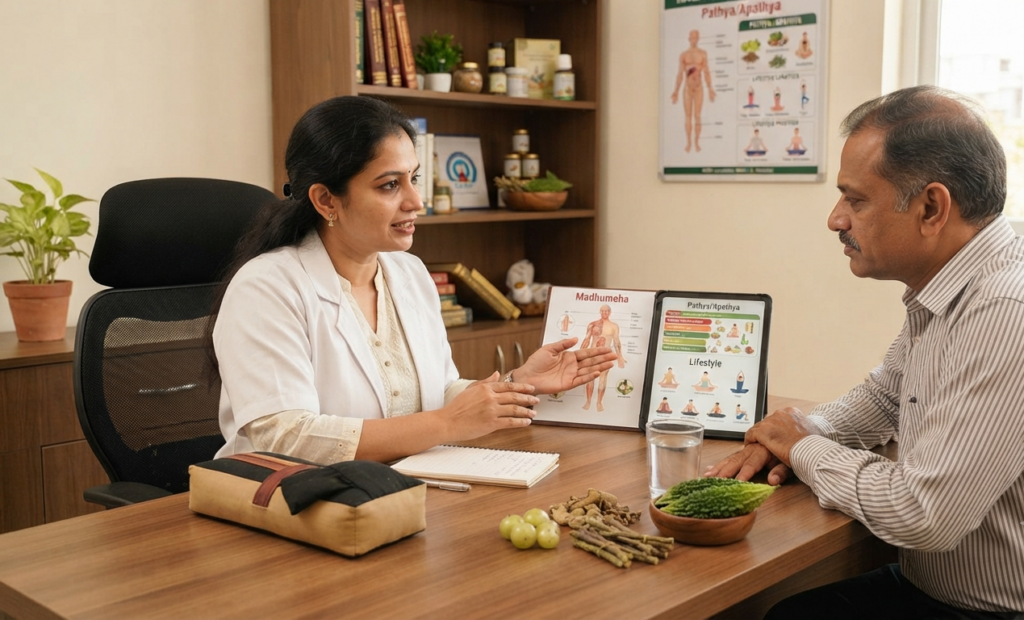
Early Signs of Diabetes and Type 2 Diabetes Symptoms
Type 2 diabetes often develops quietly. The NHS lists feeling very tired, passing urine more than usual and feeling thirsty all the time as the most common symptoms, and notes that not everyone has symptoms at all.
Other early signs worth noticing include:
- Blurred vision
- Cuts or wounds that heal slowly
- Repeated skin, gum or urinary infections
- Tingling or numbness in the hands and feet
- Unexplained weight loss
Ayurvedic texts describe a burning sensation in the palms and soles, a sweet taste in the mouth, heavy sweating and sticky or cloudy urine as early warnings (Purvarupa). These descriptions can prompt you to get tested, but they cannot confirm diabetes. When blood sugar stays high for years, it can affect the eyes, kidneys, nerves and feet, which is why complications such as diabetic retinopathy and diabetic foot are best caught early.
Diagnosis and Conventional Treatment
Diabetes is diagnosed with blood tests, usually fasting and post-meal glucose and HbA1c, which reflects average blood sugar over roughly three months. A doctor reads the results against recognised diagnostic criteria and may also check kidney function, cholesterol and blood pressure.
Conventional care rests on three pillars: lifestyle changes, medicines when needed (such as metformin and other oral drugs), and insulin for those who require it. Regular monitoring, yearly eye and foot checks and good blood pressure control help prevent complications. Ayurveda does not replace any of this. At Healing Earth, you can begin with a Kayachikitsa (Ayurvedic general medicine) consultation in the General and Internal Medicine department, and the hospital’s in-house lab facilities support the tests your physician may advise.
Ayurvedic Management of Diabetes: How Care Is Planned
Ayurvedic management of diabetes is individual. The physician considers body constitution (Prakriti), strength, age, digestion and the stage of the condition before choosing a plan. Classical care usually combines four parts:
- Nidana Parivarjana: identifying and reducing the causes, such as inactivity and unsuitable foods
- Shamana: herbal medicines and formulations that pacify the imbalance
- Shodhana: cleansing therapies from Panchakarma, such as Virechana, for selected people
- Pathya and Vihara: suitable diet and lifestyle
Shodhana is not for everyone. People who are weak, elderly, pregnant, have poorly controlled blood sugar or have advanced complications may not be suitable, and these therapies should only be done under a qualified physician’s supervision with blood sugar monitored. Outcomes vary from person to person, and no therapy should be presented as a cure.
Ayurvedic Herbs for Diabetes: What to Know
Several herbs are traditionally used in the Ayurvedic management of diabetes. Healing Earth’s medicinal plant library describes many of them, including Guduchi (Tinospora cordifolia), Haridra (turmeric), Amalaki (Indian gooseberry), Methika (fenugreek), Karavellaka (bitter gourd), Jambu (jamun) and Nimba (neem). Gudmar (Gymnema sylvestre) and Vijaysar (Pterocarpus marsupium) are also often named in classical formulations.
Here is the part readers deserve to hear plainly. These are traditional uses, and the clinical evidence is limited. The National Center for Complementary and Integrative Health at the NIH concludes that science does not yet show any dietary supplement can reliably manage or prevent type 2 diabetes. It also advises people never to take a supplement instead of diabetes medicine, and warns that some products can interact with medicines or affect the kidneys.
A few practical points:
- Do not start Guduchi powder, bitter gourd juice or any herbal capsule on your own, especially if you take glucose-lowering medicines, because combined effects could push blood sugar too low.
- Do not stop or reduce prescribed medicine because you have started a herb.
- Be cautious of any product that promises to “cure” diabetes.
Ayurvedic Diet for Diabetes: Pathya and Apathya
Ayurveda calls suitable foods Pathya and unsuitable ones Apathya. For Madhumeha, the general principle is to favour light, fibre-rich foods with bitter and astringent tastes, and to limit heavy, sweet and oily foods.
Pathya (generally suitable)
- Barley (Yava), ragi, jowar and other millets
- Green gram (Mudga) and horse gram (Kulattha)
- Bitter gourd, drumstick, ridge gourd and leafy greens
- Amla and fenugreek added to meals
- Freshly cooked food and warm water
Apathya (best limited or avoided)
- Sweets, sugary drinks, packaged juices and jaggery
- Refined flour, bakery items and large portions of polished white rice
- Fried and very heavy foods
- Curd at night and late, heavy dinners
These overlap well with the usual advice on foods to avoid with diabetes, since modern guidance also asks people to cut back on sugary drinks, refined carbohydrates and processed snacks. Foods that help manage blood sugar are mostly those rich in fibre, which slows how quickly glucose enters the blood. A simple plate idea is half vegetables, a quarter dal or other protein, and a quarter whole grain or millet.
A proper diabetes diet chart, however, should be personal. Portions, meal timings and your medicines all matter, and skipping meals while on tablets or insulin can cause low blood sugar. No single food, bitter gourd included, controls blood sugar on its own.
Yoga, Exercise and Ayurvedic Lifestyle Practices
Movement is one of the strongest supports for blood sugar management. Many guidelines suggest at least 150 minutes of moderate activity a week, such as brisk walking, cycling or yoga, with some strength work added. A short walk after meals is a simple habit that also fits the Ayurvedic advice to avoid heaviness after eating.
Yoga practices commonly taught for diabetes include Surya Namaskar, Ardha Matsyendrasana, Mandukasana and slow pranayama, which also helps with stress. If you have neuropathy, retinopathy, high blood pressure or joint problems, poses should be adapted by a trained teacher. Healing Earth’s Yoga and Naturopathy department is one place to learn them safely.
Daily rhythm matters as well: regular meal times, enough sleep, and avoiding sleep during the day. Our guide to Dinacharya explains how an Ayurvedic daily routine is built.
When to See a Doctor
Please see a qualified doctor if you notice increased thirst or urination, unexplained tiredness or weight loss, or if diabetes runs in your family. Seek urgent medical care for vomiting, confusion, extreme drowsiness, chest pain, sudden vision changes, a foot wound that is not healing, or signs of low blood sugar such as shaking, sweating and fainting.
If you are looking for Ayurvedic treatment for diabetes in Bangalore, Healing Earth is an NABH-accredited Ayurvedic hospital in HSR Layout where an Ayurvedic doctor can offer supportive care alongside your regular medical treatment. Insurance coverage depends on your policy, and you can review the details on our insurance page.
Frequently Asked Questions
1. What is Madhumeha in Ayurveda?
Madhumeha is the classical Ayurvedic term for a metabolic condition with excessive, sweet-like urine and declining strength. It is closely compared with diabetes mellitus, though the two systems describe it in different languages.
2. Can Ayurveda cure diabetes?
There is no reliable clinical evidence that Ayurveda cures diabetes. Ayurvedic diet, lifestyle and herbal care may offer supportive benefits when supervised by a qualified doctor, and they should be used alongside conventional monitoring and treatment.
3. Is it safe to take Ayurvedic medicine with diabetes tablets or insulin?
It can be, but only when your Ayurvedic physician and your regular doctor both know everything you take. Some herbs can lower blood sugar further or interact with medicines, so never add or stop anything on your own.
4. Is Guduchi or bitter gourd enough to control blood sugar?
No. Guduchi and bitter gourd are traditionally used, but evidence for controlling blood sugar is limited, and neither replaces medicines, diet or exercise.
5. What foods should be avoided with diabetes?
Limit sugary drinks, sweets, bakery items, refined flour, fried foods and large portions of white rice. A doctor or dietitian can tailor the list to your readings and medicines.
6. Where can I find an Ayurvedic doctor for diabetes in Bangalore?
You can arrange an Ayurvedic consultation in HSR Layout, Bangalore, at Healing Earth Ayurveda Hospital. The team can discuss Ayurvedic treatment for Madhumeha in Bangalore as supportive care, after reviewing your reports and current medicines.
Conclusion
Madhumeha in Ayurveda offers a thoughtful way of looking at diabetes, built around digestion, diet, movement and daily routine. Its strongest contribution is lifestyle guidance, while modern testing and medicines remain essential for safe blood sugar management. If you would like to understand how the two approaches can work together for you, you can book an appointment for a consultation at Healing Earth in HSR Layout, Bangalore.
About the Author
Dr. Silpa S. P (BAMS, M.Sc Dietetics and Food Service Management)
For diet and lifestyle guidance as part of diabetes care, you can consult Dr. Silpa S. P (BAMS, M.Sc Dietetics and Food Service Management), Medical Officer and Centre In-Charge at Healing Earth, whose profile covers holistic health, disease prevention and lifestyle management. Her details are listed on our Team of Doctors page.
Medical Disclaimer: This article is intended for general educational purposes only. It does not replace professional medical advice, diagnosis or treatment. Please consult a qualified healthcare professional about your individual medical concerns, and do not stop or change any prescribed medicine without their guidance.