
Medically reviewed by: Dr. Silpa S. P, BAMS, M.Sc (Dietetics & Food Service Management), Medical Officer & Centre In-Charge.
You skip breakfast, eat a heavy lunch at your desk and snack on whatever is nearby. By evening, you feel bloated, tired and a bit off.
Food plays a bigger part in this than most of us think:
- The ICMR-National Institute of Nutrition estimates that unhealthy diets account for 56.4% of India’s total disease burden.
- NFHS-6 (2023-24) found that 30.7% of women and 27.3% of men aged 15 to 49 are overweight or obese.
The Ayurvedic diet takes a calmer, more practical approach. It looks at what you eat, when you eat and how well you digest it. This guide covers the core principles, what to eat for Vata, Pitta and Kapha, a 7-day plan and simple recipes you can try this week.
Quick answer: The Ayurvedic diet is a traditional Indian way of eating that matches food to your body type (dosha), your digestion and the season. The basics include fresh, warm, home-cooked meals; lunch as the main meal; all six tastes each day; and eating only when you are hungry. It is a flexible set of habits, not a fixed menu, and it works best when a doctor personalises it for you.
What Is the Ayurvedic Diet?
The Ayurvedic diet is a way of eating based on Ayurveda, the traditional system of medicine that developed in India over thousands of years. Instead of counting calories or banning whole food groups, it asks a simpler question: is this food right for your body, right now?
Ayurveda calls food ahara and treats it as one of the three pillars of health, along with sleep and a balanced daily routine. A key idea is agni, your digestive fire. When agni is strong, you digest food well, feel light after meals and have steady energy. When it is weak, food sits heavy and you may notice gas, bloating or tiredness. Ayurveda traditionally links many everyday complaints to weak agni.
The diet also uses doshas. Vata, Pitta and Kapha are three energy types that, in different mixes, make up your constitution, or prakriti. A person with a lot of Vata often needs warm, moist, grounding meals. A Pitta type usually does better with cooling, fresh food. A Kapha type tends to need lighter, spiced meals.
Here is what it is not. It is not a crash diet, a cleanse or one plan for everyone. It also overlaps with a lot of mainstream advice: eat more home-cooked food, fewer packaged snacks, and slow down at meals. If these ideas are new to you, our page on About Ayurveda is a good place to start.
Core Principles of an Ayurvedic Diet
These are the Ayurvedic diet rules most doctors begin with. You don’t have to follow all of them from day one. Pick two or three, get comfortable, then add more.
- Eat fresh, warm, cooked food. Packaged snacks, ready meals and day-old leftovers are said to weaken digestion.
- Make lunch your main meal. Digestion is believed to peak around midday, so eat your biggest meal then and keep dinner light.
- Eat when you’re hungry. If the last meal hasn’t settled, wait. Eating to the clock instead of your appetite is how heaviness builds up.
- Slow down. Sit down, put the phone away and chew well. This kind of mindful eating helps you notice when you’re full.
- Don’t overfill. A traditional guide is half the stomach with food, a quarter with liquid and a quarter left empty.
- Choose warm over cold. Sip warm water through the day and skip ice-cold drinks at meals.
- Eat with the seasons. Go lighter and cool in summer, warmer and richer in winter.
The Six Tastes
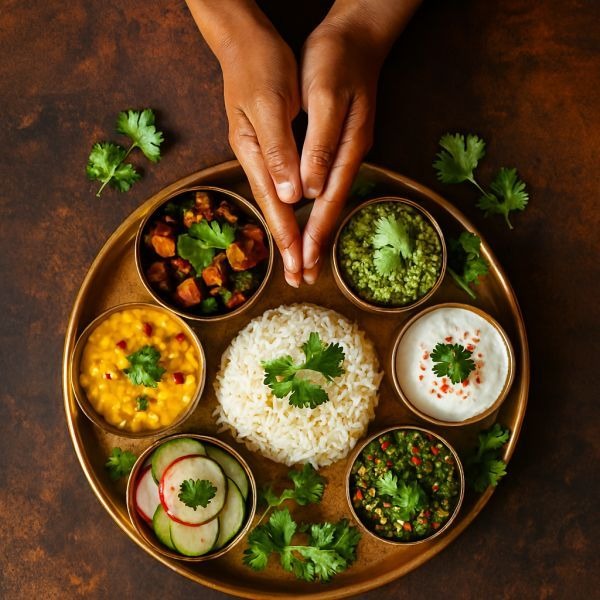
Ayurveda groups food into six tastes, or rasa: sweet, sour, salty, pungent, bitter and astringent. A balanced plate has a little of each. Rice and dates are sweet, lemon and curd are sour, ginger and pepper are pungent, greens and turmeric are bitter, and lentils and pomegranate are astringent. Ayurveda says meals that cover more tastes feel more satisfying, so you reach for fewer snacks later.
Ayurvedic Diet for Vata, Pitta and Kapha Dosha
The same food doesn’t suit everyone. Here is a simple starting point for each dosha. Most people are a mix of two, so use what fits your symptoms.
Ayurvedic Diet for Vata Dosha
Vata is light, dry and cold, so balance it with warm, moist, grounding food. Think porridge, soups, stews, cooked root vegetables, rice, ghee and sesame oil. Go easy on raw salads, cold drinks, dry snacks and too much caffeine. Regular meal times matter a lot for Vata types.
Ayurvedic Diet for Pitta Dosha
Pitta runs hot and sharp. Cooling, fresh food helps: cucumber, coconut water, sweet fruit, leafy greens, basmati rice, coriander and fennel. Limit chilli, fried food, very salty or sour dishes and alcohol. Try not to skip meals, because hunger tends to make Pitta types irritable.
Ayurvedic Diet for Kapha Dosha
Kapha is heavy and slow. Light, warm, spiced food helps: lentils, millets, barley, lightly cooked vegetables, ginger, black pepper and turmeric. Cut back on deep-fried food, sweets, cheese and heavy dairy, and avoid eating late at night.
Not sure which dosha you are? Online quizzes only take you so far. Dr. Farida Khanum, our CMO and Technical Director, uses Nadi Pareeksha (pulse examination) along with a holistic assessment of your constitution. You can read about her and the rest of our team of doctors.
A 7-Day Ayurvedic Diet Plan (Sample Diet Chart)
Think of this as a simple Ayurvedic diet chart you can adapt to your taste and your dosha. Each day lists breakfast, lunch and dinner in that order.
Day 1: Vegetable dalia. Moong dal, rice and lauki sabzi. Light moong dal khichdi with a teaspoon of ghee.
Day 2: Idli with sambar. Roti, dal and bhindi sabzi with a small glass of buttermilk. Pumpkin soup with one millet roti.
Day 3: Vegetable poha. Rice, sambar and beans poriyal. Lauki and moong dal soup.
Day 4: Oats porridge with cinnamon and stewed apple. Roti, dal and mixed vegetable sabzi. Barley and vegetable soup.
Day 5: Besan chilla with mint chutney. Jowar roti, chana dal and steamed greens. Khichdi with seasonal vegetables.
Day 6: Ragi porridge. Rice, dal, beetroot sabzi and a small bowl of curd. Light vegetable stew.
Day 7: Vegetable upma. Vegetable pulao, dal and a little raita. Moong dal soup with one roti.
A few daily habits go with the plan. Start each morning with a cup of warm water, sip jeera water after meals and finish dinner by 8 pm. We keep curd at lunch because Ayurveda advises against it at night.
This is a general sample for healthy adults, not a prescription. Your own plan may look different depending on your dosha, your health and the medicines you take.
Ayurvedic Diet Plan for Weight Loss
Can an Ayurvedic diet help you lose weight? It can support slow, steady weight loss, but it isn’t a quick fix. The approach works because it corrects the habits that usually lead to weight gain: irregular meals, heavy late dinners, constant snacking and too much sugar and fried food.
India’s own guidelines point the same way. The ICMR-NIN Dietary Guidelines for Indians say that healthy diets and regular physical activity can help prevent up to 80% of type 2 diabetes.
Here is what a weight-loss-friendly Ayurvedic diet plan looks like in practice:
- Start the day with warm water, with a slice of ginger if you like.
- Eat a proper breakfast and a good lunch, and keep dinner small and early.
- Fill half your plate with cooked vegetables, and pick millets, barley or oats over refined flour.
- Swap sweets, fried snacks and fizzy drinks for fruit, roasted chana or a few soaked almonds.
- Walk for 10 to 15 minutes after meals.
- Sleep on time, because poor sleep makes cravings worse.
The 7-day plan above doubles as an Ayurvedic diet chart for weight loss. Kapha types, who tend to put on weight more easily, usually do well with lighter, spiced meals.
Skip crash fasts and kitchari-only cleanses unless a doctor has advised them. If weight has been a long-standing concern, you can read how we approach obesity (Stoulya). If you also have diabetes, check with your doctor before you change your meals.
Ayurvedic Diet for Gut Health: How to Improve Digestion
Ayurveda sees good digestion as the base of good health, so gut care sits at the centre of the diet. If you want to improve gut health, start with how you eat before you change what you eat.
Try these steps for two weeks:
- Sip warm water throughout the day and avoid ice-cold drinks with meals.
- Chew a thin slice of fresh ginger with a pinch of rock salt about 15 minutes before lunch. It’s a traditional way to wake up the appetite.
- Drink jeera water. Boil half a teaspoon each of cumin, coriander and fennel seeds in two glasses of water for five minutes. Strain it and sip warm after meals.
- Add a little ghee to dal or khichdi. A teaspoon is enough.
- Eat mindfully. Sit down, chew well and keep screens away.
- Walk for 10 minutes after meals and go to bed on time.
If bloating, gas or irregular bowels are your main problem, lean on soft, cooked foods such as moong dal, rice, lauki and pumpkin. Go easy on raw salads, cold smoothies and heavy fried food. Fixed mealtimes help too, since your gut likes a routine.
Diet can only do so much. Our doctors also see patients with constipation, hyperacidity (Amlapitta) and irritable bowel syndrome, and the diet is planned around each person.
See a doctor soon if you notice blood in your stool, black stools, unexplained weight loss, trouble swallowing, or a change in bowel habits that lasts more than two weeks.
Simple Ayurvedic Recipes to Start With
You don’t need rare ingredients. Most of these are already in an Indian kitchen.
Moong Dal Khichdi Recipe (Kitchari, Serves 2)
Ingredients: ½ cup basmati rice, ½ cup split yellow moong dal, 4 cups water, 1 tablespoon ghee, ½ teaspoon cumin seeds, ½ teaspoon turmeric, 1 teaspoon grated ginger, a pinch of hing, salt to taste, 1 cup chopped lauki or carrot, fresh coriander and a squeeze of lemon.
Method:
- Rinse the rice and dal until the water runs clear. Soak them for 30 minutes.
- Heat the ghee in a pressure cooker or heavy pot. Add the cumin seeds, then the hing, ginger and turmeric.
- Add the rice, dal, vegetables, salt and water. Cook for 3 to 4 whistles, or simmer for about 30 minutes, until everything is soft.
- Finish with coriander and lemon juice. Eat it warm.
This kitchari recipe is soft and easy to digest, which makes it a good first meal when your stomach feels heavy.
Jeera Water
Boil half a teaspoon each of jeera, coriander seeds and saunf in two glasses of water for five minutes. Strain and sip warm through the morning or after meals.
Spiced Oats Porridge
Simmer oats in milk or plant milk with a pinch of cinnamon and cardamom. Top with stewed apple or pear and a few soaked almonds. It’s warm, filling and works well on cool mornings.
Ayurvedic Detox: Where Panchakarma Fits In
Search for an Ayurvedic detox online and you’ll find juice cleanses, laxative teas and “flush your system” kits. Laxative teas and juice-only cleanses can leave you dehydrated, and there is no good evidence that they detox a healthy body. Your liver, kidneys and gut already clear waste every day.
Real Ayurvedic cleansing means Panchakarma. It is a doctor-led programme, not a diet you start on your own. After an assessment, the physician plans a preparation phase, which may include Snehapana (taking medicated ghee or oil internally) and sudation. Then come therapies such as Virechana or Vasti Karma, depending on your condition. You can read more on our Panchakarma Chikitsa page.
Food is a big part of the process. Before therapy, you eat light, easy-to-digest meals. Afterwards, you return to normal food slowly, starting with simple dishes such as rice gruel and khichdi.
Not everyone needs Panchakarma, and not everyone can have it. That’s why we begin with a consultation. If you simply want to feel lighter, the 7-day plan above is a gentler place to start. Some patients continue with our Rejuvenation care after a course of therapy. Treatment outcomes vary from person to person.
Who Should Be Careful With an Ayurvedic Diet?
Eating more fresh, home-cooked food is safe for most people. But talk to your doctor before making big changes if you:
- Have diabetes, especially if you take insulin or tablets that can lower blood sugar
- Have kidney disease, coeliac disease or another condition that needs a specific diet
- Take warfarin, because large changes in leafy greens can affect it
- Are pregnant, breastfeeding or planning a diet for a child
- Have had an eating disorder, as strict food rules can make it worse
- Are underweight or recovering from illness or surgery
Always tell your physician about every medicine you take. Our General and Internal Medicine department can guide you on how to continue your medicines alongside Ayurvedic treatment, and our Yoga and Naturopathy team supports the lifestyle side. Never stop prescribed medicines in favour of a diet change.
Ayurvedic Diet Consultation in Bangalore: Get a Plan Made for You
A general guide gets you started. A personal plan takes you further. Healing Earth is an NABH-accredited Ayurvedic hospital in HSR Layout, Bangalore, and every patient begins with a full consultation. Our doctors look at your digestion, appetite, sleep, bowel habits, medical history and current medicines. Then they suggest food and lifestyle changes that fit your prakriti, your health and your routine.
Our medical team includes Dr. Silpa S. P (BAMS, M.Sc in Dietetics & Food Service Management), Dr. Preethikanth C S (BAMS, MD, Kayachikitsa) and Dr. Farida Khanum (BAMS, MD). If you’re looking for an Ayurvedic doctor in Bangalore, you can meet the full team of doctors before you book.
What you can expect:
- An OPD consultation, or inpatient care if your doctor recommends it.
- In-house lab facilities for the tests you need
- Panchakarma and other therapies, only when they suit you
- Online video consultation for patients who can’t visit
- Insurance support for eligible in-patient treatment, subject to your policy terms. See our insurance page.
Searching for an Ayurvedic hospital near me? We’re at 149 HSR, Outer Ring Road, Sector 5, HSR Layout, Bengaluru 560102.
Ready for an Ayurvedic consultation in Bangalore? Book an appointment or call +91 78999 03943.
Frequently Asked Questions
What is the Ayurvedic diet?
The Ayurvedic diet is a traditional Indian way of eating that matches food to your dosha, your digestion and the season. It focuses on fresh, warm, home-cooked meals, a main meal at lunch, all six tastes and calm eating. It’s a flexible set of habits, not one fixed menu.
Is the Ayurvedic diet vegetarian?
Mostly, yes, but it doesn’t have to be. Classical Ayurveda also discusses eggs, fish and meat, and your doctor can work around your food preferences. Many Ayurvedic recipes are naturally vegetarian and easy to make vegan by using oil instead of ghee.
Can an Ayurvedic diet help with weight loss?
It can support slow, steady weight loss by cutting processed food and sugar and by building regular meal habits. It isn’t a crash diet. For lasting results, pair it with daily walking and good sleep.
Do I need to know my dosha before I start?
No. The basics, such as warm cooked meals, a proper lunch and calm eating, suit most people. Knowing your dosha helps you fine-tune food choices, and a doctor can assess it during a consultation.
What foods should I avoid on an Ayurvedic diet?
Ayurveda advises limiting packaged and fried food, refined sugar, ice-cold drinks, stale leftovers and heavy late-night meals. It also warns against some food combinations, such as milk with fish. What you should avoid also depends on your dosha and health condition.
Is coffee allowed on an Ayurvedic diet?
Ayurveda considers coffee stimulating and drying, so it’s usually limited rather than banned. Many practitioners allow a small amount, ideally before the afternoon. If you struggle with acidity or poor sleep, ginger or fennel tea can be a good swap.
What is kitchari?
Kitchari, also called khichdi, is a simple dish of rice and split moong dal cooked with mild spices and vegetables. It’s soft, easy to digest and a staple of Ayurvedic meal plans.
Is an Ayurvedic diet safe if I have diabetes?
Many Ayurvedic principles match standard healthy-eating advice, but diabetes needs careful handling, especially if you take insulin or tablets that can lower blood sugar. Speak to your doctor before changing your diet or trying kitchari-only days.
Where can I get an Ayurvedic diet consultation in Bangalore?
Healing Earth Ayurveda Hospital in HSR Layout, Bangalore offers consultations with BAMS and MD Ayurvedic doctors, in person or online. You can book through our contact page or call +91 78999 03943.
Conclusion
An Ayurvedic diet isn’t about eating perfectly. It’s about small, steady habits: warm meals, a proper lunch, a lighter dinner, calm eating and food that suits your body. Start with two or three changes this week and notice how your digestion and energy respond.
If you’d like a plan built around your health instead of a generic chart, our doctors can help. Book an Ayurvedic consultation at Healing Earth in HSR Layout, Bangalore, and leave with a diet you can actually follow. For more articles like this, visit our Healing Talks blog.
Medical disclaimer: This article is for general information and is not a substitute for medical advice. Please consult a qualified doctor before changing your diet, especially if you have a medical condition or take regular medicines.