
Back pain is a common health concern that can affect everyday activities such as walking, sitting, bending and sleeping. Long working hours, poor posture, sedentary habits, muscle strain and age-related spinal changes can contribute to discomfort in the lower or upper back. While conventional treatments may include medication, physiotherapy and lifestyle modifications, some individuals also explore traditional approaches to managing back pain.
Panchakarma for Back Pain is an Ayurvedic treatment approach that involves selected therapeutic procedures based on an individual’s health condition and Ayurvedic assessment. Therapies such as Kati Basti, Abhyanga, Basti and Swedana may be considered as part of an individualised treatment plan.
People exploring Ayurvedic Treatment for Back Pain may benefit from understanding the different therapies, their potential benefits and the precautions involved before starting treatment. However, not every type of back pain requires Panchakarma. Identifying the underlying cause and consulting a qualified healthcare professional are important first steps.
Understanding Back Pain and Its Common Causes
Back pain can develop in different parts of the spine, including the cervical, thoracic and lumbar regions. Lower back pain is particularly common because the lumbar spine supports much of the body’s weight and is involved in everyday movements.
Some common causes of back pain include:
- Poor posture: Sitting for extended periods or maintaining an incorrect posture can place additional stress on the back muscles.
- Muscle strain: Lifting heavy objects, sudden movements and physical overexertion may cause muscle strain.
- Sedentary lifestyle: Limited physical activity can contribute to muscle weakness and reduced flexibility.
- Age-related changes: Degenerative changes in spinal structures may contribute to persistent back discomfort.
- Intervertebral disc problems: Conditions such as herniated discs can cause back pain and sometimes nerve-related symptoms.
- Spinal conditions: Certain spinal disorders may lead to recurring pain, stiffness or restricted movement.
Individuals experiencing persistent discomfort may require an assessment through an appropriate Orthopaedic and Neurology Department to identify possible musculoskeletal or neurological causes.
Understanding the underlying condition helps determine whether Ayurvedic therapies, physiotherapy or other medical treatments may be appropriate.
Can Panchakarma Help Manage Back Pain?
Panchakarma is a traditional Ayurvedic system of therapeutic procedures intended to support health through individually selected treatments.
In Ayurveda, musculoskeletal discomfort is often assessed in relation to Vata Dosha, along with other factors such as the patient’s constitution, symptoms, digestion and overall health.
Panchakarma for Back Pain may involve external therapies and selected internal procedures depending on the individual’s assessment.
For example, a person experiencing muscular stiffness may be considered for external therapies such as Kati Basti or Abhyanga, while someone with recurring lower back discomfort may require a different treatment approach.
The objective is to select appropriate therapies that may support:
- Relaxation of tense muscles.
- Temporary relief from muscular discomfort.
- Improved comfort during movement.
- Reduced feelings of stiffness.
- General physical relaxation.
The suitability of each procedure depends on the underlying condition. Evidence for individual Ayurvedic procedures varies, and Panchakarma should not be considered a proven cure for structural spinal problems, nerve compression or serious medical conditions.
Panchakarma Therapies Used for Back Pain
Different Ayurvedic therapies may be considered for individuals experiencing back pain. The selection depends on the patient’s symptoms, medical history, physical condition and the treating physician’s assessment.
1. Kati Basti for Back Pain
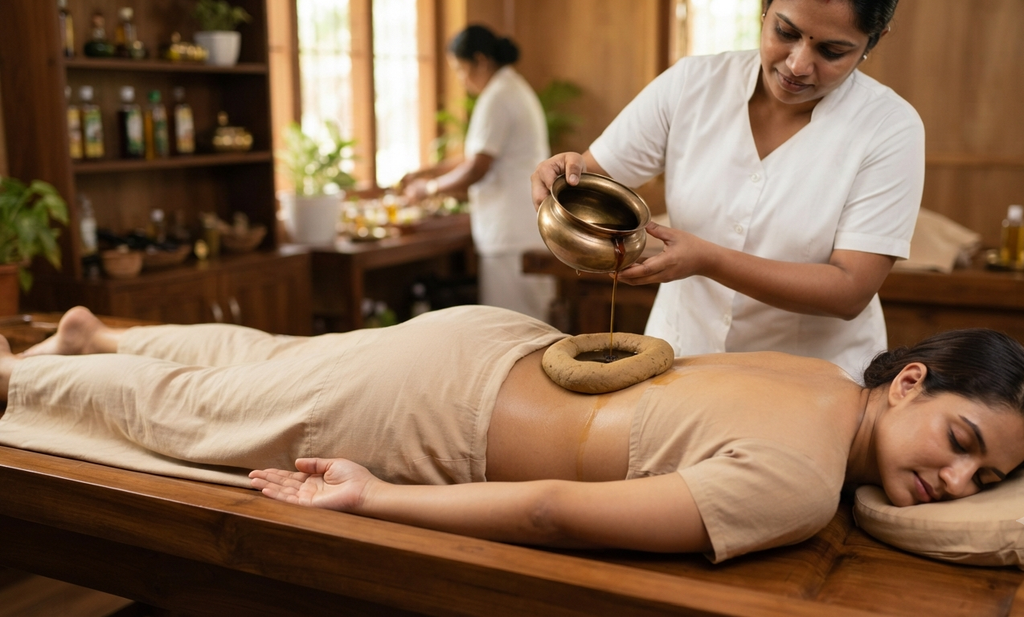
Kati Basti therapy is a traditional Ayurvedic external treatment commonly associated with lower back care.
During this procedure, a ring made from dough is placed over the lower back. Warm medicated oil is poured into the enclosed area and maintained at a comfortable temperature for a prescribed duration.
Kati Basti for Back Pain is traditionally used to support:
- Relaxation of the lower back muscles.
- Temporary relief from muscular stiffness.
- Comfort in the lumbar region.
- Relaxation of surrounding tissues.
This therapy may be considered for selected cases of muscular back discomfort. However, it does not physically repair damaged spinal discs or reverse structural changes.
2. Abhyanga for Back Pain
Abhyanga is a traditional Ayurvedic oil massage performed using suitable herbal oils.
The massage involves controlled movements over different parts of the body, depending on the treatment plan.
For individuals experiencing back discomfort, Abhyanga for Back Pain may help promote relaxation and temporarily ease muscle tension.
Potential benefits include:
- Supporting muscle relaxation.
- Improving the feeling of physical comfort.
- Reducing temporary muscular tightness.
- Promoting relaxation and general well-being.
The pressure, oil selection and treatment duration should be determined by a qualified practitioner. Massage may not be appropriate for every back condition.
3. Patra Pinda Sweda
Patra Pinda Sweda is an Ayurvedic therapy that uses heated herbal leaves bundled into boluses.
The herbal bundles are warmed using suitable oils and gently applied to selected areas of the body.
This procedure is traditionally used for muscular stiffness and joint discomfort.
For selected individuals with back pain, it may help:
- Promote relaxation of affected muscles.
- Support temporary relief from stiffness.
- Improve the feeling of flexibility.
- Provide warmth to the treated area.
The therapy must be performed with appropriate temperature control to avoid skin irritation or burns.
4. Basti Treatment for Back Pain
Basti is one of the traditional Panchakarma procedures involving the administration of prescribed Ayurvedic preparations through the rectal route.
In Ayurveda, Basti is traditionally associated with Vata-related conditions.
Depending on the patient’s condition, an Ayurvedic physician may consider specific Basti procedures as part of an individualised treatment plan.
Some potential considerations include:
- The patient’s overall health and constitution.
- The nature and duration of back discomfort.
- Existing medical conditions.
- The suitability of the selected Basti procedure.
Basti is a medical procedure requiring professional assessment, appropriate preparation and supervision. It should never be self-administered.
5. Swedana Therapy
Swedana refers to traditional Ayurvedic heat or sudation therapies.
Depending on the selected method, warmth or steam may be applied to specific body areas or the whole body.
For certain individuals experiencing muscular discomfort, Swedana may help promote relaxation and temporary relief from stiffness.
The procedure should be selected carefully, particularly for people with cardiovascular conditions, impaired temperature sensation or other health concerns.
Potential Benefits of Panchakarma for Back Pain
The benefits of Ayurvedic therapies depend on the underlying cause of back pain, the selected procedures and individual health factors.
When appropriately selected and supervised, certain Panchakarma therapies may offer supportive benefits.
1. Support for Muscle Relaxation
Therapies such as Abhyanga and Kati Basti may help relax tense muscles and improve physical comfort.
2. Temporary Relief from Stiffness
Warm oil applications and selected sudation therapies may help individuals experiencing muscular tightness feel more comfortable.
3. Improved Relaxation
Traditional Ayurvedic massage procedures may promote relaxation and help reduce physical tension.
4. Support for Movement and Comfort
Some individuals may experience temporary improvement in comfort during everyday movements when muscular stiffness is addressed.
5. Individualised Treatment Approach
Ayurvedic practitioners consider factors such as symptoms, constitution, health history and lifestyle before recommending treatment.
These potential benefits should not be interpreted as guaranteed outcomes. Panchakarma is not a substitute for necessary medical treatment, physiotherapy or surgical evaluation.
Who May Consider Ayurvedic Treatment for Lower Back Pain?
Individuals experiencing certain types of back discomfort may explore Ayurvedic therapies as part of a broader healthcare plan.
Ayurvedic Treatment for Lower Back Pain may be considered as a complementary approach for selected individuals, including:
- People experiencing occasional muscular stiffness.
- Individuals with recurring muscular discomfort.
- People experiencing back tension associated with prolonged sitting.
- Individuals seeking supportive approaches to physical relaxation.
- Patients interested in complementary approaches alongside conventional care.
However, people with suspected spinal injuries, fractures, severe disc problems or neurological symptoms require appropriate medical evaluation before considering any Ayurvedic procedure.
Important Considerations Before Panchakarma Treatment
Although Panchakarma includes traditional therapeutic procedures, not every therapy is suitable for every individual.
Before starting Panchakarma treatment, consider the following factors.
Identify the underlying cause: Back pain can result from muscular, neurological, spinal or inflammatory conditions. A proper diagnosis helps determine the appropriate treatment.
Consult a qualified practitioner: An Ayurvedic physician should assess your symptoms, medical history and overall health before recommending Panchakarma.
Discuss existing medical conditions: Inform your healthcare provider about diabetes, cardiovascular conditions, pregnancy, recent surgery, allergies and any ongoing treatment.
Avoid self-treatment: Procedures involving medicated oils, heat applications and Basti require professional supervision.
Do not discontinue prescribed medication: Ayurvedic therapies should not replace prescribed medicines or medically recommended treatments without consultation with the treating healthcare professional.
Understand treatment expectations: The number of sessions, duration and suitability of therapies vary between individuals. No fixed treatment duration or guaranteed outcome applies to everyone.
When Should You Seek Immediate Medical Attention?
Back pain accompanied by certain symptoms requires urgent medical evaluation.
Seek immediate medical attention if you experience:
- New loss of bladder or bowel control.
- Numbness around the groin or saddle area.
- Progressive weakness in one or both legs.
- Severe back pain following an accident or injury.
Also seek prompt medical assessment for back pain accompanied by fever, unexplained weight loss, a history of cancer or persistent worsening symptoms.
These symptoms should not be managed with massage or Panchakarma procedures without medical evaluation.
What to Expect During an Ayurvedic Consultation
Before recommending Panchakarma, an Ayurvedic physician generally evaluates the patient’s symptoms and health history.
A consultation may involve:
1. Understanding Symptoms: The physician discusses the location, duration, severity and pattern of back pain.
2. Reviewing Medical History: Existing health conditions, previous injuries, medications and diagnostic reports may be considered.
3. Assessing Physical Condition: The physician may evaluate posture, movement, stiffness and other relevant physical findings.
4. Selecting Suitable Therapies: Based on the assessment, the physician may recommend specific external therapies or other treatment approaches.
5. Monitoring Progress: Symptoms and treatment response should be reviewed regularly to determine whether the treatment plan needs modification.
Patients should also be advised when further investigations or referral to another medical specialist are necessary.
Panchakarma Treatment in Bangalore at Healing Earth Ayurveda Hospital
Choosing an appropriate treatment approach begins with understanding the cause of back pain and evaluating individual health needs.
At Healing Earth Ayurveda Hospital, patients can consult Ayurvedic healthcare professionals to discuss their symptoms and explore suitable treatment options.
The hospital provides Ayurvedic healthcare services, including Panchakarma Chikitsa, based on individual assessment and clinical suitability.
Patients exploring Panchakarma Treatment in Bangalore can discuss their back pain concerns, medical history and treatment expectations with the healthcare team before starting any procedure.
If you are looking for an Ayurvedic Hospital in Bangalore to discuss traditional treatment options, a professional consultation can help you understand the available therapies and their suitability.
Individuals searching for the Best Ayurvedic Hospital in Bangalore or the Best Ayurvedic Hospital in HSR Layout, Bangalore should consider factors such as qualified practitioners, treatment facilities, patient assessment and appropriate clinical supervision.
If you are experiencing persistent back discomfort, consult a qualified healthcare professional to understand the underlying cause and available treatment options.
Explore Panchakarma treatment services at Healing Earth Ayurveda Hospital to learn more about the available Ayurvedic procedures.
For additional information about the hospital and its healthcare services, visit Healing Earth Ayurveda Hospital, Bangalore.
Frequently Asked Questions
Can Panchakarma help with back pain?
Certain Panchakarma therapies may help support muscle relaxation and temporary relief from muscular stiffness. Their suitability depends on the cause of back pain and the individual’s health condition.
Which Panchakarma therapy is commonly used for lower back pain?
Kati Basti is a traditional Ayurvedic external therapy commonly used for lower back discomfort. Other procedures, such as Abhyanga and selected Swedana therapies, may also be considered following an individual assessment.
Is Kati Basti effective for back pain?
Kati Basti may provide temporary comfort and relaxation for some individuals experiencing muscular back discomfort. However, it does not correct structural spinal problems or guarantee relief from chronic back pain.
How many Panchakarma sessions are needed for back pain?
The number of sessions depends on the individual’s symptoms, health condition and selected therapy. There is no standard treatment duration applicable to everyone. An Ayurvedic physician can recommend an appropriate schedule.
Is Ayurvedic treatment suitable for chronic lower back pain?
Some Ayurvedic therapies may be considered as complementary approaches for selected cases of chronic lower back discomfort. However, chronic back pain requires proper diagnosis to identify possible spinal, muscular or neurological causes.
Can Panchakarma treat slipped disc problems?
Panchakarma cannot be considered a proven treatment for repairing a slipped or herniated disc. People with suspected disc problems should undergo appropriate medical evaluation before considering complementary therapies.
Is Panchakarma safe for everyone?
No. Panchakarma procedures are not suitable for everyone. Factors such as age, pregnancy, existing medical conditions, medications and the underlying cause of back pain must be considered before treatment.
Where can I consult for Panchakarma treatment in Bangalore?
Individuals interested in Ayurvedic treatment can consult qualified Ayurvedic practitioners at Healing Earth Ayurveda Hospital in Bangalore to discuss their symptoms and determine whether Panchakarma is appropriate.
Author Bio
Dr. Farida Khanum
Dr. Farida Khanum, BAMS, MD, is the CMO and Technical Director at Healing Earth Ayurveda Hospital and heads the Orthopaedic and Neurology Department. With over 15 years of Ayurvedic practice, her areas of focus include joint, musculoskeletal and neurological disorders.
Medical Disclaimer: This article is for educational purposes only and does not replace professional medical advice or treatment. Consult a qualified healthcare professional before undergoing Panchakarma or any other treatment.