
Medically reviewed by: Dr. Sreelaxmi, BAMS, ACD, Resident Medical Officer (Panchakarma & Lifestyle Disorders), Healing Earth Ayurveda Hospital, HSR Layout, Bangalore.
Every monsoon, Bengaluru settles into the same rhythm. The air turns damp, your appetite drops and your body feels heavy. The season is hard on health in general.
On a smaller scale, many of us notice:
- Slow digestion and bloating
- Joint stiffness and muscle aches
- Low energy and a constant feeling of heaviness
- Allergies, blocked sinuses and skin flare-ups
Ayurveda reads these as seasonal signals. That is why panchakarma treatment, planned by a qualified doctor, is traditionally linked to the rains. This guide explains why, how the process works and what to expect at Healing Earth, an NABH-accredited ayurvedic hospital in HSR Layout, Bangalore.
What Is Panchakarma?
If you are asking what panchakarma is, think of it as Ayurveda’s structured cleansing programme. The word means “five actions”. Each action clears accumulated waste (ama) and doshic imbalance from a particular part of the body. Ayurveda panchakarma is not a quick fix or a spa package. A doctor first looks at your constitution, age, digestion and health history, then builds a plan around you.
The 5 steps of panchakarma are:
Vamana: therapeutic emesis, mainly for excess Kapha in the upper body.
Virechana: controlled purgation that clears excess Pitta. You can read more on our Virechana page.
Basti: a medicated oil or decoction enema, classically the main therapy for Vata imbalance.
Nasya: medicated oil or herbal drops given through the nose. See our Nasya Karma page.
Raktamokshana: careful removal of a small amount of blood, used only in selected conditions.
Nobody needs all five. Most plans use one or two main therapies after proper preparation. Our Panchakarma treatment page explains how our doctors plan this.
What Happens to Your Body During Varsha Ritu
Ayurveda divides the year into six seasons. Varsha ritu, the rainy season, falls roughly between July and September in much of India. Classical texts describe three changes during this time:
- Agni weakens. Agni in Ayurveda is the digestive fire that drives digestion and metabolism. When it dips, food feels heavy, appetite falls and ama builds up.
- Vata aggravates. Cool, damp and windy weather unsettles Vata. Stiff joints, body aches and restlessness are common.
- Pitta starts to accumulate. It stays quiet for now, but it can show up later as acidity or skin trouble in autumn.
Most monsoon ailments follow this pattern: indigestion, bloating, sluggishness, aching joints and fatigue. A person with a desk job and old knee stiffness, for example, often feels it worse during a drizzly July in Bangalore. If joint pain is your main concern, our Orthopaedic Neurology department can assess it.
Why the Monsoon Suits Panchakarma Treatment
The classical logic is simple, and it comes from Ayurvedic principles rather than clinical trials. Here is why the rains are considered a favourable window:
- Cooler weather makes therapy comfortable. Oil massage (Snehana) and herbal steam (Swedana) are hard to tolerate in peak summer. In the monsoon, your body handles them more easily.
- The body is more receptive. Ayurveda holds that damp, cool air makes the body’s tissues and channels (srotas) more responsive to oleation, which helps loosen deep-seated imbalance before the main cleansing.
- Vata needs attention. Since Vata rises in varsha ritu, therapies that settle it, especially Basti, fit this season well.
- The pace is slower. Rest is part of the treatment. Rainy weeks make it easier to sleep well, eat on time and step back from a busy routine.
- It works as prevention. Lifestyle conditions such as hypertension and diabetes account for nearly two-thirds of all deaths in India, according to health experts quoted by ETV Bharat. A seasonal reset with a doctor is one way to look after your long-term health.
So is the monsoon the only time? No. Think of it as a favoured window, not a rule. Your doctor decides the right timing for you.
Which Panchakarma Therapy Fits the Monsoon?
Traditional texts link each season to a main therapy: Vamana with spring, Virechana with autumn and Basti with the monsoon. That is why a monsoon panchakarma plan often looks different from one in another season.
| Therapy | Why it suits the monsoon | Often considered for |
| Abhyanga (oil massage) | Calms Vata and prepares the body | Stiffness, fatigue, poor sleep |
| Basti | Classical therapy for Vata in varsha ritu | Joint pain, back pain, constipation |
| Nasya | Clears the head and sinuses in damp weather | Blocked nose, allergic rhinitis, headaches |
| Virechana | Clears Pitta that has built up | Skin and digestive concerns, often planned for autumn |
These are examples, not prescriptions. Only an ayurvedic doctor can match a therapy to your condition. If you have a skin concern, our Skin and Hair Care department can guide you.
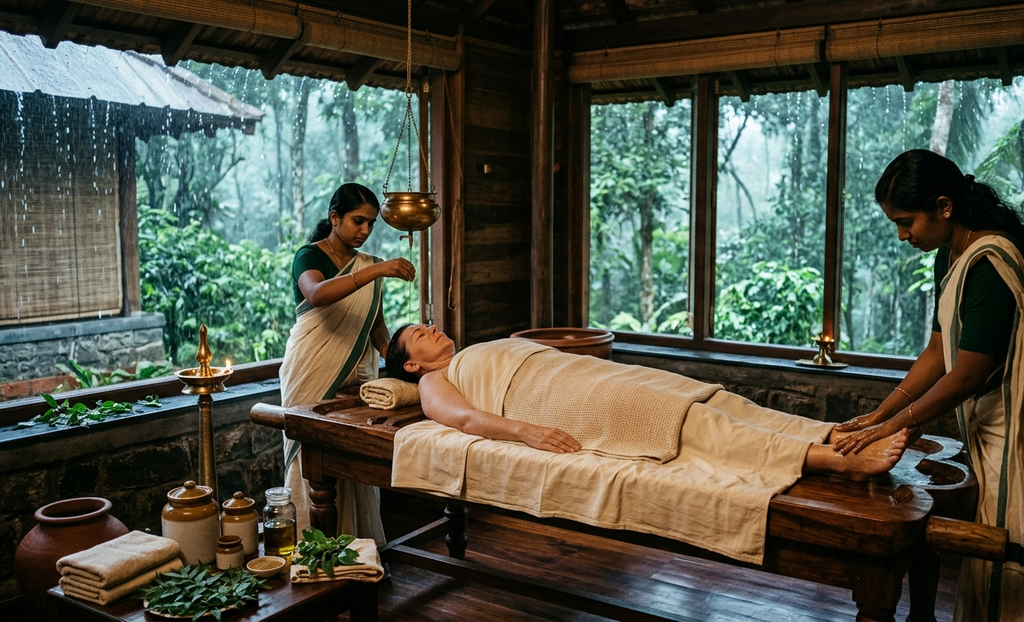
The Panchakarma Process, Step by Step
A panchakarma detox follows three stages. Skipping any of them reduces its value.
- Purvakarma (preparation). You receive internal and external oleation (Snehana), followed by herbal steam (Swedana). This loosens toxins and moves them toward the gut.
- Pradhana karma (main therapy). Your doctor performs the chosen cleansing therapy, such as Basti, Nasya or Virechana.
- Paschat karma (aftercare). You return to normal food slowly, starting with light meals. Rest, gentle movement and a set routine help the body settle.
The length of the programme depends on your condition and the therapies chosen. Your doctor will explain the plan before you begin.
Your Diet During a Monsoon Panchakarma
Food is half the treatment. Because agni is weaker in the rains, the diet stays warm, light and freshly cooked.
Usually encouraged:
- Moong dal khichdi and thin vegetable soups
- Freshly cooked seasonal vegetables
- Ginger, cumin and black pepper in cooking
- Warm water through the day
Usually avoided:
- Cold drinks and ice cream
- Raw salads and street food
- Fried, heavy or stale food
- Leftovers kept in the fridge
Your doctor adjusts the diet to your dosha and your therapy. For a wider guide, read our Ayurvedic diet plan with a 7-day menu.
Who Should Speak to a Doctor First?
Panchakarma is not for everyone, and it should never be self-prescribed. Please book an ayurvedic consultation before starting if you:
- Are pregnant or recently delivered
- Have a fever or an active infection
- Have heart, kidney or liver conditions
- Feel very weak or are recovering from illness
- Take regular medicines for any condition
Tell your doctor about every medicine you take. They will guide you on how to continue them alongside Ayurveda treatment.
Panchakarma Treatment in Bangalore at Healing Earth, HSR Layout
If you are looking for panchakarma treatment in Bangalore, Healing Earth is a multispeciality ayurvedic hospital in HSR Layout. We are NABH-accredited and registered under KPME, with a 30-bed in-patient facility, an in-house lab and trained therapists.
Here is what that means for you:
- One-to-one assessment. Every plan starts with an ayurvedic doctor. You can meet our physicians on the Team of Doctors page.
- Care across departments. Our General and Internal Medicine and Yoga and Naturopathy teams support lifestyle and recovery.
- Rejuvenation options. If you want a gentler seasonal reset, ask about our Rejuvenation package.
- Insurance support. Eligible in-patient treatment may be claimed cashless with partner insurers, subject to your policy. Check the insurance page.
Whether you search for a panchakarma hospital in Bangalore, an ayurvedic hospital in HSR Layout or monsoon panchakarma in Bangalore, the first step is the same: a consultation. Our address is 149 HSR, Outer Ring Road, Sector 5, HSR Layout, Bengaluru 560102.
Frequently Asked Questions
Why is the monsoon considered a good time for panchakarma?
Ayurveda holds that cool, damp weather makes the body more receptive to oil and steam therapies, and Vata rises in this season. Basti is the classical therapy for it. This is traditional reasoning, and your doctor confirms whether the timing suits you.
Can I do panchakarma at any time of the year?
Yes. Each season has its own therapy focus, and your doctor can plan a programme for other months too.
How is a panchakarma detox different from a regular detox?
A juice or diet cleanse is self-directed. Panchakarma therapy in Ayurveda is a doctor-supervised programme with preparation, a main therapy and aftercare, and it is planned around your constitution.
Is panchakarma safe?
It is generally safe when a qualified doctor assesses you first and supervises each step. Self-prescribed panchakarma can cause harm.
Do I need an ayurvedic consultation first?
Yes. A consultation is the first step. The doctor checks your history, current medicines and digestion before recommending any therapy.
Conclusion
The rains slow digestion, aggravate Vata and make the body feel heavy. Ayurveda answers that with a seasonal plan: light food, rest and, where suitable, panchakarma treatment under a doctor. The monsoon offers cooler weather, a slower pace and a body that responds well to oil and steam, which is why it has been a favoured window for centuries.
The best plan is the one built around you. If you want to know whether a monsoon detox suits your health, start with a conversation.
About the author: Dr. Sreelaxmi
Dr. Sreelaxmi is a Resident Medical Officer at Healing Earth Ayurveda Hospital in HSR Layout, Bangalore. She holds a BAMS degree and an ACD qualification. Her work centres on Panchakarma therapies, daily health regimens (Dinacharya) and lifestyle disorders. She works closely with patients to restore doshic balance and guides them through detoxification therapies, from preparation to aftercare.
Medical Disclaimer: This content is for general awareness and is not medical advice. Please consult a qualified ayurvedic doctor before starting any treatment.
Book a panchakarma consultation at Healing Earth, HSR Layout. Call +91 78999 03943 or request an appointment online.